


Seeking to cool market sentiment, the head of OPEC said the organization is concerned about stubbornly high prices that defy what he described as a well-supplied market and adequate crude stocks worldwide.
The statement by Sheik Ahmad Fahad al-Ahmad al-Sabah, OPEC's president and secretary-general, was issued on Sunday in a clear attempt to dampen speculative buying that last week briefly drove prices above US$55 a barrel before they settled in the still historically high lower US$50s.
More bullish oil was poured on the fire on Saturday, when Venezuelan President Hugo Chavez said OPEC countries could fix a price for crude in a range of US$40 to US$50 per barrel, adding that low petroleum prices were a thing of the past.
Meeting next week
At a crucial OPEC meeting in Iran on March 16, some analysts are expecting the cartel to cut production to boost oil prices, which have skyrocketed over the past year on supply worries.
Al Sabah, in contrast, suggested present prices were too high, considering market fundamentals.
"Increased investment in commodities by speculators has caused further sizable upward pressure on prices," said the statement, issued by OPEC headquarters in the Austrian capital.
Other factors accounting for the surge include the late cold snap in the Northern Hemisphere; unexpected outages downstream at wells and port facilities; expectations of continued strong demand, "and ongoing concerns about the slowdown in the pace of growth" by non-OPEC suppliers, he said.
"OPEC is committed to maintaining stability and ensuring that global markets remain well supplied at all times," al-Sabah said.
Spare capacity
When OPEC ministers meet next Wednesday in Isfahan, Iran, "we shall review the prevailing market outlook to ensure market stability at reasonable price," he said, adding that the organization's present spare capacity -- at 2 million barrels a day -- will reach a daily 3 million barrels by the year's end.
That comment seemed to be geared to counter concerns that there was little unused output capacity at a time of generally robust world economic growth.
Crude oil futures dipped slightly yesterday. On the New York Mercantile Exchange, light, sweet crude for April delivery fell US$0.14 to US$53.64 a barrel, midmorning in Asian electronic trading.
Analysts said global supply tightness is likely to persist through the year owing to economic expansion that so far seems only marginally slower than last year.
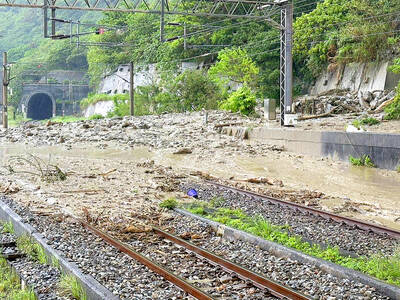
ROLLER-COASTER RIDE: More than five earthquakes ranging from magnitude 4.4 to 5.5 on the Richter scale shook eastern Taiwan in rapid succession yesterday afternoon Back-to-back weather fronts are forecast to hit Taiwan this week, resulting in rain across the nation in the coming days, the Central Weather Administration said yesterday, as it also warned residents in mountainous regions to be wary of landslides and rockfalls. As the first front approached, sporadic rainfall began in central and northern parts of Taiwan yesterday, the agency said, adding that rain is forecast to intensify in those regions today, while brief showers would also affect other parts of the nation. A second weather system is forecast to arrive on Thursday, bringing additional rain to the whole nation until Sunday, it

CONDITIONAL: The PRC imposes secret requirements that the funding it provides cannot be spent in states with diplomatic relations with Taiwan, Emma Reilly said China has been bribing UN officials to obtain “special benefits” and to block funding from countries that have diplomatic ties with Taiwan, a former UN employee told the British House of Commons on Tuesday. At a House of Commons Foreign Affairs Committee hearing into “international relations within the multilateral system,” former Office of the UN High Commissioner for Human Rights (OHCHR) employee Emma Reilly said in a written statement that “Beijing paid bribes to the two successive Presidents of the [UN] General Assembly” during the two-year negotiation of the Sustainable Development Goals. Another way China exercises influence within the UN Secretariat is

LANDSLIDES POSSIBLE: The agency advised the public to avoid visiting mountainous regions due to more expected aftershocks and rainfall from a series of weather fronts A series of earthquakes over the past few days were likely aftershocks of the April 3 earthquake in Hualien County, with further aftershocks to be expected for up to a year, the Central Weather Administration (CWA) said yesterday. Based on the nation’s experience after the quake on Sept. 21, 1999, more aftershocks are possible over the next six months to a year, the agency said. A total of 103 earthquakes of magnitude 4 on the local magnitude scale or higher hit Hualien County from 5:08pm on Monday to 10:27am yesterday, with 27 of them exceeding magnitude 5. They included two, of magnitude

Taiwan’s first drag queen to compete on the internationally acclaimed RuPaul’s Drag Race, Nymphia Wind (妮妃雅), was on Friday crowned the “Next Drag Superstar.” Dressed in a sparkling banana dress, Nymphia Wind swept onto the stage for the final, and stole the show. “Taiwan this is for you,” she said right after show host RuPaul announced her as the winner. “To those who feel like they don’t belong, just remember to live fearlessly and to live their truth,” she said on stage. One of the frontrunners for the past 15 episodes, the 28-year-old breezed through to the final after weeks of showcasing her unique


 RSS
RSS