


The Intel Corp, the world's largest semiconductor maker, reported on Tuesday that its profit for the third quarter rose 15 percent from a year earlier, though it continued to struggle with an inventory glut that has reduced its profit margins.
Intel executives said on Tuesday that they were making progress toward eliminating the inventory problem that caused the company to reduce its sales forecast in early September. The weakness, the company said at the time, was a result of lower-than-expected demand for both its microprocessor and flash memory products.
"Inventories are still higher than we would like and we will continue to improve them during the fourth quarter," said Andy Bryant, Intel's chief financial officer, in a conference call on Tuesday with financial analysts. Bryant said the company cut its inventories by US$43 million during the quarter.
Bryant told analysts that demand for chips for notebook computers and servers was strong, but that demand for flash memory used in cell phones and digital cameras was flat.
Net income for the quarter was US$1.9 billion, or US$0.30 a share, compared with US$1.66 billion, or US$0.25 a share, for the quarter a year ago. Revenue reached US$8.5 billion for the quarter, compared with US$7.8 billion in the quarter last year. A consensus of analysts polled by Thomson Financial forecast a profit of US$0.27 a share and sales of US$8.45 billion for the quarter, which ended Sept. 25.
But the company's per-share earnings included a tax benefit of US$0.036 a share during the quarter, including a small gain that the company had reported last month. Without that write-down, the company earned only US$0.26 a share for the quarter, slightly lower than analysts' forecasts.
"Growth was not as high as we originally anticipated due to inventory adjustments at some of our major customers and lower than expected overall demand for PCs," Intel's chief executive Craig Barrett said.
But Intel's gross margins continued to decline during the quarter, and they show no sign of improving next quarter. Gross margins dropped to 55.7 percent, compared with the company's earlier revised forecast of 58 percent.
In addition to the inventory glut, Bryant attributed the margin drop to a shift in demand away from higher-margin products like microprocessors used in personal computers to less expensive products like motherboards and chipsets. He added that he expected margins to remain at roughly 56 percent through the fourth quarter.
Intel forecast that fourth-quarter revenue would be US$8.6 billion to US$9.2 billion.
Analysts said the company still had a long way to go in reducing its reserves and improving profit margins, though the company was taking the right steps, overall.
"It confirms our view that the PC market is growing but at somewhat less than the seasonal norm," said Mark Edelstone, semiconductor analyst at Morgan Stanley. "But there are also a number of things they have to address. They still have to work on inventories, and to better align their manufacturing with the market."
Intel's report comes as the company is trying to recover from a series of missteps. In addition to misjudging demand, the company has stumbled in getting new products out on time, most notably its chips for desktop computers. In the meantime, AMD, Intel's chief rival, has had strong sales in its competing products.
The company's problems became so pronounced that Barrett issued a memo to employees in July encouraging them to work harder to prevent problems in the future.
But Bryant denied that the inventory problem caused it to lose market share to competitors during the quarter.
"We think shares were the same between Intel and its competitors," he said.
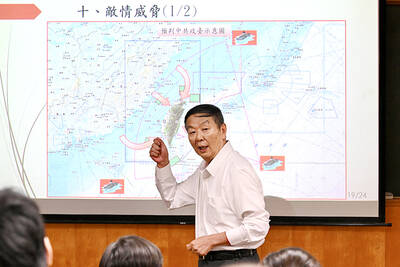
RETHINK? The defense ministry and Navy Command Headquarters could take over the indigenous submarine project and change its production timeline, a source said Admiral Huang Shu-kuang’s (黃曙光) resignation as head of the Indigenous Submarine Program and as a member of the National Security Council could affect the production of submarines, a source said yesterday. Huang in a statement last night said he had decided to resign due to national security concerns while expressing the hope that it would put a stop to political wrangling that only undermines the advancement of the nation’s defense capabilities. Taiwan People’s Party Legislator Vivian Huang (黃珊珊) yesterday said that the admiral, her older brother, felt it was time for him to step down and that he had completed what he

Taiwan has experienced its most significant improvement in the QS World University Rankings by Subject, data provided on Sunday by international higher education analyst Quacquarelli Symonds (QS) showed. Compared with last year’s edition of the rankings, which measure academic excellence and influence, Taiwanese universities made great improvements in the H Index metric, which evaluates research productivity and its impact, with a notable 30 percent increase overall, QS said. Taiwanese universities also made notable progress in the Citations per Paper metric, which measures the impact of research, achieving a 13 percent increase. Taiwanese universities gained 10 percent in Academic Reputation, but declined 18 percent
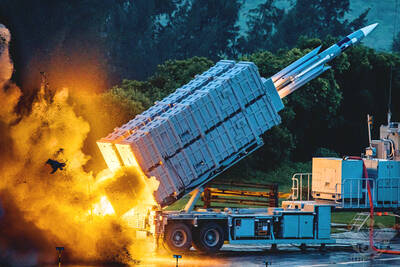
UNDER DISCUSSION: The combatant command would integrate fast attack boat and anti-ship missile groups to defend waters closest to the coastline, a source said The military could establish a new combatant command as early as 2026, which would be tasked with defending Taiwan’s territorial waters 24 nautical miles (44.4km) from the nation’s coastline, a source familiar with the matter said yesterday. The new command, which would fall under the Naval Command Headquarters, would be led by a vice admiral and integrate existing fast attack boat and anti-ship missile groups, along with the Naval Maritime Surveillance and Reconnaissance Command, said the source, who asked to remain anonymous. It could be launched by 2026, but details are being discussed and no final timetable has been announced, the source
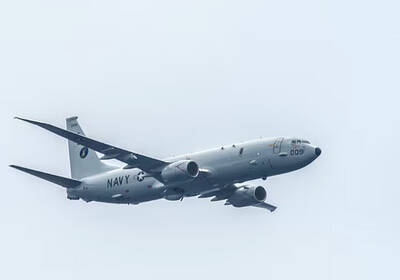
CHINA REACTS: The patrol and reconnaissance plane ‘transited the Taiwan Strait in international airspace,’ the 7th Fleet said, while Taipei said it saw nothing unusual The US 7th Fleet yesterday said that a US Navy P-8A Poseidon flew through the Taiwan Strait, a day after US and Chinese defense heads held their first talks since November 2022 in an effort to reduce regional tensions. The patrol and reconnaissance plane “transited the Taiwan Strait in international airspace,” the 7th Fleet said in a news release. “By operating within the Taiwan Strait in accordance with international law, the United States upholds the navigational rights and freedoms of all nations.” In a separate statement, the Ministry of National Defense said that it monitored nearby waters and airspace as the aircraft


 RSS
RSS