


The official theme of the 94th annual meeting of the Association of National Advertisers was "Masters of Marketing," but it might have been more bluntly, and more accurately, summarized as "Change or Die."
Speakers at the conference, which concluded here Sunday, warned the more than 700 attendees that executives who oversee the estimated US$300 billion a year spent on consumer marketing in the US must become more accountable, innovative and creative or be doomed to failure.
"The traditional marketing model we all grew up with is obsolete," said James Stengel, global marketing officer of Procter & Gamble, the world's largest advertiser.
"We are taking the reinvention of marketing very seriously at Procter & Gamble," he added, "and we all need to do that."
Stengel was one of several speakers representing big, well-known sellers of consumer products and services that are substantially reorganizing or rethinking their marketing efforts. The others included DaimlerChrysler, General Electric, Home Depot, Charles Schwab, Toyota Motor, Wachovia, Wrigley and Yahoo.
Those strategic shifts stem from a growing belief that most companies have already increased profits as much as they can through cost-cutting, said Michael Winkler, executive vice president and chief marketing officer of Hewlett-Packard, and need now to "focus on revenue growth" to further fatten the bottom line.
"Marketing has got to become a competitive advantage," he added, much like superior product quality or better customer service.
But a formidable obstacle looms, according to Winkler: many of the chief executives to whom chief marketing officers report think that marketing is "largely a financial black hole, an ambiguous function of the business, with immeasurable results and limited return on investment."
That was the subject of several hours of discussion on Saturday as the association and Booz Allen Hamilton, the consulting company, presented the findings from the first phase of a two-year study on corporate marketing.
"Marketing is more of a critical success factor than five years ago," even in fields where it has not traditionally been valued, like banks and other financial services, said Paul Hyde, vice president for the financial services practice at Booz Allen. "But it is being seen as disconnected from the CEO agenda" and as a result typically lacks adequate resources, he said.
"Marketing has a long-term focus, and yet corporations are expecting their chief marketing officers to deliver short-term results," he added. "CMOs are being asked to sink or swim and in many instances, it's `Mission: Impossible.'"
One inevitable outcome has been the revampings of marketing departments at more than 70 percent of the companies that responded to the survey, Hyde said, adding in an aside to the audience: "Don't go on vacation. Your job might not be there when you get back."
Indeed, the average tenure of a chief marketing officer is 23 months, he added, citing a study by Spencer Stuart, compared with 54 months for a chief executive.
Peter Littlewood, senior vice president for corporate marketing at the Masterfoods USA division of Mars, said that he and other marketing executives can prove their worth to skeptical chief executives by "thinking about consumers, about brands, about creating demand."
For instance, Littlewood said, "we believe there's a huge opportunity for M&Ms in customization and personalization," offering candy made to order in special colors or stamped with names, initials or greetings, "but shipping consumers customized colors X days ahead of a wedding is a very different business model" from selling them in standardized packages in supermarkets, drugstores and newsstands.
The corporate marketing study is part of plans by the association, which represents almost 350 companies that own about 8,000 brands, to "promote, encourage, cajole and when necessary fight for greater accountability," said Robert Liodice, its president and chief executive.
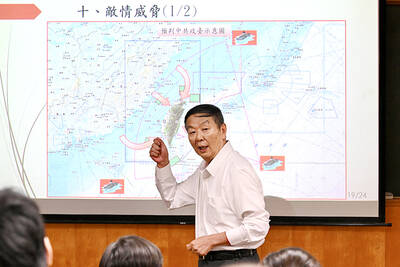
RETHINK? The defense ministry and Navy Command Headquarters could take over the indigenous submarine project and change its production timeline, a source said Admiral Huang Shu-kuang’s (黃曙光) resignation as head of the Indigenous Submarine Program and as a member of the National Security Council could affect the production of submarines, a source said yesterday. Huang in a statement last night said he had decided to resign due to national security concerns while expressing the hope that it would put a stop to political wrangling that only undermines the advancement of the nation’s defense capabilities. Taiwan People’s Party Legislator Vivian Huang (黃珊珊) yesterday said that the admiral, her older brother, felt it was time for him to step down and that he had completed what he
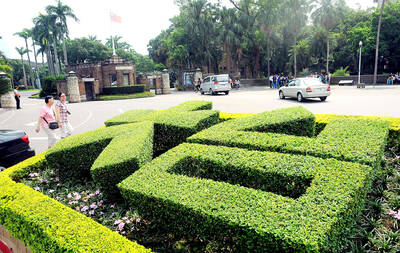
Taiwan has experienced its most significant improvement in the QS World University Rankings by Subject, data provided on Sunday by international higher education analyst Quacquarelli Symonds (QS) showed. Compared with last year’s edition of the rankings, which measure academic excellence and influence, Taiwanese universities made great improvements in the H Index metric, which evaluates research productivity and its impact, with a notable 30 percent increase overall, QS said. Taiwanese universities also made notable progress in the Citations per Paper metric, which measures the impact of research, achieving a 13 percent increase. Taiwanese universities gained 10 percent in Academic Reputation, but declined 18 percent

UNDER DISCUSSION: The combatant command would integrate fast attack boat and anti-ship missile groups to defend waters closest to the coastline, a source said The military could establish a new combatant command as early as 2026, which would be tasked with defending Taiwan’s territorial waters 24 nautical miles (44.4km) from the nation’s coastline, a source familiar with the matter said yesterday. The new command, which would fall under the Naval Command Headquarters, would be led by a vice admiral and integrate existing fast attack boat and anti-ship missile groups, along with the Naval Maritime Surveillance and Reconnaissance Command, said the source, who asked to remain anonymous. It could be launched by 2026, but details are being discussed and no final timetable has been announced, the source
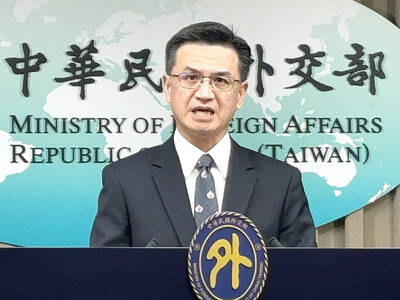
BULLY TACTICS: Beijing has continued its incursions into Taiwan’s airspace even as Xi Jinping talked about Taiwan being part of the Chinese family and nation China should stop its coercion of Taiwan and respect mainstream public opinion in Taiwan about sovereignty if its expression of goodwill is genuine, the Ministry of Foreign Affairs (MOFA) said yesterday. Ministry spokesman Jeff Liu (劉永健) made the comment in response to media queries about a meeting between former president Ma Ying-jeou (馬英九) and Chinese President Xi Jinping (習近平) the previous day. Ma voiced support for the so-called “1992 consensus,” while Xi said that although the two sides of the Taiwan Strait have “different systems,” this does not change the fact that they are “part of the same country,” and that “external


 RSS
RSS