


China will phase out measures aimed at reining in the overheating economy amid fears that the tough controls may lead to a hard landing, a press report said yesterday.
Citing unnamed sources, the South China Morning Post said Beijing was expected to announce a decision to "adjust" its macroeconomic controls either later this month or early next month.
The announcement would be made during the annual national economic conference to plot growth targets for next year, it said.
At the conference, top government officials are expected to declare "preliminary success" in curbing runaway fixed-asset investment and bank lending.
They will likely stress that the planned withdrawal of administrative measures does not signal a relaxation of all macroeconomic controls, the newspaper said.
They are also expected to announce that macroecono-mic controls in general will remain a medium- and long-term policy to prevent the economy from overheating again.
Despite the short-term success of the measures, an increasing number of local officials and economists have warned that the controls could become counterproductive if they were not relaxed.
"The real situation is worse than what the official data has suggested," one source was quoted as saying.
"Many banks have largely stopped lending for fear of breaching the central government's rules and this is not healthy," the source said.
The sources said policymakers had become less concerned about strong inflationary pressures, which may actually benefit rural areas.
"Inflation is mainly driven by rising food prices but this is good news for the country's millions of far-mers," one source said. "The government does not want grain prices to drop just as it is planning to boost the living standards of farmers."
Since the middle of last year, China has issued a series of administrative regulations aimed at cooling investment, particularly in overheated sectors such as steel, aluminum, cement, property development and car manufacturing.
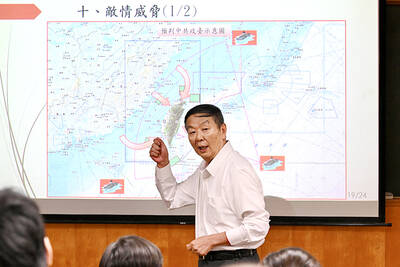
RETHINK? The defense ministry and Navy Command Headquarters could take over the indigenous submarine project and change its production timeline, a source said Admiral Huang Shu-kuang’s (黃曙光) resignation as head of the Indigenous Submarine Program and as a member of the National Security Council could affect the production of submarines, a source said yesterday. Huang in a statement last night said he had decided to resign due to national security concerns while expressing the hope that it would put a stop to political wrangling that only undermines the advancement of the nation’s defense capabilities. Taiwan People’s Party Legislator Vivian Huang (黃珊珊) yesterday said that the admiral, her older brother, felt it was time for him to step down and that he had completed what he

Taiwan has experienced its most significant improvement in the QS World University Rankings by Subject, data provided on Sunday by international higher education analyst Quacquarelli Symonds (QS) showed. Compared with last year’s edition of the rankings, which measure academic excellence and influence, Taiwanese universities made great improvements in the H Index metric, which evaluates research productivity and its impact, with a notable 30 percent increase overall, QS said. Taiwanese universities also made notable progress in the Citations per Paper metric, which measures the impact of research, achieving a 13 percent increase. Taiwanese universities gained 10 percent in Academic Reputation, but declined 18 percent
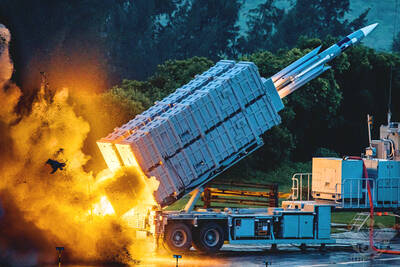
UNDER DISCUSSION: The combatant command would integrate fast attack boat and anti-ship missile groups to defend waters closest to the coastline, a source said The military could establish a new combatant command as early as 2026, which would be tasked with defending Taiwan’s territorial waters 24 nautical miles (44.4km) from the nation’s coastline, a source familiar with the matter said yesterday. The new command, which would fall under the Naval Command Headquarters, would be led by a vice admiral and integrate existing fast attack boat and anti-ship missile groups, along with the Naval Maritime Surveillance and Reconnaissance Command, said the source, who asked to remain anonymous. It could be launched by 2026, but details are being discussed and no final timetable has been announced, the source
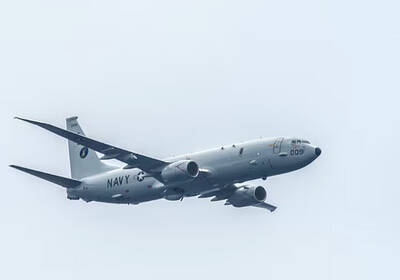
CHINA REACTS: The patrol and reconnaissance plane ‘transited the Taiwan Strait in international airspace,’ the 7th Fleet said, while Taipei said it saw nothing unusual The US 7th Fleet yesterday said that a US Navy P-8A Poseidon flew through the Taiwan Strait, a day after US and Chinese defense heads held their first talks since November 2022 in an effort to reduce regional tensions. The patrol and reconnaissance plane “transited the Taiwan Strait in international airspace,” the 7th Fleet said in a news release. “By operating within the Taiwan Strait in accordance with international law, the United States upholds the navigational rights and freedoms of all nations.” In a separate statement, the Ministry of National Defense said that it monitored nearby waters and airspace as the aircraft


 RSS
RSS