


The European economy slowed significantly in the second quarter as spending lagged, official reports showed on Tuesday, and economists expected growth in the region to be soft into early next year as consumers hang onto their cash.
High unemployment has weighed on spending among several of 12 countries that use the euro. But in Germany, the region's largest economy, the stormy political response to Chancellor Gerhard Schroeder's proposals to cut back unemployment and welfare benefits have recently added to a general malaise among German consumers, whose reluctance to spend has proved a durable feature of the economic landscape, economists said.
"The sentiment is actually worse than the situation," said Elga Bartsch, an economist with Morgan Stanley in London.
German Finance Minister Hans Eichel added to the sober atmosphere, declaring on Tuesday that EU members would fail in their goal to become the world's most competitive economy by 2010.
The pledge, taken four years ago in Lisbon by what were then the 15 members of the EU, promised citizens changes in labor and pension laws, coupled with more spending on research and new technologies.
Finance ministers will discuss their progress on the Lisbon stra-tegy at a meeting this weekend in The Hague.
"We won't manage to make Europe the world's most competitive area by 2010, but the aim is right and all countries of the EU must make their contribution," Eichel said during a debate in Berlin on the government's budget for next year.
Economic growth among the 12 countries that use the euro slowed in the second quarter to 0.5 percent, down from 0.6 percent in the first quarter, as consumers reined in their spending, Eurostat, the EU statistics agency, said on Tuesday.
Consumer spending rose 0.3 percent in the last three months, slowing from 0.6 percent in the first quarter of the year.
Demand for German exports is pulling along an otherwise sluggish economy, hurt by anemic consumer spending and only modest business investment. The Economics and Labor ministry reported on Tuesday that industrial production was up 1.6 percent in July as factories and mines hummed to meet external demand, but still off 1.1 percent over the previous year.
"This is a comfort," Bartsch said. "The recovery in Germany is not faltering."
The trend is making itself felt in Europe as a whole as well, where exports increased 3.7 percent in the second quarter, Eurostat said.
But the euro zone's largest economy is not accelerating, and from the perspective of consumption, Germany stands out for excessive weakness that is both a lingering effect of the euro's introduction, and of the politics of reform, according to several economists.
When euro coins and bills went into circulation in 2002, German consumers who had money to spend reacted to what they perceived as a substantial uptick in prices by saving more. This change in mentality drove Germany's savings rate steadily upwards, to 11 percent last year from 9.8 percent in 2000, essentially withdrawing billions of euros from circulation and shortening lines at cash registers.
Though this effect may ebb over the next few years, it still offers a powerful counterpoint to efforts in France by Finance Minister Nicolas Sarkozy to help consumer spending by persuading retailers to lower prices.
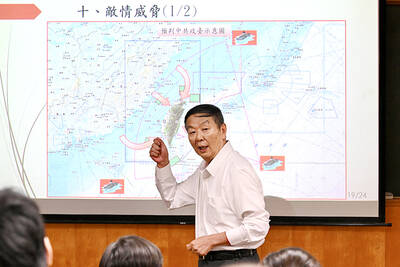
RETHINK? The defense ministry and Navy Command Headquarters could take over the indigenous submarine project and change its production timeline, a source said Admiral Huang Shu-kuang’s (黃曙光) resignation as head of the Indigenous Submarine Program and as a member of the National Security Council could affect the production of submarines, a source said yesterday. Huang in a statement last night said he had decided to resign due to national security concerns while expressing the hope that it would put a stop to political wrangling that only undermines the advancement of the nation’s defense capabilities. Taiwan People’s Party Legislator Vivian Huang (黃珊珊) yesterday said that the admiral, her older brother, felt it was time for him to step down and that he had completed what he

Taiwan has experienced its most significant improvement in the QS World University Rankings by Subject, data provided on Sunday by international higher education analyst Quacquarelli Symonds (QS) showed. Compared with last year’s edition of the rankings, which measure academic excellence and influence, Taiwanese universities made great improvements in the H Index metric, which evaluates research productivity and its impact, with a notable 30 percent increase overall, QS said. Taiwanese universities also made notable progress in the Citations per Paper metric, which measures the impact of research, achieving a 13 percent increase. Taiwanese universities gained 10 percent in Academic Reputation, but declined 18 percent
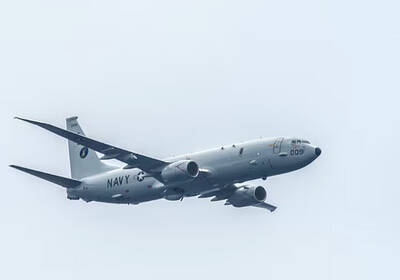
CHINA REACTS: The patrol and reconnaissance plane ‘transited the Taiwan Strait in international airspace,’ the 7th Fleet said, while Taipei said it saw nothing unusual The US 7th Fleet yesterday said that a US Navy P-8A Poseidon flew through the Taiwan Strait, a day after US and Chinese defense heads held their first talks since November 2022 in an effort to reduce regional tensions. The patrol and reconnaissance plane “transited the Taiwan Strait in international airspace,” the 7th Fleet said in a news release. “By operating within the Taiwan Strait in accordance with international law, the United States upholds the navigational rights and freedoms of all nations.” In a separate statement, the Ministry of National Defense said that it monitored nearby waters and airspace as the aircraft
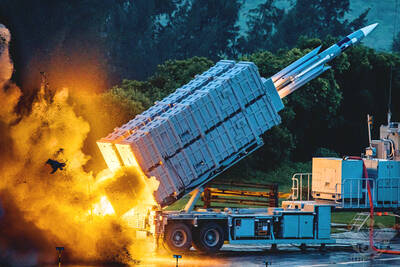
UNDER DISCUSSION: The combatant command would integrate fast attack boat and anti-ship missile groups to defend waters closest to the coastline, a source said The military could establish a new combatant command as early as 2026, which would be tasked with defending Taiwan’s territorial waters 24 nautical miles (44.4km) from the nation’s coastline, a source familiar with the matter said yesterday. The new command, which would fall under the Naval Command Headquarters, would be led by a vice admiral and integrate existing fast attack boat and anti-ship missile groups, along with the Naval Maritime Surveillance and Reconnaissance Command, said the source, who asked to remain anonymous. It could be launched by 2026, but details are being discussed and no final timetable has been announced, the source


 RSS
RSS