


Mobile phones get smaller and lighter every year. With the part count for the average mobile going down by 20 percent to 30 percent every year, a phone bought five years ago now looks as old-fashioned as a 1950s wireless. But will mobile phones eventually be so small that they do not even look like mobile phones?
Clues can be found in Asia, where many of the world's most technologically advanced firms are based. Japanese and South Korean customers have been unusually receptive to technological innovations. Consequently, firms use the Asian market as a test bed for new ideas.
Manufacturers have spotted the logical outcome of the ever-shrinking phone -- a unit that can be worn rather than carried. A wearable phone is easier to use, and less likely to be lost or stolen.
Last year, two firms tried to cash in by launching wristwatch models. NTT DoCoMo's Wristomo phone, manufactured by Seiko and offering e-mail and Web browser functionality, sold out its initial run of 1,000 within 10 minutes of going on sale.
Samsung's equivalent, touted as the world's first "Dick Tracy phone," launched last year offering GPRS, one and a half hours of continuous talk time, voice-activated dialling and a built-in phone book. It supported WAP and Bluetooth, and weighed less than 80g.
But NTT DoCoMo stopped making the Wristomo after interest tailed off, and last year's promised European launch of Samsung's phone never took place. The problem manufacturers face is the tension between people's desire for smaller mobile phones and their hunger for more functionality.
In Japan, says Michael King, a principal analyst with Gartner, there has even been a reversal of the trend for miniaturization, with consumers preferring bigger cellphones with larger screens and multiple LCDs. He argues that no solution will satisfy everyone.
The answer could lie in Bluetooth, which allows short-range wireless communication. It enables a phone to have multiple functions without requiring them to be on the same physical device.
Motorola has developed a prototype called the SmartButton, a sleek-looking badge worn by the user which uses Bluetooth to connect to the user's phone.
To use it, you don't need to pick up it up or even look at it, said Joe Dvorak, a member of Motorola's technical staff: "If the user taps the SmartButton and says 'Call John Smith', the phone looks up the number and places the call."
Don't expect to be able to buy such phones in the next year or so, however. The technology is there, but firms are still trying to find the form that works.
"It's just a matter of someone hitting on the right combination of Bluetooth connective accessories and miniaturized product," King said.
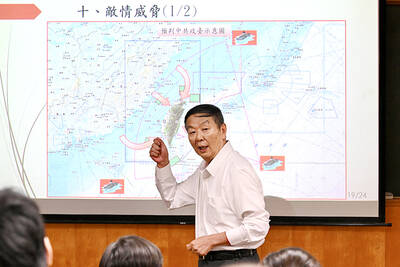
RETHINK? The defense ministry and Navy Command Headquarters could take over the indigenous submarine project and change its production timeline, a source said Admiral Huang Shu-kuang’s (黃曙光) resignation as head of the Indigenous Submarine Program and as a member of the National Security Council could affect the production of submarines, a source said yesterday. Huang in a statement last night said he had decided to resign due to national security concerns while expressing the hope that it would put a stop to political wrangling that only undermines the advancement of the nation’s defense capabilities. Taiwan People’s Party Legislator Vivian Huang (黃珊珊) yesterday said that the admiral, her older brother, felt it was time for him to step down and that he had completed what he
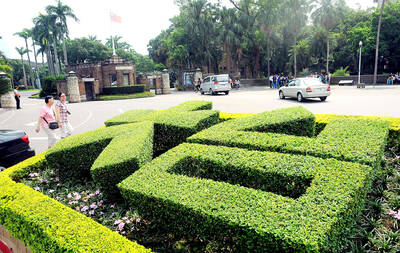
Taiwan has experienced its most significant improvement in the QS World University Rankings by Subject, data provided on Sunday by international higher education analyst Quacquarelli Symonds (QS) showed. Compared with last year’s edition of the rankings, which measure academic excellence and influence, Taiwanese universities made great improvements in the H Index metric, which evaluates research productivity and its impact, with a notable 30 percent increase overall, QS said. Taiwanese universities also made notable progress in the Citations per Paper metric, which measures the impact of research, achieving a 13 percent increase. Taiwanese universities gained 10 percent in Academic Reputation, but declined 18 percent
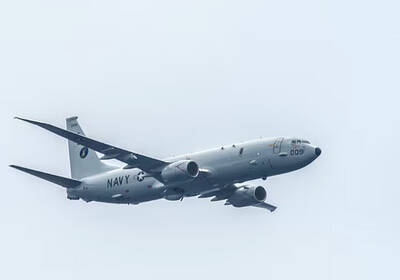
CHINA REACTS: The patrol and reconnaissance plane ‘transited the Taiwan Strait in international airspace,’ the 7th Fleet said, while Taipei said it saw nothing unusual The US 7th Fleet yesterday said that a US Navy P-8A Poseidon flew through the Taiwan Strait, a day after US and Chinese defense heads held their first talks since November 2022 in an effort to reduce regional tensions. The patrol and reconnaissance plane “transited the Taiwan Strait in international airspace,” the 7th Fleet said in a news release. “By operating within the Taiwan Strait in accordance with international law, the United States upholds the navigational rights and freedoms of all nations.” In a separate statement, the Ministry of National Defense said that it monitored nearby waters and airspace as the aircraft
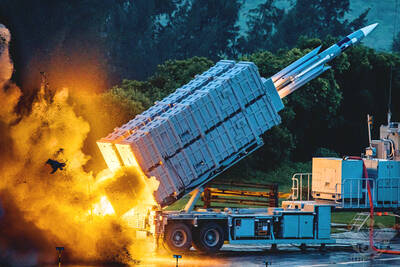
UNDER DISCUSSION: The combatant command would integrate fast attack boat and anti-ship missile groups to defend waters closest to the coastline, a source said The military could establish a new combatant command as early as 2026, which would be tasked with defending Taiwan’s territorial waters 24 nautical miles (44.4km) from the nation’s coastline, a source familiar with the matter said yesterday. The new command, which would fall under the Naval Command Headquarters, would be led by a vice admiral and integrate existing fast attack boat and anti-ship missile groups, along with the Naval Maritime Surveillance and Reconnaissance Command, said the source, who asked to remain anonymous. It could be launched by 2026, but details are being discussed and no final timetable has been announced, the source


 RSS
RSS