


A month after being passed over for the top job, Steven Heyer, the president and chief operating officer of Coca-Cola, said on Wed-nesday that he would leave the company.
Heyer, a marketing wizard who joined the company in 2001, was once considered the heir apparent to the previous chief executive, Douglas Daft, but he lost out to a company veteran, Neville Isdell, after a protracted search.
Isdell said in a statement that the two had reached a "mutual agreement" on Tuesday that would lead to Heyer's departure from Coke after "an orderly transition" in the next several months.
"We agreed that Steve could best realize his aspirations by pursuing opportunities outside the company," Isdell said.
Heyer will apparently leave without another offer in hand, and Coke has yet to announce whether or when it will name a successor.
His exit was widely expected by Wall Street analysts and beverage industry observers after Coke set up the high-stakes derby for a new chief executive, seemingly marginalizing Heyer's candidacy.
But the timing of Wednesday's announcement, just a week after Isdell officially took over, was somewhat surprising, and it may signal that he intends to move swiftly to put his own mark on the company and its management.
"It was precipitated by Neville getting the job," said one individual close to the situation. "This happened very fast. Nobody is quite sure of anything."
Heyer arrived at Coke three years ago, armed with what many analysts considered the right formula to put the long-troubled company on the right track.
"Coming from outside the industry, he brought a way of thinking that was very different from the way Coke was before," said William Pecoriello, a beverage-industry analyst at Morgan Stanley.
Pecoriello said Heyer's departure "leaves a big hole in Coke's organization in terms of marketing strategy and planning."
Pecoriello suggested that the management structure at Coke would again be forced to reshuffle; this time, in a way that would eliminate the president's role and allow Isdell to have more direct contact with the company's regional division heads.
Isdell, 61, a longtime Coke executive who was brought back to the company this year, now has a mandate to install his own management team, but will likely carry out many of the strategies that Heyer helped design.
Still, he is under pressure to reverse the company's recent history of declining sales and management turmoil.
"This is a very important moment for Coca-Cola," said Emanuel Goldman, a beverage industry consultant in Hillsborough, California. "If they pick right, they can overcome some of the management sins of the past."
Heyer, a 51-year-old former Turner Broadcasting president with stints as a management consultant and an advertising executive on his resume, arrived at Coke as an outsider to head Coca-Cola Ventures, a now defunct division that included oversight of the Minute Maid juice brand.
But Heyer's star soon began to rise, and he quickly won the favor of Wall Street analysts as well as other powerful Coke insiders like Donald Keough, who believed his ideas might be just the thing to shake up the staid soft drink maker.
In less than two years, he rocketed through the company's ranks to become head of soft drink concentrate manufacturing and the marketing division, the two most important businesses for Coke, eventually getting promoted to second-in-command as president.
While Heyer's big ideas were welcome, his assertive -- and sometimes acerbic-management style often was not.
Beverage industry observers said that his brash sensibility was not compatible with the company's genteel culture and led some executives to leave the company.
"He was brought in to be a change agent," Pecoriello said. "They say he had a tough style, but sometimes that is required to change the mentality."
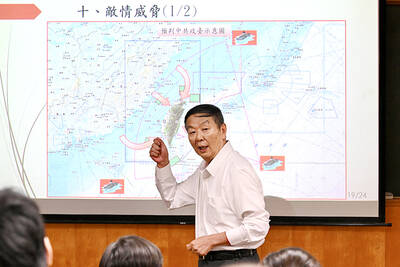
RETHINK? The defense ministry and Navy Command Headquarters could take over the indigenous submarine project and change its production timeline, a source said Admiral Huang Shu-kuang’s (黃曙光) resignation as head of the Indigenous Submarine Program and as a member of the National Security Council could affect the production of submarines, a source said yesterday. Huang in a statement last night said he had decided to resign due to national security concerns while expressing the hope that it would put a stop to political wrangling that only undermines the advancement of the nation’s defense capabilities. Taiwan People’s Party Legislator Vivian Huang (黃珊珊) yesterday said that the admiral, her older brother, felt it was time for him to step down and that he had completed what he
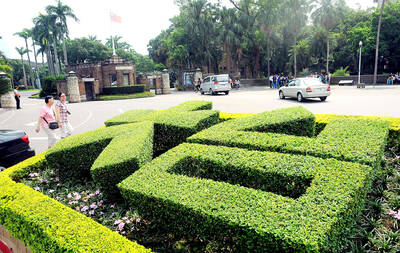
Taiwan has experienced its most significant improvement in the QS World University Rankings by Subject, data provided on Sunday by international higher education analyst Quacquarelli Symonds (QS) showed. Compared with last year’s edition of the rankings, which measure academic excellence and influence, Taiwanese universities made great improvements in the H Index metric, which evaluates research productivity and its impact, with a notable 30 percent increase overall, QS said. Taiwanese universities also made notable progress in the Citations per Paper metric, which measures the impact of research, achieving a 13 percent increase. Taiwanese universities gained 10 percent in Academic Reputation, but declined 18 percent
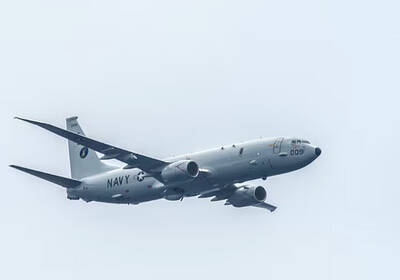
CHINA REACTS: The patrol and reconnaissance plane ‘transited the Taiwan Strait in international airspace,’ the 7th Fleet said, while Taipei said it saw nothing unusual The US 7th Fleet yesterday said that a US Navy P-8A Poseidon flew through the Taiwan Strait, a day after US and Chinese defense heads held their first talks since November 2022 in an effort to reduce regional tensions. The patrol and reconnaissance plane “transited the Taiwan Strait in international airspace,” the 7th Fleet said in a news release. “By operating within the Taiwan Strait in accordance with international law, the United States upholds the navigational rights and freedoms of all nations.” In a separate statement, the Ministry of National Defense said that it monitored nearby waters and airspace as the aircraft
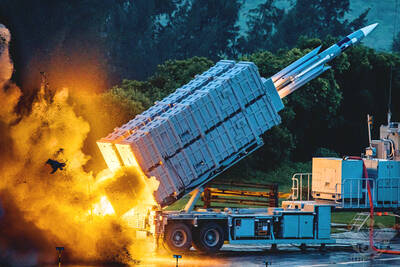
UNDER DISCUSSION: The combatant command would integrate fast attack boat and anti-ship missile groups to defend waters closest to the coastline, a source said The military could establish a new combatant command as early as 2026, which would be tasked with defending Taiwan’s territorial waters 24 nautical miles (44.4km) from the nation’s coastline, a source familiar with the matter said yesterday. The new command, which would fall under the Naval Command Headquarters, would be led by a vice admiral and integrate existing fast attack boat and anti-ship missile groups, along with the Naval Maritime Surveillance and Reconnaissance Command, said the source, who asked to remain anonymous. It could be launched by 2026, but details are being discussed and no final timetable has been announced, the source


 RSS
RSS