


One out of every four high-technology jobs in developed countries today may be outsourced to emerging markets like India by 2010, according to a report by the research firm Gartner Inc.
"Global sourcing is becoming a mainstream delivery model," said Ian Marriott, vice president at Gartner, at a Barcelona symposium and released by Gartner Wednesday.
"The potential cost advantages are so persuasive that companies that don't consider it seriously risk doing their shareholders a disservice. Businesses will also be put at risk due to loss of competitive advantage and inability to focus on growth through innovation."
India remains "the undisputed offshore leader," according to Gartner, with China and Russia emerging "as strong contenders" and many other countries eyeing the potential offshore IT services.
Outsourcing has been a growing phenomenon in the US and is catching on now in Europe as well, with last year a turning point.
"Last year saw a phenomenon in Europe," said Gartner vice president Roger Cox. "Out of 15 US$1 billion mega-deals signed in 2003, 10 were awarded by Europe-based enterprises. Until 2003, Europe-based organizations had only signed a total of 14 mega-deals since 1989."
He said British firms signed five such deals last year and France signed three, suggesting it has begun to overcome its cultural resistance to outsourcing.
Marriott said that based on these trends, outsourcing of jobs in information technology is likely to expand despite a backlash over the loss of high-paid, white-collar jobs in wealthy nations.
"We estimate that up to 25 percent of traditional IT jobs in many developed countries around the world will be situated in emerging markets by 2010," said Marriott.
"There is no doubt that the predicted shift in jobs associated with global sourcing is a harsh reality. However, there is nothing new about technology causing massive shifts in how and where people work. This is an unavoidable outcome of how the global marketplace operates today and western economies have been successful in navigating successive waves of economic transformation in the past."
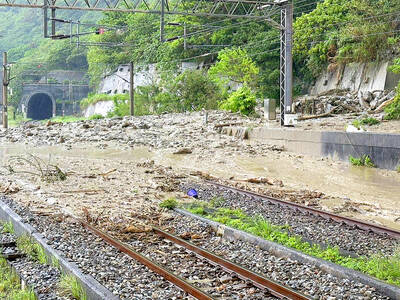
ROLLER-COASTER RIDE: More than five earthquakes ranging from magnitude 4.4 to 5.5 on the Richter scale shook eastern Taiwan in rapid succession yesterday afternoon Back-to-back weather fronts are forecast to hit Taiwan this week, resulting in rain across the nation in the coming days, the Central Weather Administration said yesterday, as it also warned residents in mountainous regions to be wary of landslides and rockfalls. As the first front approached, sporadic rainfall began in central and northern parts of Taiwan yesterday, the agency said, adding that rain is forecast to intensify in those regions today, while brief showers would also affect other parts of the nation. A second weather system is forecast to arrive on Thursday, bringing additional rain to the whole nation until Sunday, it

CONDITIONAL: The PRC imposes secret requirements that the funding it provides cannot be spent in states with diplomatic relations with Taiwan, Emma Reilly said China has been bribing UN officials to obtain “special benefits” and to block funding from countries that have diplomatic ties with Taiwan, a former UN employee told the British House of Commons on Tuesday. At a House of Commons Foreign Affairs Committee hearing into “international relations within the multilateral system,” former Office of the UN High Commissioner for Human Rights (OHCHR) employee Emma Reilly said in a written statement that “Beijing paid bribes to the two successive Presidents of the [UN] General Assembly” during the two-year negotiation of the Sustainable Development Goals. Another way China exercises influence within the UN Secretariat is
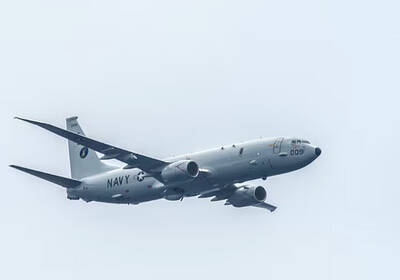
CHINA REACTS: The patrol and reconnaissance plane ‘transited the Taiwan Strait in international airspace,’ the 7th Fleet said, while Taipei said it saw nothing unusual The US 7th Fleet yesterday said that a US Navy P-8A Poseidon flew through the Taiwan Strait, a day after US and Chinese defense heads held their first talks since November 2022 in an effort to reduce regional tensions. The patrol and reconnaissance plane “transited the Taiwan Strait in international airspace,” the 7th Fleet said in a news release. “By operating within the Taiwan Strait in accordance with international law, the United States upholds the navigational rights and freedoms of all nations.” In a separate statement, the Ministry of National Defense said that it monitored nearby waters and airspace as the aircraft

Taiwan’s first drag queen to compete on the internationally acclaimed RuPaul’s Drag Race, Nymphia Wind (妮妃雅), was on Friday crowned the “Next Drag Superstar.” Dressed in a sparkling banana dress, Nymphia Wind swept onto the stage for the final, and stole the show. “Taiwan this is for you,” she said right after show host RuPaul announced her as the winner. “To those who feel like they don’t belong, just remember to live fearlessly and to live their truth,” she said on stage. One of the frontrunners for the past 15 episodes, the 28-year-old breezed through to the final after weeks of showcasing her unique


 RSS
RSS