


Tower Records, the pioneering record retailer that invented the music megastore, is likely to file for bankruptcy to aid a potential sale, a source close to the matter said.
A filing could involve swapping debt for equity in a move to reduce Tower's debt burden and clear the way for a potential buyer, the source said Thursday, speaking on condition of anonymity. The bankruptcy was likely to come within a week, the source said.
MTS Inc, the privately held parent of the West Sacramento, California-based record retailer, declined to comment on the possible Chapter 11 filing. Such a filing would be nearly a year after MTS decided to sell Tower because it could not pay US$5.2 million in debt on US$110 million in bonds sold in 1998.
Tower Records, begun with a single store in 1960, the same year as the "Twist" dance craze, became internationally recognized for its in-store concerts and a deep selection of popular and obscure music. But the chain has fallen victim to a slump in the music business and its own missteps in a rapidly changing retailing environment.
"It doesn't surprise me," said Phil Leigh, digital music analyst with Digital Inside Media. "The brick-and-mortar retailers are facing a serious problem. They've got to deal with Borders and Wal-Mart and the trend toward digital distribution."
Tower Records owns about 100 stores, down from 171 during its heyday when annual sales topping US$1 billion were routine.
The retailer's decline began in 1998 as falling sales, lack of hits and discounters such as Best Buy and Wal-Mart Stores Inc cut into profits of traditional record stores.
The company borrowed US$110 million in 1998 to expand into Great Britain, Asia, Canada and South America shortly after founder Russ Solomon boasted in a magazine interview that his company "can compete with anybody" and predicted a coming industry shakedown in which some companies would die and the "good ones will get bigger."
Yet as its troubles mounted, the company became known among music shoppers for steep prices -- typically US$18.99 for CDs, compared to US$4 and US$5 less at discount stores.
The company's June 2003 filing with the Securities and Exchange Commission reported US$441 million in long-term debt and operating leases as of April last year.
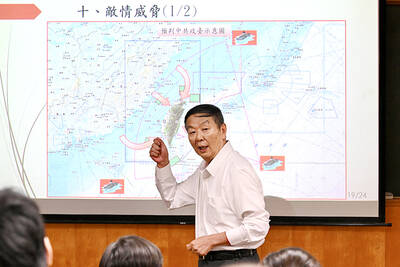
RETHINK? The defense ministry and Navy Command Headquarters could take over the indigenous submarine project and change its production timeline, a source said Admiral Huang Shu-kuang’s (黃曙光) resignation as head of the Indigenous Submarine Program and as a member of the National Security Council could affect the production of submarines, a source said yesterday. Huang in a statement last night said he had decided to resign due to national security concerns while expressing the hope that it would put a stop to political wrangling that only undermines the advancement of the nation’s defense capabilities. Taiwan People’s Party Legislator Vivian Huang (黃珊珊) yesterday said that the admiral, her older brother, felt it was time for him to step down and that he had completed what he

Taiwan has experienced its most significant improvement in the QS World University Rankings by Subject, data provided on Sunday by international higher education analyst Quacquarelli Symonds (QS) showed. Compared with last year’s edition of the rankings, which measure academic excellence and influence, Taiwanese universities made great improvements in the H Index metric, which evaluates research productivity and its impact, with a notable 30 percent increase overall, QS said. Taiwanese universities also made notable progress in the Citations per Paper metric, which measures the impact of research, achieving a 13 percent increase. Taiwanese universities gained 10 percent in Academic Reputation, but declined 18 percent
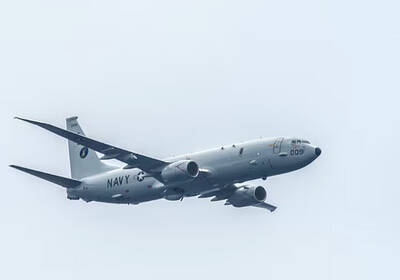
CHINA REACTS: The patrol and reconnaissance plane ‘transited the Taiwan Strait in international airspace,’ the 7th Fleet said, while Taipei said it saw nothing unusual The US 7th Fleet yesterday said that a US Navy P-8A Poseidon flew through the Taiwan Strait, a day after US and Chinese defense heads held their first talks since November 2022 in an effort to reduce regional tensions. The patrol and reconnaissance plane “transited the Taiwan Strait in international airspace,” the 7th Fleet said in a news release. “By operating within the Taiwan Strait in accordance with international law, the United States upholds the navigational rights and freedoms of all nations.” In a separate statement, the Ministry of National Defense said that it monitored nearby waters and airspace as the aircraft

UNDER DISCUSSION: The combatant command would integrate fast attack boat and anti-ship missile groups to defend waters closest to the coastline, a source said The military could establish a new combatant command as early as 2026, which would be tasked with defending Taiwan’s territorial waters 24 nautical miles (44.4km) from the nation’s coastline, a source familiar with the matter said yesterday. The new command, which would fall under the Naval Command Headquarters, would be led by a vice admiral and integrate existing fast attack boat and anti-ship missile groups, along with the Naval Maritime Surveillance and Reconnaissance Command, said the source, who asked to remain anonymous. It could be launched by 2026, but details are being discussed and no final timetable has been announced, the source


 RSS
RSS