


China's economic planners have suggested they are getting ready to step on the brakes with a 7 percent growth target for next year, state media said yesterday.
The growth objective was made public at a high-level meeting beginning Monday which set out the strategic goals for economic policies next year, the People's Daily and other newspapers reported.
"The main work objective for the economy is to maintain fast, coordinated and healthy development," Premier Wen Jiabao (溫家寶) was quoted as telling the National Development and Reform Commission during the meeting.
The operative word is "coordinated," a People's Daily editorial writer explained to the readers of the Communist Party mouthpiece, suggesting that China is no longer looking for growth at any cost.
China has routinely set a 7 percent growth target for the past half-decade, arguing it is the minimum needed if enough jobs are to be found for the unemployed and large-scale social unrest is to be avoided.
However, with average growth of 7.7 percent in the past five years and 8.5 percent predicted for this year, there is little doubt the target could have been set higher, ranking officials said.
"Economic development is not everything for the government," said Ma Kai, the head of the National Development and Reform Commission.
"We should pour more energy into other indicators such as education, health, environment and social welfare," he said.
This could be a response to growing worries about trends in this particular category of economic activity.
Analysts have warned blind investment could lead to over-capacity.
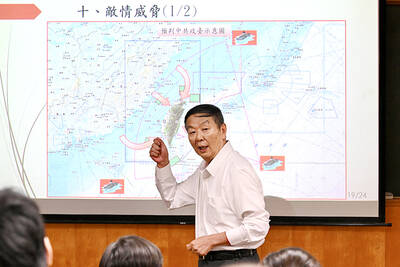
RETHINK? The defense ministry and Navy Command Headquarters could take over the indigenous submarine project and change its production timeline, a source said Admiral Huang Shu-kuang’s (黃曙光) resignation as head of the Indigenous Submarine Program and as a member of the National Security Council could affect the production of submarines, a source said yesterday. Huang in a statement last night said he had decided to resign due to national security concerns while expressing the hope that it would put a stop to political wrangling that only undermines the advancement of the nation’s defense capabilities. Taiwan People’s Party Legislator Vivian Huang (黃珊珊) yesterday said that the admiral, her older brother, felt it was time for him to step down and that he had completed what he
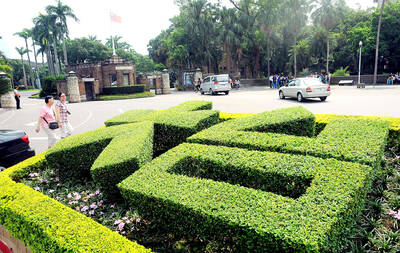
Taiwan has experienced its most significant improvement in the QS World University Rankings by Subject, data provided on Sunday by international higher education analyst Quacquarelli Symonds (QS) showed. Compared with last year’s edition of the rankings, which measure academic excellence and influence, Taiwanese universities made great improvements in the H Index metric, which evaluates research productivity and its impact, with a notable 30 percent increase overall, QS said. Taiwanese universities also made notable progress in the Citations per Paper metric, which measures the impact of research, achieving a 13 percent increase. Taiwanese universities gained 10 percent in Academic Reputation, but declined 18 percent
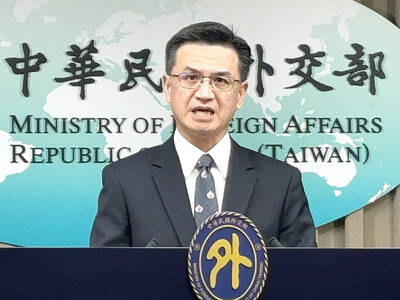
BULLY TACTICS: Beijing has continued its incursions into Taiwan’s airspace even as Xi Jinping talked about Taiwan being part of the Chinese family and nation China should stop its coercion of Taiwan and respect mainstream public opinion in Taiwan about sovereignty if its expression of goodwill is genuine, the Ministry of Foreign Affairs (MOFA) said yesterday. Ministry spokesman Jeff Liu (劉永健) made the comment in response to media queries about a meeting between former president Ma Ying-jeou (馬英九) and Chinese President Xi Jinping (習近平) the previous day. Ma voiced support for the so-called “1992 consensus,” while Xi said that although the two sides of the Taiwan Strait have “different systems,” this does not change the fact that they are “part of the same country,” and that “external
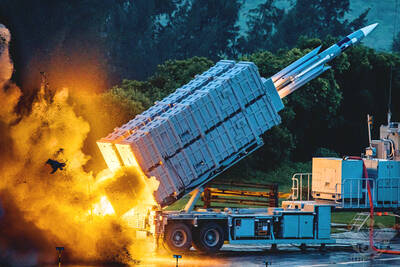
UNDER DISCUSSION: The combatant command would integrate fast attack boat and anti-ship missile groups to defend waters closest to the coastline, a source said The military could establish a new combatant command as early as 2026, which would be tasked with defending Taiwan’s territorial waters 24 nautical miles (44.4km) from the nation’s coastline, a source familiar with the matter said yesterday. The new command, which would fall under the Naval Command Headquarters, would be led by a vice admiral and integrate existing fast attack boat and anti-ship missile groups, along with the Naval Maritime Surveillance and Reconnaissance Command, said the source, who asked to remain anonymous. It could be launched by 2026, but details are being discussed and no final timetable has been announced, the source


 RSS
RSS