


Fear of growing competition from China has unnerved the Philippines' electronics exports sector, which is already struggling with a downturn in recent months, industry leaders say.
In addition, many of the electronics businesses in the Philippines complain that the government is not doing enough to address their concerns even though the industry has been the keystone of the country's economy for years.
Complaints
Their main complaints are the high cost of power, the poor infrastructure and the shaky security situation that has sent potential foreign electronics investors looking elsewhere.
The industry association, the Semiconductors and Electronics Industries in the Philippines Inc. (SEIPI), complained to the government this month that unknown gunmen had been "hijacking" trucks that bring electronics products to ports or airports for shipment abroad.
"All is not lost but if we don't do something about it, we are heading down a disastrous slope," warned Arthury Young, chairman of PSI Technologies Inc, in a recent industry forum.
"Not all of us are surviving here. Many companies have shut down and moved to China," said Dan Lachica, president of First Sumiden Circuits.
Electronic exports have been one of the few success stories for the beleaguered Philippine economy.
Semiconductors, components and other electronic items now make up more than 60 percent of the country's exports, easily displacing such traditional commodities like coconut products and metallic ores.
From January to August this year, total Philippine exports hit US$23 billion, of which 65 percent consisted of electronics products.
But exports have also been falling for much of the past year, due partly to the weakening demand for electronic products overseas.
In a report to SEIPI, Norberto Viera, president of Texas Industries Philippines Inc, conceded that the industry had a weak opening this year due to fears over the SARS outbreak and the impending war in Iraq.
Optimism
But he expressed optimism that exports would improve in the balance of the year, but added that he was "expecting a below average growth [this] year with an improving outlook for 2004."
He cited statistics showing that the economies in the developed countries that buy electronics goods were starting to pick up, boosting local demand.
What worries the local industry is that low labor costs and improved technology and infrastructure in China could eventually lure companies away from the Philippines.
Young said the government must be "more flexible" to react to changes in the market in order to attract investors.
It should also act swiftly to keep the local industry competitive by trying to bring down power rates, said Mike Petrucci, president of Amkor Technology Philippines Inc.
Local threat
"I don't look at China as the threat. The threat is in the Philippines itself," he said during a SEIPI dialogue last week.
Socioeconomic Planning Secretary Romulo Neri said the government was addressing the problems but said it could do little, for example, in the short-term to bring down power rates.
"You'll have to live with it," he said at the dialogue, remarking that government could only "whittle down" the obstacles.
Most of the electronics companies operating in the Philippines affirm that their productive, well-trained, English-speaking work forces are more than a match for the low-wage workers in China.
"Bluntly speaking [Filipino] labor is excellent," said Ippei Futaki, president of Toshiba Information Equipment Philippines.
"Efficiency and quality is the key," he said.
Manufacturing haven
"China will always be a manufacturing haven but it can't be everything," said Art Tan, president of Integrated Microelectronics Inc, advising that the Philippines can find its own niches in other electronics.
Steve Leece, managing director of Moog Controls Corp, maker of airline components, said that his company has found success selling higher-value products.
"We're not interested in competing with China in plastic Christmas trees," he said.
Citing his own high-end airline components, Leece said "we're selling to China, not buying from them."
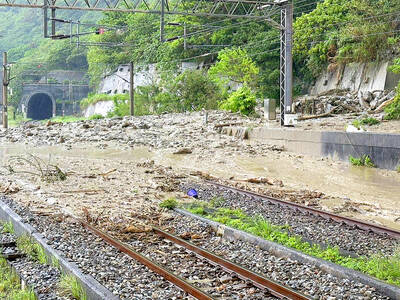
ROLLER-COASTER RIDE: More than five earthquakes ranging from magnitude 4.4 to 5.5 on the Richter scale shook eastern Taiwan in rapid succession yesterday afternoon Back-to-back weather fronts are forecast to hit Taiwan this week, resulting in rain across the nation in the coming days, the Central Weather Administration said yesterday, as it also warned residents in mountainous regions to be wary of landslides and rockfalls. As the first front approached, sporadic rainfall began in central and northern parts of Taiwan yesterday, the agency said, adding that rain is forecast to intensify in those regions today, while brief showers would also affect other parts of the nation. A second weather system is forecast to arrive on Thursday, bringing additional rain to the whole nation until Sunday, it

CONDITIONAL: The PRC imposes secret requirements that the funding it provides cannot be spent in states with diplomatic relations with Taiwan, Emma Reilly said China has been bribing UN officials to obtain “special benefits” and to block funding from countries that have diplomatic ties with Taiwan, a former UN employee told the British House of Commons on Tuesday. At a House of Commons Foreign Affairs Committee hearing into “international relations within the multilateral system,” former Office of the UN High Commissioner for Human Rights (OHCHR) employee Emma Reilly said in a written statement that “Beijing paid bribes to the two successive Presidents of the [UN] General Assembly” during the two-year negotiation of the Sustainable Development Goals. Another way China exercises influence within the UN Secretariat is
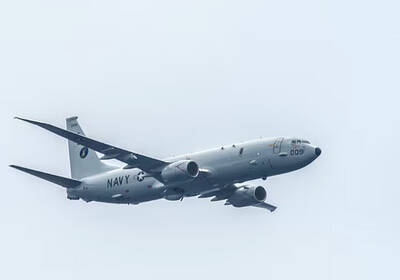
CHINA REACTS: The patrol and reconnaissance plane ‘transited the Taiwan Strait in international airspace,’ the 7th Fleet said, while Taipei said it saw nothing unusual The US 7th Fleet yesterday said that a US Navy P-8A Poseidon flew through the Taiwan Strait, a day after US and Chinese defense heads held their first talks since November 2022 in an effort to reduce regional tensions. The patrol and reconnaissance plane “transited the Taiwan Strait in international airspace,” the 7th Fleet said in a news release. “By operating within the Taiwan Strait in accordance with international law, the United States upholds the navigational rights and freedoms of all nations.” In a separate statement, the Ministry of National Defense said that it monitored nearby waters and airspace as the aircraft

Taiwan’s first drag queen to compete on the internationally acclaimed RuPaul’s Drag Race, Nymphia Wind (妮妃雅), was on Friday crowned the “Next Drag Superstar.” Dressed in a sparkling banana dress, Nymphia Wind swept onto the stage for the final, and stole the show. “Taiwan this is for you,” she said right after show host RuPaul announced her as the winner. “To those who feel like they don’t belong, just remember to live fearlessly and to live their truth,” she said on stage. One of the frontrunners for the past 15 episodes, the 28-year-old breezed through to the final after weeks of showcasing her unique


 RSS
RSS