


Incoming prime minister Abdullah Ahmad Badawi will inherit a modern and progressive Malaysia when his mentor Mahathir Mohamad steps down this week, but he will also be confronted with an array of tough political and economic challenges.
Looming general elections, a serious budget deficit and the need to bolster economic competitiveness and woo investment will weigh heavily on the new premier.
"It will be a baptism of fire for Abdullah in all senses soon after taking office," said Nizam Idris, a regional economist with Singapore-based IDEAglobal.

PHOTO: AP
The first new prime minister in 22 years has a relatively firm foundation to build on. The economy is healthier than most of its Southeast Asian neighbors after bouncing back from the 1997 to 1998 regional financial crisis.
Malaysia has made progress cleaning up its corporate image, with some of its most prominent businessmen ousted and their companies seized as the government sought to recover bank debts.
It bristles with some of the most advanced infrastructure in the world. Mahathir, 77, single-mindedly drove the country towards the digital age by carving out an ambitious high-tech hub in 1996.
Race relations in a country where majority Muslims have enjoyed more than three decades of privileges under an affirmative action program to help them close the gap with the wealthier Chinese minority are mainly good.
But the picture is not all rosy.
Foreign investment, which fueled high-speed growth before the Asian crisis, has slumped since 2001 with most diverted to China and other regional rivals like Thailand.
Fiscal pump-priming to boost the economy has seen Malaysia run seven straight budget deficits, leaving little room for Abdullah to manuever in the event of a global slowdown.
He also has to deal with the peg of the ringgit currency at 3.80 to the dollar, imposed by Mahathir in 1998 as part of capital curbs, most now lifted.
There is no immediate pressure on the peg as the dollar's current weakness gives a competitive edge to exports, but if left in place for too long, economists warn, it may damage Malaysia's free-market credentials and hurt investment.
Then there is the deeply-rooted political patronage system linking the corporate sector with the ruling United Malays National Organization (UMNO), that often led to the award of government contracts without open tender and restricted healthy competition needed to spur productivity.
The government's tendency to rescue troubled companies and protect local industries is also criticised in the face of market liberalization.
But to undo such excesses will disrupt the comfort zone for many vested parties and Abdullah, who has railed against corruption and told mismanaged firms to shape up, will not be in a hurry to change the system.
"To go against corporate Malaysia he needs to have muscles," said Abdul Razak Baginda, director of the Malaysian Strategic Research Center.
"There will be more continuity than change, at least in the short-term," he said.
"There will be no new initiatives except to reinforce what Mahathir has done. What we need now is a soothing effect because Malaysia is fearful of the post-Mahathir era."
Abdullah, 63, has pledged to maintain his predecessor's policies, although his management style will be different as he is seen as a team player with a more liberal approach.
For now, economic issues are likely to take a backseat as Abdullah focuses on consolidating his grip on UMNO, the lynchpin of the ruling coalition, to face a general election widely expected early next year.
A rally which took the stock market to an 18-month high last week is seen by analysts as a vote of confidence in the new premier.
But the political and business community are waiting in suspense to see who Abdullah will pick for his new cabinet.
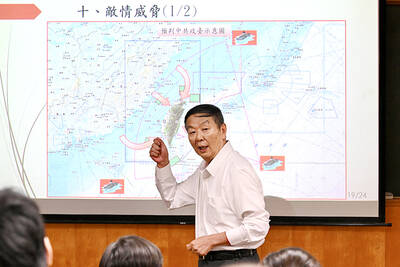
RETHINK? The defense ministry and Navy Command Headquarters could take over the indigenous submarine project and change its production timeline, a source said Admiral Huang Shu-kuang’s (黃曙光) resignation as head of the Indigenous Submarine Program and as a member of the National Security Council could affect the production of submarines, a source said yesterday. Huang in a statement last night said he had decided to resign due to national security concerns while expressing the hope that it would put a stop to political wrangling that only undermines the advancement of the nation’s defense capabilities. Taiwan People’s Party Legislator Vivian Huang (黃珊珊) yesterday said that the admiral, her older brother, felt it was time for him to step down and that he had completed what he
Taiwan has experienced its most significant improvement in the QS World University Rankings by Subject, data provided on Sunday by international higher education analyst Quacquarelli Symonds (QS) showed. Compared with last year’s edition of the rankings, which measure academic excellence and influence, Taiwanese universities made great improvements in the H Index metric, which evaluates research productivity and its impact, with a notable 30 percent increase overall, QS said. Taiwanese universities also made notable progress in the Citations per Paper metric, which measures the impact of research, achieving a 13 percent increase. Taiwanese universities gained 10 percent in Academic Reputation, but declined 18 percent

UNDER DISCUSSION: The combatant command would integrate fast attack boat and anti-ship missile groups to defend waters closest to the coastline, a source said The military could establish a new combatant command as early as 2026, which would be tasked with defending Taiwan’s territorial waters 24 nautical miles (44.4km) from the nation’s coastline, a source familiar with the matter said yesterday. The new command, which would fall under the Naval Command Headquarters, would be led by a vice admiral and integrate existing fast attack boat and anti-ship missile groups, along with the Naval Maritime Surveillance and Reconnaissance Command, said the source, who asked to remain anonymous. It could be launched by 2026, but details are being discussed and no final timetable has been announced, the source
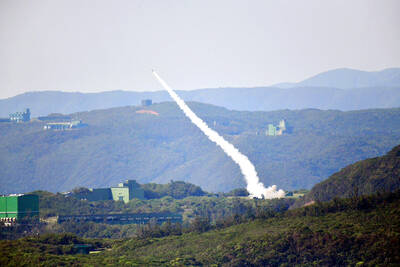
SHOT IN THE ARM: The new system can be integrated with Avenger and Stinger missiles to bolster regional air defense capabilities, a defense ministry report said Domestically developed Land Sword II (陸射劍二) missiles were successfully launched and hit target drones during a live-fire exercise at the Jiupeng Military Base in Pingtung County yesterday. The missiles, developed by the Chungshan Institute of Science and Technology (CSIST), were originally scheduled to launch on Tuesday last week, after the Tomb Sweeping Day holiday long weekend, but were postponed to yesterday due to weather conditions. Local residents and military enthusiasts gathered outside the base to watch the missile tests, with the first one launching at 9:10am. The Land Sword II system, which is derived from the Sky Sword II (天劍二) series, was turned


 RSS
RSS