


Moscow and Washington can see a marked improvement in mutual ties as past mistrust is swept aside, Russian Foreign Minister Sergei Lavrov said in an article published yesterday, pledging renewed efforts for a new nuclear arms reduction deal.
“The key to new ties between our countries is reconstruction of trust undermined in past years, and it will require joint efforts in overcoming negative legacies ... Interaction, compromise, give-and-take is important here,” Lavrov wrote in the Rossiyskaya Gazeta daily.
“We will honestly strive for a timely and full-fledged replacement of the START [Strategic Arms Reduction Treaty] treaty, which would provide strategic security on the basis of admission that strategic aggressive and defensive weapons are irreversibly linked,” Lavrov wrote.
“We know that it will require overcoming the resistance of certain forces within the United States which cannot, by inertia, imagine an equal partnership with Russia,” the minister warned.
Earlier, Lavrov said that efforts to clinch a new Russian-US nuclear disarmament deal this year have advanced and negotiators will report to the two countries’ leaders by the time Russian President Dmitry Medvedev and US President Barack Obama meet at a G20 summit this month.
During Obama’s landmark visit to Moscow in July, he and Medvedev agreed to hammer out a new nuclear arms reduction pact to replace the 1991 START, preferably by the time it expires on Dec. 5.
A declaration signed by Medvedev and Obama at their Moscow meeting fixed no deadline for agreement on a new deal and only instructed negotiators to complete the work as quickly as possible.
“The crisis of trust in our relations with the West as a whole lay in the conflict of expectations as there was no common understanding of what the end of the Cold War stood for. That is where all the misunderstanding came from,” Lavrov said.
However, as “we are wiser now” the anti-US sentiments in Russia also would give way, as “once the reasons for such an attitude vanish, so shall Russian feelings toward America change, and they already do,” Lavrov said.

Crowds in Bangladesh are flocking to snap photographs with an unlikely social media star — an albino buffalo with flowing blond hair nicknamed “Donald Trump” that is due to be sacrificed within days. Owner Zia Uddin Mridha, 38, said his brother named the 700kg bull over its flowing helmet of hair resembling the signature look of the US president. “My younger brother picked this name because of the buffalo’s extraordinary hair,” he said at his farm in Narayanganj, just outside the capital, Dhaka. Mridha said that a constant stream of curious visitors — social media fans, onlookers and children — have come throughout
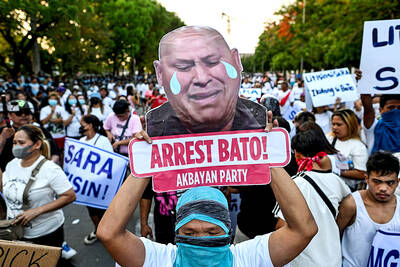
The Philippines said it has asked the country’s Supreme Court to allow it to arrest former Philippine president Rodrigo Duterte’s chief drug war enforcer to stand trial in an international tribunal. The International Criminal Court (ICC) last week unsealed an arrest warrant against Philippine Senator Ronald dela Rosa, accusing him along with Duterte and other “coperpetrators” of the “crime against humanity of murder.” Dela Rosa briefly sought refuge in the Philippine Senate last week while asking the Philippine Supreme Court to stop an ongoing attempt by government agents to arrest him. “By his own conduct, he has placed himself outside the protection of

It began as a satirical online project. Now millions of young people in India are flocking to it as an outlet for their frustration. A parody political party called the Cockroach Janta Party, with the insect as its symbol, has exploded across India’s social media by turning absurdist humor into protest. Memes and short videos mocking corruption, joblessness and political dysfunction have flooded social media sites, where millions of users are embracing the cockroach — known for its ability to survive harsh conditions — as a tongue-in-cheek symbol of endurance. The online movement’s rise has been unusually rapid. The Cockroach Janta Party (CJP)
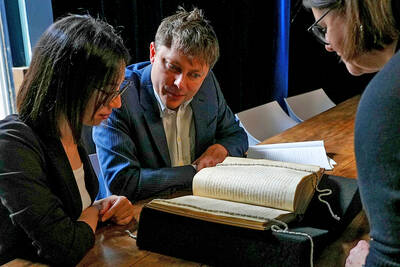
The researchers in Ireland looked at their computer screen, marveling at a medieval book tracked down in a Roman library. They flipped through its digitized pages and found their sought-after treasure: the oldest surviving English poem. “We were extremely surprised. We were speechless. We couldn’t believe our eyes when we first saw that,” said Elisabetta Magnanti, a visiting research fellow at Trinity College Dublin’s school of English. The poem was also within the main body of Latin text, she said, calling it “extraordinary.” Composed in Old English by a Northumbrian agricultural worker in the 7th century, Caedmon’s Hymn appears within some copies of


 RSS
RSS