


In a quiet corner of east Berlin lies Europe's biggest Jewish cemetery, a sprawling but dilapidated testament to a once-thriving community and the gaping hole left by its annihilation in the Holocaust.
Berlin authorities and Jewish leaders have now joined forces to win a place for Weissensee Cemetery on UNESCO's World Heritage List.
Though considered a long shot, campaigners say it is a last hope to raise funds to shore up a century-old site where crumbling headstones sit among mausolea by famed Bauhaus architects Ludwig Mies van der Rohe and Walter Gropius.
"The unique importance of Weissensee is not only its remarkable artistic treasures but also its inextricable link with the history of Berlin's Jews," said Hermann Simon, director of the Centrum Judaicum foundation for Jewish history and culture.
"It is really a mirror image of the history of Berlin's Jews in all its turbulence. And it shows the intertwined histories of Berlin and its Jews," he said.
The cemetery holds 115,600 graves that stretch over a swathe of property equivalent to 86 soccer pitches, now littered with rusting iron, potholed paths and an ancient drainage system.
A stroll through the site offers moving and often chilling reminders of the past.
Some headstones bear silent witness to unspeakable tragedy, like those of Regina and Fritz Weiss, who, trapped in Nazi-era Berlin as the genocidal campaign gathered pace, killed themselves and their three daughters Ruth, 11, Doris, 4, and baby Ursula on March 5, 1943.
"Here my beloved sister found peace after horrible persecution by the Nazis," reads the epitaph of Gertrud Setzkorn who died in Berlin on Jan. 27, 1944, one year to the day before the liberation of the Auschwitz death camp.
"Here rests with God the woman I loved above everything, my devoted wife, my heroic comrade in the hardest of times," reads another, for Irmgard Loewenberg, who died on Sept. 6, 1950, five years after World War II.
Modest grave markers mix with more elaborate memorials to the pillars of early 20th century Berlin society -- merchants, professors, doctors, resistance fighters and rabbis.
"When I walk through the cemetery I am reminded I am part of a long history that might have ended but instead endured," said Simon, who said he represents the 12th generation of his Jewish family in Berlin.
The Weissensee graveyard opened in 1880 as the Jewish community in Berlin outgrew smaller cemeteries that were closer to the city center.
It boasts a neo-Italian Renaissance entry hall and came to include outstanding gravestones and mausolea, many in the delicate Art Nouveau style of the late 19th and early 20th century. In the 1920s there were even plans to expand the enormous cemetery for fear it would soon be full.
Because the Jewish faith has a tradition of maintaining graves for an eternity, it normally falls to the next generations to ensure their preservation. But as the population vanished and Jewish institutions were destroyed, the site fell into disrepair.
During the Nazi period, some Jews learned gardening there to prepare for a new life in exile in "Palestine." Later, some hid in the grounds from the Gestapo.
In the 1930s as the Nazis opened the first concentration camps on German soil, the cremated remains of dead prisoners were returned to family members, who could collect them in exchange for a fee. About 400 of those urns can be seen at Weissensee.
When the genocidal campaign began in earnest in the 1940s, relatives still in Berlin placed headstones on top of hollow graves in memory of their deported loved ones, whose fates were unknown but presumed.
The figures paint a shocking picture. About 56,000 Berlin Jews were deported to the camps and never returned. Thousands more fled the country. By the war's end the community had shrunk to 1,500.
The cemetery's inspector, Ron Kohls, said there were now about 40 burials per year, the fees for which only begin to cover Weissensee's costs.
Simon and Kohls said although they knew UNESCO would not provide funds to preserve the cemetery and a decision on its acceptance to the heritage list would not be made before 2016, the initiative could help it attract donations.
"This cemetery is part of German heritage. If the Jewish community as it was had survived or the Germans had taken better care of it, it would not be in this condition. But now there is still a chance," Kohls said. "I see the cemetery as a sleeping beauty waiting to be kissed awake."

Republican US lawmakers on Friday criticized US President Joe Biden’s administration after sanctioned Chinese telecoms equipment giant Huawei unveiled a laptop this week powered by an Intel artificial intelligence (AI) chip. The US placed Huawei on a trade restriction list in 2019 for contravening Iran sanctions, part of a broader effort to hobble Beijing’s technological advances. Placement on the list means the company’s suppliers have to seek a special, difficult-to-obtain license before shipping to it. One such license, issued by then-US president Donald Trump’s administration, has allowed Intel to ship central processors to Huawei for use in laptops since 2020. China hardliners
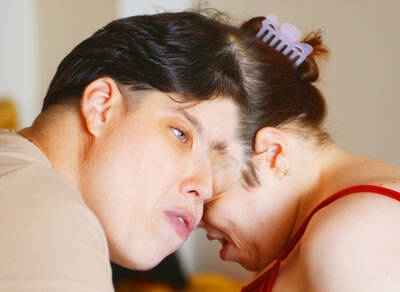
Conjoined twins Lori and George Schappell, who pursued separate careers, interests and relationships during lives that defied medical expectations, died this month in Pennsylvania, funeral home officials said. They were 62. The twins, listed by Guinness World Records as the oldest living conjoined twins, died on April 7 at the Hospital of the University of Pennsylvania, obituaries posted by Leibensperger Funeral Homes of Hamburg said. The cause of death was not detailed. “When we were born, the doctors didn’t think we’d make 30, but we proved them wrong,” Lori said in an interview when they turned 50, the Philadelphia Inquirer reported. The
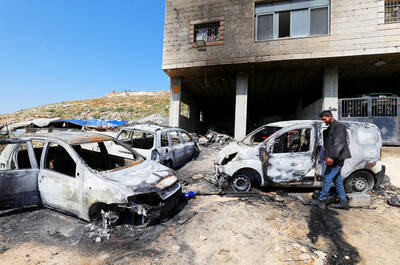
RAMPAGE: A Palestinian man was left dead after dozens of Israeli settlers searching for a missing 14-year-old boy stormed a village in the Israeli-occupied West Bank US President Joe Biden on Friday said he expected Iran to attack Israel “sooner, rather than later” and warned Tehran not to proceed. Asked by reporters about his message to Iran, Biden simply said: “Don’t,” underscoring Washington’s commitment to defend Israel. “We are devoted to the defense of Israel. We will support Israel. We will help defend Israel and Iran will not succeed,” he said. Biden said he would not divulge secure information, but said his expectation was that an attack could come “sooner, rather than later.” Israel braced on Friday for an attack by Iran or its proxies as warnings grew of
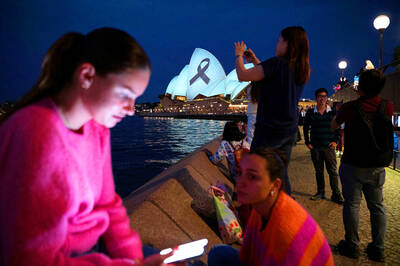
A prominent Christian leader has allegedly been stabbed at the altar during a Mass yesterday in southwest Sydney. Bishop Mar Mari Emmanuel was saying Mass at Christ The Good Shepherd Church in Wakeley just after 7pm when a man approached him at the altar and allegedly stabbed toward his head multiple times. A live stream of the Mass shows the congregation swarm forward toward Emmanuel before it was cut off. The church leader gained prominence during the COVID-19 pandemic, amassing a large online following, Officers attached to Fairfield City police area command attended a location on Welcome Street, Wakeley following reports a number


 RSS
RSS