


The disgraced South Korean scientist who falsely claimed breakthroughs in creating stem cells from cloned human embryos plans to open a new lab and resume research next month, his lawyer said yesterday.
However, the move by Hwang to resume work on embryonic stem cells faces legal hurdles because he is no longer authorized to conduct such research in South Korea.
Hwang Woo-suk has secured enough private funding to open a laboratory in Seoul early next month, said his lawyer Lee Geon-haeng.
"Dr Hwang feels that the only way to win people's forgiveness and reclaim his honor is to resume research and show accomplishments," Lee said. "He's executing his plans very carefully in an effort not to stir up any misunderstanding."
The prestigious Seoul National University, where Hwang used to work, fired him earlier this year after concluding that his claims to have created the world's first stem cells from cloned human embryos were fabricated.
Hwang has admitted inflating some data for his research claims, published by prestigious international journals in 2004 and 2005. However, he has maintained that he has the technology to clone embryonic stem cells and was deceived by underlings.
Hwang will try to do his research "as long as it is permitted legally," Lee said.
South Korea's Health Ministry has withdrawn Hwang's research license, preventing him from cloning human embryos or receiving eggs for such work.
"By law, Hwang won't be able to start such research again," said Kim Young-ho, a ministry official.
Hwang and other researchers on his former SNU team will try to replicate the cloning of embryonic stem cells at their new lab, but are concerned whether they will be able to get human eggs for research, Lee said.
A trained veterinarian, Hwang had been treated as a national hero in South Korea, and still draws a group of dedicated supporters who stage occasional demonstrations in his honour.
He went on trial this month for allegedly accepting 2 billion won (US$2.1 million) in private donations based on the outcome of the falsified research and embezzling about 800 million won in private and government research funds.
Hwang also is accused of buying human eggs, a violation of the country's bioethics law.

Republican US lawmakers on Friday criticized US President Joe Biden’s administration after sanctioned Chinese telecoms equipment giant Huawei unveiled a laptop this week powered by an Intel artificial intelligence (AI) chip. The US placed Huawei on a trade restriction list in 2019 for contravening Iran sanctions, part of a broader effort to hobble Beijing’s technological advances. Placement on the list means the company’s suppliers have to seek a special, difficult-to-obtain license before shipping to it. One such license, issued by then-US president Donald Trump’s administration, has allowed Intel to ship central processors to Huawei for use in laptops since 2020. China hardliners
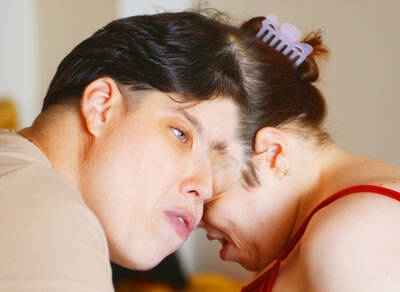
Conjoined twins Lori and George Schappell, who pursued separate careers, interests and relationships during lives that defied medical expectations, died this month in Pennsylvania, funeral home officials said. They were 62. The twins, listed by Guinness World Records as the oldest living conjoined twins, died on April 7 at the Hospital of the University of Pennsylvania, obituaries posted by Leibensperger Funeral Homes of Hamburg said. The cause of death was not detailed. “When we were born, the doctors didn’t think we’d make 30, but we proved them wrong,” Lori said in an interview when they turned 50, the Philadelphia Inquirer reported. The

RAMPAGE: A Palestinian man was left dead after dozens of Israeli settlers searching for a missing 14-year-old boy stormed a village in the Israeli-occupied West Bank US President Joe Biden on Friday said he expected Iran to attack Israel “sooner, rather than later” and warned Tehran not to proceed. Asked by reporters about his message to Iran, Biden simply said: “Don’t,” underscoring Washington’s commitment to defend Israel. “We are devoted to the defense of Israel. We will support Israel. We will help defend Israel and Iran will not succeed,” he said. Biden said he would not divulge secure information, but said his expectation was that an attack could come “sooner, rather than later.” Israel braced on Friday for an attack by Iran or its proxies as warnings grew of
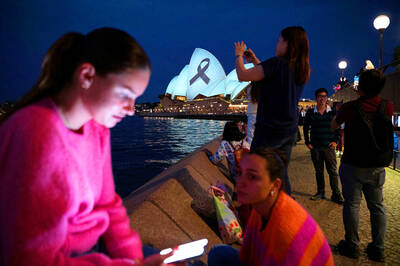
A prominent Christian leader has allegedly been stabbed at the altar during a Mass yesterday in southwest Sydney. Bishop Mar Mari Emmanuel was saying Mass at Christ The Good Shepherd Church in Wakeley just after 7pm when a man approached him at the altar and allegedly stabbed toward his head multiple times. A live stream of the Mass shows the congregation swarm forward toward Emmanuel before it was cut off. The church leader gained prominence during the COVID-19 pandemic, amassing a large online following, Officers attached to Fairfield City police area command attended a location on Welcome Street, Wakeley following reports a number


 RSS
RSS