


EU foreign ministers were to meet in Luxembourg yesterday with the launch of substantive membership talks with Turkey in jeopardy over a continuing dispute over the recognition of Cyprus.
Eight months after the vast mostly Muslim country won a symbolic green light to start negotiations on joining the bloc, the ministers hope to approve the opening of the first of 35 policy "chapters" of concrete discussions.
However they will first have to overcome the latest dispute centred on the Mediterranean island divided between Greek and Turkish Cypriots.
Internationally-recognized Greek Cyprus joined the EU in 2004, and has resisted approving the opening of talks until Turkey recognizes the Mediterranean island state and fully implements the so-called Ankara protocol, diplomats said.
"The Cypriots want to highlight the issue and have a political discussion on this question of recognition, which has nothing to do with the contents of the chapter," said one EU diplomat.
Turkish Foreign Minister Abdullah Gul was expected in Luxembourg Monday, hoping to smile for the cameras and shake hands with his EU counterparts at the launch of accession talks.
But on Sunday there were signals in Ankara that Gul may snub the meeting if there is no agreement on the Cyprus issue.
"We are going to wait for a final decision to be taken [by the EU] before getting on the plane," a Turkish diplomat told reporters on condition of anonymity.
Cyprus has been divided since 1974 when Turkey occupied the northern third in response to an Athens-engineered Greek Cypriot coup seeking to unite the island with Greece.
The Greek Cypriot government in Nicosia wants to include phrases explicitly putting pressure on Turkey to recognize its sovereignty, and fully implement the Ankara protocol, an accord between Turkey and the EU which notably calls for free access to ports and airports -- still not available to Cypriot ships and planes in Turkey.
The Cypriot government on Saturday was keeping its cards close to its chest over the possible use of its veto to block the opening of the talks.
While yesterday's talks could take some time to resolve the issue, few expect Cyprus to scupper the whole process.
"I don't think they really would block a chapter of which the substance is very limited," one diplomat said.
The talks are at least expected to go ahead with Croatia, which was given a green light at the same time as Turkey, although only after being delayed for half a year as a result of failure to capture a key war crimes suspect.

Republican US lawmakers on Friday criticized US President Joe Biden’s administration after sanctioned Chinese telecoms equipment giant Huawei unveiled a laptop this week powered by an Intel artificial intelligence (AI) chip. The US placed Huawei on a trade restriction list in 2019 for contravening Iran sanctions, part of a broader effort to hobble Beijing’s technological advances. Placement on the list means the company’s suppliers have to seek a special, difficult-to-obtain license before shipping to it. One such license, issued by then-US president Donald Trump’s administration, has allowed Intel to ship central processors to Huawei for use in laptops since 2020. China hardliners
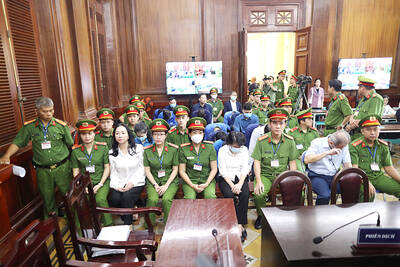
A top Vietnamese property tycoon was on Thursday sentenced to death in one of the biggest corruption cases in history, with an estimated US$27 billion in damages. A panel of three hand-picked jurors and two judges rejected all defense arguments by Truong My Lan, chair of major developer Van Thinh Phat, who was found guilty of swindling cash from Saigon Commercial Bank (SCB) over a decade. “The defendant’s actions ... eroded people’s trust in the leadership of the [Communist] Party and state,” read the verdict at the trial in Ho Chi Minh City. After the five-week trial, 85 others were also sentenced on

‘DELUSIONAL’: Targeting the families of Hamas’ leaders would not push the group to change its position or to give up its demands for Palestinians, Ismail Haniyeh said Israeli aircraft on Wednesday killed three sons of Hamas’ top political leader in the Gaza Strip, striking high-stakes targets at a time when Israel is holding delicate ceasefire negotiations with the militant group. Hamas said four of the leader’s grandchildren were also killed. Ismail Haniyeh’s sons are among the highest-profile figures to be killed in the war so far. Israel said they were Hamas operatives, and Haniyeh accused Israel of acting in “the spirit of revenge and murder.” The deaths threatened to strain the internationally mediated ceasefire talks, which appeared to gain steam in recent days even as the sides remain far
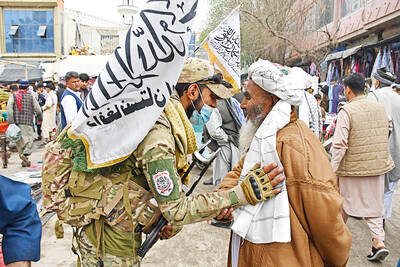
The Taliban’s reclusive supreme leader made a rare public appearance yesterday, an Afghan government spokesman said, leading thousands of worshipers in prayers marking Eid al-Fitr. Hibatullah Akhundzada has made only a handful of public appearances since inheriting the leadership of the Taliban in 2016 and leading the movement back to power with the withdrawal of US forces in 2021. Taliban government spokesman Zabihullah Mujahid said prayer in the largest mosque in Kandahar was “performed under the leadership of the supreme leader.” In a statement on X, he said the early-morning service “was attended by thousands of compatriots” in the southern province considered the


 RSS
RSS