


A searing drought has killed dozens of wild animals in Kenya and neighboring Tanzania, and has partially disrupted the annual migration of wildebeests and zebras between the two East African nations, conservation officials said.
Maasai warriors and others are driving tens of thousands of cattle inside Kenya's wildlife sanctuaries in search of pastures, browse and water -- risking attacks by wild animals, Kenya Wildlife Service spokeswoman Connie Maina said on Saturday.
The incursion also threatens to spread diseases to wildlife whose immune systems are not used to infections carried by domesticated animals, Maina said.
The drought has so far killed at least 60 hippopotamuses in Kenya's wildlife sanctuaries. The animals -- the third-largest living land mammals, after elephants and white rhinos -- need large quantities of water or mud to cool their bodies, which can weigh up to 3.2 tonnes.
"Whenever there is a drought, the first casualties are usually hippos who live in the water," Maina said.
Some 40 endangered Grevys zebra -- the largest, wildest and most untamable of the three zebra species remaining in Africa -- have died from anthrax near the Samburu Game Reserve, Maina said.
Natural anthrax is common in parts of Africa, where its bacillus spores can live for decades in dry soil and are ingested by animals rummaging for vegetation during droughts.
Hundreds of buffaloes, water bucks, elephants and other large animals that need plenty of water are suffering in the drought, wildlife officials in Kenya and Tanzania said.
"We see the physical appearance of the big herbivores like elephants and buffaloes getting worse," said Samson Lenjir, deputy senior warden of Kenya's Maasai Mara Game Reserve. "The situation is expected to get worse because the rains are expected in mid-March."
The drought has partially disrupted the migration of more than 1.5 million wildebeests, zebras and other herbivores from the Maasai Mara to Tanzania's fabled Serengeti National Park.
The annual migration has been described as the most spectacular wildlife spectacle on earth.
The animals thunder into the Serengeti plains to feed off the new grass and to calve "because the grass is more nutritious, with a lot of calcium, which is crucial for milk production," said Titus Mlengeya, chief veterinary officer with the Tanzania National Parks Authority.
The animals migrate into the Serengeti through the western, central and eastern corridors. The rains, however, ended prematurely along all routes except for the west, the only area where animals have calved well, wildlife officials said.
The rain failure triggered a critical shortage of pastures and water for the large herds of animals that had begun to calf.

‘IN A DIFFERENT PLACE’: The envoy first visited Shanghai, where he attended a Chinese basketball playoff match, and is to meet top officials in Beijing tomorrow US Secretary of State Antony Blinken yesterday arrived in China on his second visit in a year as the US ramps up pressure on its rival over its support for Russia while also seeking to manage tensions with Beijing. The US diplomat tomorrow is to meet China’s top brass in Beijing, where he is also expected to plead for restraint as Taiwan inaugurates president-elect William Lai (賴清德), and to raise US concerns on Chinese trade practices. However, Blinken is also seeking to stabilize ties, with tensions between the world’s two largest economies easing since his previous visit in June last year. At the
Nearly half of China’s major cities are suffering “moderate to severe” levels of subsidence, putting millions of people at risk of flooding, especially as sea levels rise, according to a study of nationwide satellite data released yesterday. The authors of the paper, published by the journal Science, found that 45 percent of China’s urban land was sinking faster than 3mm per year, with 16 percent at more than 10mm per year, driven not only by declining water tables, but also the sheer weight of the built environment. With China’s urban population already in excess of 900 million people, “even a small portion

UNSETTLING IMAGES: The scene took place in front of TV crews covering the Trump trial, with a CNN anchor calling it an ‘emotional and unbelievably disturbing moment’ A man who doused himself in an accelerant and set himself on fire outside the courthouse where former US president Donald Trump is on trial has died, police said yesterday. The New York City Police Department (NYPD) said the man was declared dead by staff at an area hospital. The man was in Collect Pond Park at about 1:30pm on Friday when he took out pamphlets espousing conspiracy theories, tossed them around, then doused himself in an accelerant and set himself on fire, officials and witnesses said. A large number of police officers were nearby when it happened. Some officers and bystanders rushed
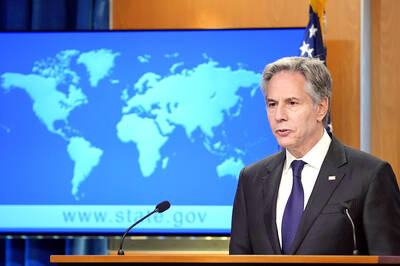
Beijing is continuing to commit genocide and crimes against humanity against Uyghurs and other Muslim minorities in its western Xinjiang province, U.S. Secretary of State Antony Blinken said in a report published on Monday, ahead of his planned visit to China this week. The State Department’s annual human rights report, which documents abuses recorded all over the world during the previous calendar year, repeated language from previous years on the treatment of Muslims in Xinjiang, but the publication raises the issue ahead of delicate talks, including on the war in Ukraine and global trade, between the top U.S. diplomat and Chinese


 RSS
RSS