


The White House was beset by the "fog of war" in the crucial days immediately after Hurricane Katrina, leaving it unable to respond properly to the unfolding catastrophe, Congressional investigators said on Friday after getting the most detailed briefing yet on how President George W. Bush's staff had handled the events.
The closed-door briefing, attended mostly by House committee aides, was provided by Kenneth Rapuano, who as Bush's deputy domestic security adviser was the senior official in charge of managing storm events at the White House when the hurricane struck. The meeting was a compromise, a result of White House objections to the investigators' requests for copies of e-mail messages and other correspondence from top presidential aides.
Rapuano, those present said, acknowledged that he left the White House at about 10pm on Monday, Aug. 29, the night the storm hit. Some two hours later, the White House received a report indicating that a major levee in New Orleans had been breached and that most of the city had already been flooded. The report was sent by an official of the Federal Emergency Management Agency (FEMA) who had flown over the city late that afternoon.
But Rapuano said that before he left that night, the White House received a separate report from the Army Corps of Engineers saying an evaluation of the levees was still under way.
The White House, Rapuano said, finally received confirmation about the levee breach about 6am on Tuesday, the morning after it occurred. But even then, it does not appear that word got immediately to Bush, who was on vacation and who later said that he had had a "sense of relaxation" and had thought the city had "dodged a bullet."
"We are left with a picture of a White House that was plagued by the fog of war," said David Marin, the Republican staff director to the House committee investigating the government's response to the hurricane. "The committee is likely to find a disturbing inability by the White House to de-conflict and analyze information -- and that had consequences."
Trent Duffy, the deputy White House press secretary, who also attended the briefing, acknowledged that all levels of the government had suffered from a lack of clarity about the events as they developed.
"There was a lack of situational awareness at all levels," Duffy said in an interview on Friday. "That is one of the biggest lessons everyone in emergency preparedness has learned because of the storm."
With the House not yet in session, only one lawmaker from the investigative committee -- its chairman, Tom Davis, a Republican -- was present for the briefing. Rapuano told him and the staff investigators that the White House role had been to monitor the situation. FEMA and its parent, the Department of Homeland Security, were operationally in charge, he said.
The investigators expressed frustration that the White House did not seem to have been more actively involved. But Duffy, echoing a point made by Rapuano, said: "The White House should not be making combat decisions in Iraq. The same is true for a domestic emergency response."
The committee staff members also asked why it had taken Bush until the following Saturday, nearly a week after the storm, to order a large number of federal troops to the Gulf Coast.
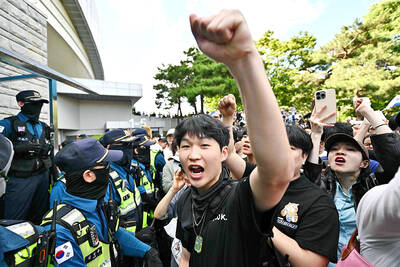
‘ABSURD MISTAKE’: The election commission said that there had been a failure to anticipate turnout after 14 polling stations ran short of ballot papers South Korean riot police yesterday cleared protesters from a Seoul polling station after a 35-hour blockade sparked by a shortage of ballot papers during local elections earlier this week. Wednesday’s election was the first nationwide vote since South Korean President Lee Jae-myung took office following the ouster of Yoon Suk-yeol over his short-lived martial law declaration. Lee’s ruling Democratic Party swept most races, but failed to flip the crucial Seoul mayoral seat. The South Korean National Election Commission apologized, blaming a failure to anticipate turnout after 14 polling stations in Seoul ran short of ballot papers. Some polling stations stayed open until 10pm to

France experienced its hottest spring on record, the French weather service said on Tuesday, after an exceptional early heat wave that also broke highs for the season in England and Wales. Meteo-France said the average nationwide temperature over March to May was 13.8°C — about 1.7°C above the norm, and surpassing records set in 2011 and 2020. “The warmest spring since records began in 1900,” it said in a bulletin. All three months were warmer than average, but the onset of an “unprecedented heatwave” late last month pushed the mercury to highs typically seen at the height of the summer. “Our country had never
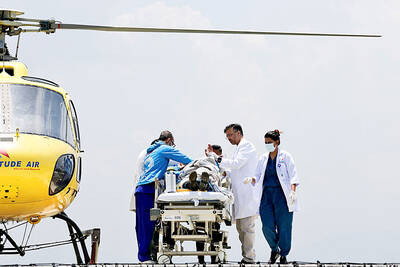
A Sherpa guide was found crawling to base camp on Mount Everest a week after he went missing and was reunited with his family, who had given up hope he would return. Dawa Sherpa was last seen on Friday last week descending the mountain, but he did not reach base camp even though his client did. The pair were among the last climbers on the mountain as the climbing season came to an end and the route was dismantled. Dawa was located by a cleaning crew on Thursday morning as he was crawling down the snowy slopes around the Khumbu Icefall, just above
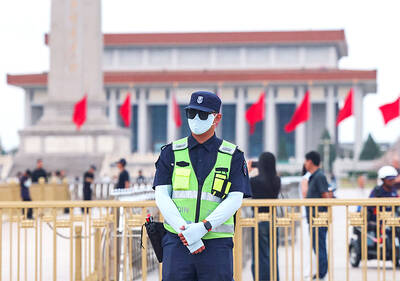
Chinese authorities are snuffing out any remembrance of the deadly 1989 military crackdown on student-led pro-democracy protests in Tiananmen Square, which happened 37 years ago yesterday, in a further tightening of a years-long campaign to erase what happened from public memory. Police told relatives of the victims they would not be allowed to visit a cemetery in Beijing on the anniversary of the crackdown, a person with knowledge of the matter said. Relatives of the victims visited the cemetery on the anniversary for more than 30 years to read memorial statements with police keeping watch, Amnesty International said. Hundreds of people,


 RSS
RSS