


With millions likely suffering mental trauma and thousands disfigured or disabled, the aftershocks of the earthquake in Pakistan and India will be felt for decades to come, doctors and psychologists warn.
Those who survived the quake and manage to find shelter, warmth and food before the onset of winter in the mountains of Kashmir are still a long way off leading anything resembling normal lives, they say.
The short-term prognosis makes bleak enough reading: at least 53,000 people were killed, half a million are still trapped in mountainous villages and hamlets with little more than plastic sheets to keep out the icy cold, millions are homeless, and at least 80,000 are injured.
Jan Egeland, the UN's emergency relief coordinator, has described the immediate fallout from the quake as "worse than the tsunami."
But looking further down the road, the future for Kashmiris in the Pakistani zone of the divided Himalayan territory looks not much better.
Kashif Ikram, a Karachi surgeon working at a field hospital in the Pakistan Kashmiri capital Muzaffarabad, feared the impact of the 7.6-magnitude quake would be felt for a long, long time.
"Kashmir will change dramatically. It will not be the same again," Ikram said. "It will take years for [Muzafarrabad] to be rebuilt, and by then many people will have found new homes.
"This place holds too many bad memories. Most survivors are suffering some form of mental trauma. It will take ages for things to normalize," he said.
Experts in both countries warn that the mental scars may take years to heal and that many families will remain dysfunctional unless long-term rehabilitation programs are launched.
The Times of India newspaper yesterday quoted the case of Kashmiri engineer Saneep Gigoo, 25, who despite taking sleeping pills sleeps fitfully, and who during the day believes the furniture in his room is rattling, that the ceiling is falling and the floor is slipping beneath his feet.
Psychologists say there are hundreds of thousands, if not millions, like Gigoo who are suffering trauma and are gripped by fear.
"The anxiety will continue, and only with time -- and in the case of chronic patients, psychiatric and medical help -- will it wane," neurologist Sushil Razdan said.

Republican US lawmakers on Friday criticized US President Joe Biden’s administration after sanctioned Chinese telecoms equipment giant Huawei unveiled a laptop this week powered by an Intel artificial intelligence (AI) chip. The US placed Huawei on a trade restriction list in 2019 for contravening Iran sanctions, part of a broader effort to hobble Beijing’s technological advances. Placement on the list means the company’s suppliers have to seek a special, difficult-to-obtain license before shipping to it. One such license, issued by then-US president Donald Trump’s administration, has allowed Intel to ship central processors to Huawei for use in laptops since 2020. China hardliners
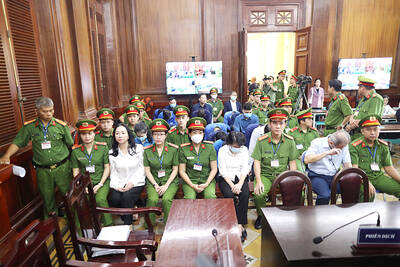
A top Vietnamese property tycoon was on Thursday sentenced to death in one of the biggest corruption cases in history, with an estimated US$27 billion in damages. A panel of three hand-picked jurors and two judges rejected all defense arguments by Truong My Lan, chair of major developer Van Thinh Phat, who was found guilty of swindling cash from Saigon Commercial Bank (SCB) over a decade. “The defendant’s actions ... eroded people’s trust in the leadership of the [Communist] Party and state,” read the verdict at the trial in Ho Chi Minh City. After the five-week trial, 85 others were also sentenced on

‘DELUSIONAL’: Targeting the families of Hamas’ leaders would not push the group to change its position or to give up its demands for Palestinians, Ismail Haniyeh said Israeli aircraft on Wednesday killed three sons of Hamas’ top political leader in the Gaza Strip, striking high-stakes targets at a time when Israel is holding delicate ceasefire negotiations with the militant group. Hamas said four of the leader’s grandchildren were also killed. Ismail Haniyeh’s sons are among the highest-profile figures to be killed in the war so far. Israel said they were Hamas operatives, and Haniyeh accused Israel of acting in “the spirit of revenge and murder.” The deaths threatened to strain the internationally mediated ceasefire talks, which appeared to gain steam in recent days even as the sides remain far
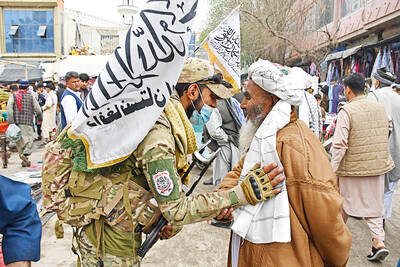
The Taliban’s reclusive supreme leader made a rare public appearance yesterday, an Afghan government spokesman said, leading thousands of worshipers in prayers marking Eid al-Fitr. Hibatullah Akhundzada has made only a handful of public appearances since inheriting the leadership of the Taliban in 2016 and leading the movement back to power with the withdrawal of US forces in 2021. Taliban government spokesman Zabihullah Mujahid said prayer in the largest mosque in Kandahar was “performed under the leadership of the supreme leader.” In a statement on X, he said the early-morning service “was attended by thousands of compatriots” in the southern province considered the


 RSS
RSS