


The first report to cover human-rights abuses committed over the full two-and-a-half decades of war in Afghanistan was released in Kabul on Sunday, identifying militia leaders responsible for some of the worst atrocities since 1978, many of whom are candidates in the national elections scheduled for Sept. 18.
"The point of the report is to name names," said Patricia Gossman, who wrote the 180-page report for an independent research organization, the Afghan Justice Project, set up to document war crimes and financed mainly by the Open Society Institute, founded by the financier George Soros.
"To get information into the public domain is the only tool at this point available in the time we have in the next several months to at least ensure that there is some information about people that we believe have enough serious charges against them, that they should not be considered candidates for these posts," she said.
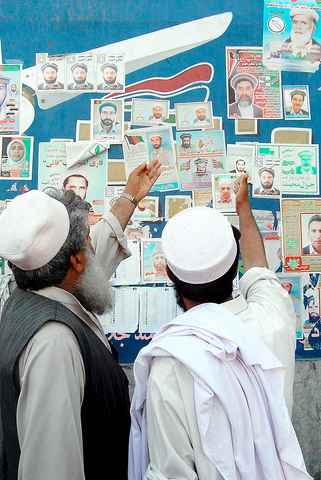
PHOTO: EPA
The report holds some important faction leaders and military commanders who are running for seats in the upper and lower houses of the Afghan National Assembly responsible for commanding troops that committed mass rape, torture and indiscriminate shelling and killing. It implicitly criticizes the policy of the Afghan government and the UN of drawing warlords into politics to try to shift the country from a long history of fractured rule through force.
Afghan law excludes convicted war criminals from holding office, but any such trials are hard to foresee, given the policy of inclusion, as well a struggling judiciary and limited documentation of crimes.
The Afghan Election Commission, which has vetted candidates, announced last week that, after putting 208 candidates on a list for disqualification, it was barring only 11 candidates because of their links to armed groups.
The 11 include only one commander of any significance, said an Afghan human-rights official; the others were mostly mid-level regional commanders.
The report, with many new firsthand interviews with witnesses and victims, focuses on the series of ruling regimes since 1978.
Some of the worst abuses of the entire period of war occurred under Afghan Communist leaders, from April 1978 until December 1979, the report says, with mass arrests and disappearances, summary executions, torture and massacres. The ensuing 10-year occupation by the Soviet Union was characterized by indiscriminate bombing and reprisals against civilians, and widespread arrests, detention and torture. The report names the entire Soviet Politburo and security ministries, as well as Afghan ministers serving during the Soviet period.
Named in particular were Sayyid Muhammad Gulabzoi, who as the interior minister controlled the police force, and Shahnawaz Tanai, who as defense minister was in charge of the Afghan army. Gulabzoi has registered as a candidate for parliament from his home province of Khost. Tanai's newly registered political party is fielding candidates.
The mujahidin factions that took power after the Soviet withdrawal are all blamed in the report for committing atrocities, from the shelling of civilian areas to executions and mass rape of civilians. Faction leaders, as well as individual commanders, are named. One is Abdul Rasul Sayyaf, who holds no official position but retains considerable influence as leader of one of the jihadi parties. Another is Muhammad Mohaqeq, who ran against Hamid Karzai in the presidential election last year. A third is General Abdul Rashid Dostum, who currently holds a ceremonial military position.
The report points out that one of the country's current vice presidents, Karim Khalil, was also a factional leader commander in the early 1990s. And it notes that Hajji Sher Alam, whose men were directly involved in one of the most notorious massacres of 1993 -- at Afshar in western Kabul, where a whole district was flattened amid mass killings and rapes -- was recently appointed governor of Ghazni Pro-vince, south of Kabul. Gossman called his appointment "appalling."

Republican US lawmakers on Friday criticized US President Joe Biden’s administration after sanctioned Chinese telecoms equipment giant Huawei unveiled a laptop this week powered by an Intel artificial intelligence (AI) chip. The US placed Huawei on a trade restriction list in 2019 for contravening Iran sanctions, part of a broader effort to hobble Beijing’s technological advances. Placement on the list means the company’s suppliers have to seek a special, difficult-to-obtain license before shipping to it. One such license, issued by then-US president Donald Trump’s administration, has allowed Intel to ship central processors to Huawei for use in laptops since 2020. China hardliners
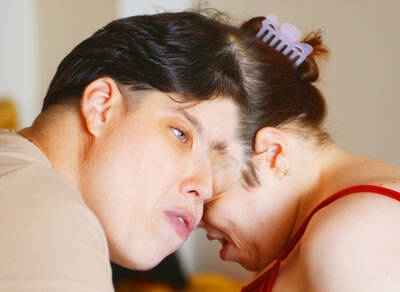
Conjoined twins Lori and George Schappell, who pursued separate careers, interests and relationships during lives that defied medical expectations, died this month in Pennsylvania, funeral home officials said. They were 62. The twins, listed by Guinness World Records as the oldest living conjoined twins, died on April 7 at the Hospital of the University of Pennsylvania, obituaries posted by Leibensperger Funeral Homes of Hamburg said. The cause of death was not detailed. “When we were born, the doctors didn’t think we’d make 30, but we proved them wrong,” Lori said in an interview when they turned 50, the Philadelphia Inquirer reported. The
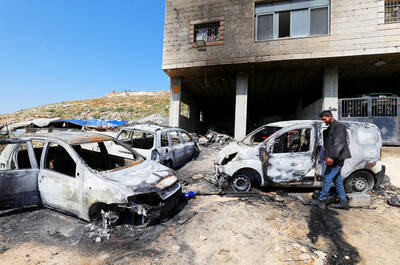
RAMPAGE: A Palestinian man was left dead after dozens of Israeli settlers searching for a missing 14-year-old boy stormed a village in the Israeli-occupied West Bank US President Joe Biden on Friday said he expected Iran to attack Israel “sooner, rather than later” and warned Tehran not to proceed. Asked by reporters about his message to Iran, Biden simply said: “Don’t,” underscoring Washington’s commitment to defend Israel. “We are devoted to the defense of Israel. We will support Israel. We will help defend Israel and Iran will not succeed,” he said. Biden said he would not divulge secure information, but said his expectation was that an attack could come “sooner, rather than later.” Israel braced on Friday for an attack by Iran or its proxies as warnings grew of
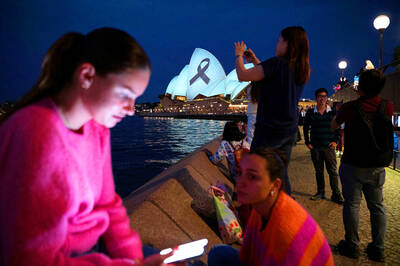
A prominent Christian leader has allegedly been stabbed at the altar during a Mass yesterday in southwest Sydney. Bishop Mar Mari Emmanuel was saying Mass at Christ The Good Shepherd Church in Wakeley just after 7pm when a man approached him at the altar and allegedly stabbed toward his head multiple times. A live stream of the Mass shows the congregation swarm forward toward Emmanuel before it was cut off. The church leader gained prominence during the COVID-19 pandemic, amassing a large online following, Officers attached to Fairfield City police area command attended a location on Welcome Street, Wakeley following reports a number


 RSS
RSS