


Research commissioned by the tobacco conglomerate Philip Morris found that cot death was linked to passive smoking, fuelling the debate on banning smoking in public places as the dangers of "second-hand smoke" become increasingly irrefutable.
The draft report was later modified to say that the links were "difficult to quantify," raising concerns that the tobacco firm sought to influence the findings of the study.
The link between cot death and babies who live in homes where adults smoke has been strengthening over the past decade. This year, a report by the government's scientific committee on tobacco and health said children exposed to cigarette smoke are at "greater risk" of cot death.
The disclosure that the world's largest tobacco firm commissioned research that originally came to this same conclusion will fuel the debate on banning smoking in public places.
The original drafts of the study emerged after researchers from the University of California trawled through thousands of confidential company documents released as a result of lawsuits in the US. Their findings have just been published in the journal Pediatrics.
The report was written by the British toxicology consultant Dr. Frank Sullivan. When his first draft concluded that passive smoking was a possible cause of cot death, or sudden infant death syndrome, company scientists persuaded him to change his mind, supplying him with evidence to suggest that the links were "unproven."
As a result of interventions by Philip Morris -- which makes Marlboro cigarettes -- Sullivan agreed to modify his findings. His final study was published in 2001 in an influential scientific journal without revealing the full role played by the tobacco giant in his report.
The authors claim that the once-secret company documents reveal how the Sullivan study was part of an elaborate attempt by the firm to sway public policy about smoking around children.
In the early 1990s, Philip Morris was trying to counter the view that tobacco smoke could cause cot death. Tobacco bosses feared that such evidence would create a powerful argument for smoke-free areas in the home and public places.
Stan Glantz, professor of medicine at the University of California, claims their investigation reveals the extreme efforts adopted by the tobacco industry to influence public policy. He said: "Their aim was to use this study to subtly manipulate public opinion. By [using] the scientific literature, they can create doubt and confusion among doctors and health officials over the debate about smoking around children."
In 1997, Philip Morris commissioned Sullivan to write a review of all the known risk factors of sudden infant death syndrome. Sullivan was an expert on birth deformities and had advised the British government on the impact of chemicals on human reproduction. There is no suggestion that he was knowingly part of any plan improperly to shift public policy.
For Philip Morris, he was an ideal candidate because he had also been a consultant to the cigarette firm Rothmans and had taken part in tobacco-funded research that had questioned the role played by second-hand smoke in damaging health. A company memo describes him as having "excellent credentials."
Sullivan's consulting fees from Philip Morris were ?800 (US$1500) a day and the company budgeted between US$47,000 and US$94,000 for his study. The contract stated that Sullivan would remain free to publish the final version without restriction by Philip Morris.
Sullivan's original draft concluded that not only does a mother smoking during pregnancy increase the risk of cot death, but so also does exposing a newborn baby to passive smoking. He said: "The evidence overall suggests that both pre-natal and post-natal maternal smoking exert independent effects."
Philip Morris executives were unhappy at this statement and urged Sullivan to make changes that incorporated their detailed comments.
Sullivan's final draft included several amendments suggested by company scientists which played down the role of smoking and particularly the role of second-hand smoke in causing cot death.
At the suggestion of Philip Morris, Sullivan added two paragraphs about a 1999 Tasmanian study of cot death that found no conclusive link between second-hand smoke and cot death. A company scientist told Sullivan: "I think that this paper is extremely important and I also think that, if at all possible, it ought to be included in your review."
After Philip Morris's interventions, Sullivan agreed to change his original conclusion that passive smoking is an independent risk factor for cot death. He argued that, although smoking during pregnancy increased the risk of it happening, the threat of passive smoking was "less well-established."
His final article, which was published in the Journal of Paediatric and Perinatal Epidemiology in 2001, stated the relationship was "difficult to quantify."
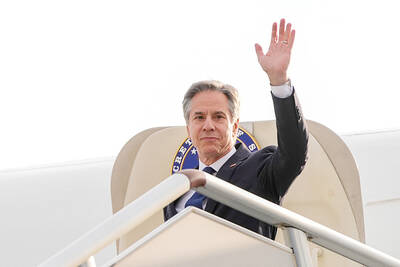
‘IN A DIFFERENT PLACE’: The envoy first visited Shanghai, where he attended a Chinese basketball playoff match, and is to meet top officials in Beijing tomorrow US Secretary of State Antony Blinken yesterday arrived in China on his second visit in a year as the US ramps up pressure on its rival over its support for Russia while also seeking to manage tensions with Beijing. The US diplomat tomorrow is to meet China’s top brass in Beijing, where he is also expected to plead for restraint as Taiwan inaugurates president-elect William Lai (賴清德), and to raise US concerns on Chinese trade practices. However, Blinken is also seeking to stabilize ties, with tensions between the world’s two largest economies easing since his previous visit in June last year. At the
Nearly half of China’s major cities are suffering “moderate to severe” levels of subsidence, putting millions of people at risk of flooding, especially as sea levels rise, according to a study of nationwide satellite data released yesterday. The authors of the paper, published by the journal Science, found that 45 percent of China’s urban land was sinking faster than 3mm per year, with 16 percent at more than 10mm per year, driven not only by declining water tables, but also the sheer weight of the built environment. With China’s urban population already in excess of 900 million people, “even a small portion

UNSETTLING IMAGES: The scene took place in front of TV crews covering the Trump trial, with a CNN anchor calling it an ‘emotional and unbelievably disturbing moment’ A man who doused himself in an accelerant and set himself on fire outside the courthouse where former US president Donald Trump is on trial has died, police said yesterday. The New York City Police Department (NYPD) said the man was declared dead by staff at an area hospital. The man was in Collect Pond Park at about 1:30pm on Friday when he took out pamphlets espousing conspiracy theories, tossed them around, then doused himself in an accelerant and set himself on fire, officials and witnesses said. A large number of police officers were nearby when it happened. Some officers and bystanders rushed
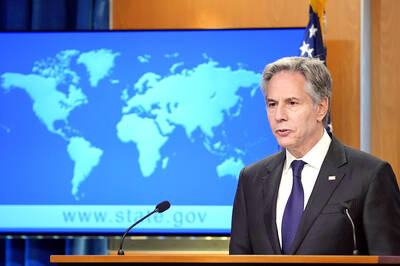
Beijing is continuing to commit genocide and crimes against humanity against Uyghurs and other Muslim minorities in its western Xinjiang province, U.S. Secretary of State Antony Blinken said in a report published on Monday, ahead of his planned visit to China this week. The State Department’s annual human rights report, which documents abuses recorded all over the world during the previous calendar year, repeated language from previous years on the treatment of Muslims in Xinjiang, but the publication raises the issue ahead of delicate talks, including on the war in Ukraine and global trade, between the top U.S. diplomat and Chinese


 RSS
RSS