


A highly critical Senate Intelligence Committee report concludes US intelligence analysts remained objective, but got careless, as they estimated the threat Iraq posed prior to the US-led invasion, officials familiar with the report say.
After a yearlong review, the committee yesterday was releasing more than 100 conclusions on the quality and quantity of the intelligence community's Iraq assessments, including estimates on the former government's purported mobile weapons labs, chemical and biological weapons, nuclear program and unmanned aerial vehicles.
Republicans and Democrats alike on the Senate committee have said their report was a hard-hitting review of the intelligence agencies' performance that would not paint a flattering picture of the CIA.
One US official familiar with the report said it does not charge the agency with losing objectivity but accuses its analysts of not being rigorous or careful in their intelligence assessments.
The report comes as President George W. Bush is deciding when to nominate a permanent replacement for CIA Director George Tenet, whose resignation becomes official tomorrow. Tenet's deputy, John McLaughlin, will then take over.
While it was initially expected that Bush would keep McLaughlin in place through the November election, senior administration officials have indicated Bush wants to find a permanent replacement sooner. Bush said this week he has made no decision.
The Senate report is among a litany of investigations under way into the intelligence community's recent performance. Bush named two commissions to investigate the Sept. 11, 2001, terrorist attacks and US intelligence capabilities regarding weapons of mass destruction.
A joint congressional inquiry already delved into the Sept. 11 attacks, finding numerous mistakes that prevented authorities from stopping al-Qaida. The House Intelligence Committee is also looking into the Iraq weapons estimates, among still other independent reviews.
The Senate report is the first part of a two-phase review, which at times polarized the usually bipartisan Intelligence Committee. Democrats wanted to see the investigation handled in a broad, single phase that would include other issues such as whether senior Bush administration officials misrepresented the analysis provided by the nation's intelligence apparatus as they made the case for war.
Democratic aides say senators will make arguments about the issue of intelligence exaggeration in "alternative views" that will be attached to the report. They hope the information will make clear that continued investigation is a necessity.
Among other partisan disagreements, the Republican-led committee will conclude that analysts were not pressured to change or tailor their views to support arguments for the invasion of Iraq, congressional and other officials said.
But several Democratic lawmakers were to write in their alternative views that some intelligence analysts told the committee they felt a need to emphasize some pieces of evidence at the expense of others, a form of pressure, according to a Democratic congressional aide who spoke on condition of anonymity.
Tenet, who was among hundreds of individuals interviewed by the committee, has publicly asserted that his analysts painted an objective assessment. "No one told us what to say or how to say it," he said in a speech in February at Georgetown University.
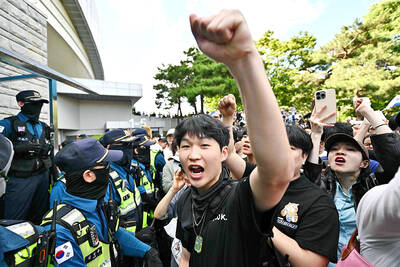
‘ABSURD MISTAKE’: The election commission said that there had been a failure to anticipate turnout after 14 polling stations ran short of ballot papers South Korean riot police yesterday cleared protesters from a Seoul polling station after a 35-hour blockade sparked by a shortage of ballot papers during local elections earlier this week. Wednesday’s election was the first nationwide vote since South Korean President Lee Jae-myung took office following the ouster of Yoon Suk-yeol over his short-lived martial law declaration. Lee’s ruling Democratic Party swept most races, but failed to flip the crucial Seoul mayoral seat. The South Korean National Election Commission apologized, blaming a failure to anticipate turnout after 14 polling stations in Seoul ran short of ballot papers. Some polling stations stayed open until 10pm to

France experienced its hottest spring on record, the French weather service said on Tuesday, after an exceptional early heat wave that also broke highs for the season in England and Wales. Meteo-France said the average nationwide temperature over March to May was 13.8°C — about 1.7°C above the norm, and surpassing records set in 2011 and 2020. “The warmest spring since records began in 1900,” it said in a bulletin. All three months were warmer than average, but the onset of an “unprecedented heatwave” late last month pushed the mercury to highs typically seen at the height of the summer. “Our country had never
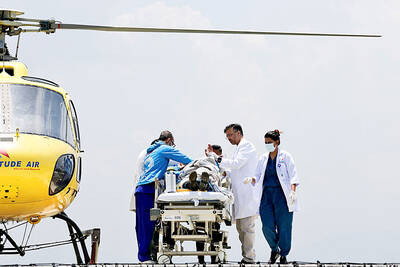
A Sherpa guide was found crawling to base camp on Mount Everest a week after he went missing and was reunited with his family, who had given up hope he would return. Dawa Sherpa was last seen on Friday last week descending the mountain, but he did not reach base camp even though his client did. The pair were among the last climbers on the mountain as the climbing season came to an end and the route was dismantled. Dawa was located by a cleaning crew on Thursday morning as he was crawling down the snowy slopes around the Khumbu Icefall, just above
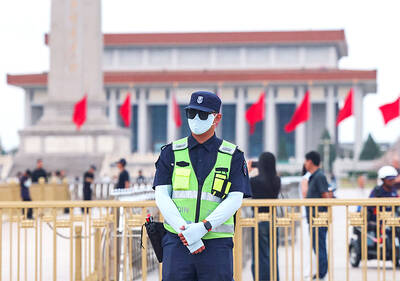
Chinese authorities are snuffing out any remembrance of the deadly 1989 military crackdown on student-led pro-democracy protests in Tiananmen Square, which happened 37 years ago yesterday, in a further tightening of a years-long campaign to erase what happened from public memory. Police told relatives of the victims they would not be allowed to visit a cemetery in Beijing on the anniversary of the crackdown, a person with knowledge of the matter said. Relatives of the victims visited the cemetery on the anniversary for more than 30 years to read memorial statements with police keeping watch, Amnesty International said. Hundreds of people,


 RSS
RSS