


Up to 3.8 million North Koreans -- 17 percent of the country's people -- could be deprived of critical international food aid by the end of winter, the World Food Program (WFP) warned yesterday.
As the first snows fall, 2.2 million are already left out of WFP deliveries because of global cutbacks in donations, the WFP said in a statement. The group expects to have delivered 300,000 tonnes of food aid, only 62 percent of what it originally requested, this year.
The shortfall comes amid a standoff over North Korea's nuclear weapons programs and other disputes that have tested international patience with the communist regime. Japan, once the North's biggest aid donor, has given nothing over the past two years, due in part to nuclear concerns.
Conditions in North Korea were also made worse by the government's recent economic reforms.
A survey conducted late last year in conjunction with the WFP found that 41 percent of North Korean children under age 7 suffered from chronic malnutrition and stunted growth.
Problems are likely to increase next year, the WFP said, because the North's government-run Public Distribution System plans to provide just 300 grams of food per person per day.
The WFP is seeking US$171 million for 485,000 tonnes of food aid for next year.
But if new pledges don't come soon, the number of people not reached by WFP rations is expected to swell to 3.8 million by early next year, the group said.
Recent advances against hunger are at risk from social adjustments unleashed by North Korea's dabbling in free-market economics. Prices have risen while wages have decreased, especially in urban areas outside the capital, Pyongyang.
Nearly half of China’s major cities are suffering “moderate to severe” levels of subsidence, putting millions of people at risk of flooding, especially as sea levels rise, according to a study of nationwide satellite data released yesterday. The authors of the paper, published by the journal Science, found that 45 percent of China’s urban land was sinking faster than 3mm per year, with 16 percent at more than 10mm per year, driven not only by declining water tables, but also the sheer weight of the built environment. With China’s urban population already in excess of 900 million people, “even a small portion

UNSETTLING IMAGES: The scene took place in front of TV crews covering the Trump trial, with a CNN anchor calling it an ‘emotional and unbelievably disturbing moment’ A man who doused himself in an accelerant and set himself on fire outside the courthouse where former US president Donald Trump is on trial has died, police said yesterday. The New York City Police Department (NYPD) said the man was declared dead by staff at an area hospital. The man was in Collect Pond Park at about 1:30pm on Friday when he took out pamphlets espousing conspiracy theories, tossed them around, then doused himself in an accelerant and set himself on fire, officials and witnesses said. A large number of police officers were nearby when it happened. Some officers and bystanders rushed

HYPOCRISY? The Chinese Ministry of Foreign Affairs yesterday asked whether Biden was talking about China or the US when he used the word ‘xenophobic’ US President Joe Biden on Wednesday called for a hike in steel tariffs on China, accusing Beijing of cheating as he spoke at a campaign event in Pennsylvania. Biden accused China of xenophobia, too, in a speech to union members in Pittsburgh. “They’re not competing, they’re cheating. They’re cheating and we’ve seen the damage here in America,” Biden said. Chinese steel companies “don’t need to worry about making a profit because the Chinese government is subsidizing them so heavily,” he said. Biden said he had called for the US Trade Representative to triple the tariff rates for Chinese steel and aluminum if Beijing was
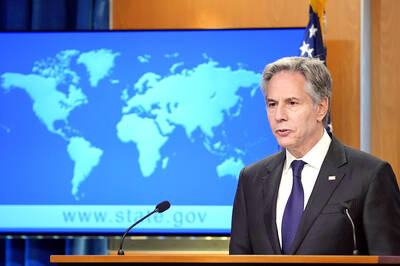
Beijing is continuing to commit genocide and crimes against humanity against Uyghurs and other Muslim minorities in its western Xinjiang province, U.S. Secretary of State Antony Blinken said in a report published on Monday, ahead of his planned visit to China this week. The State Department’s annual human rights report, which documents abuses recorded all over the world during the previous calendar year, repeated language from previous years on the treatment of Muslims in Xinjiang, but the publication raises the issue ahead of delicate talks, including on the war in Ukraine and global trade, between the top U.S. diplomat and Chinese


 RSS
RSS