


The US maintained its dominance in the international arms market last year, especially in sales to developing nations, according to a new congressional report.
The US was the leader in total worldwide sales last year, with about US$13.3 billion, or 45.5 percent of global conventional weapons deals, a rise from US$12.1 billion in 2001. Of that, US$8.6 billion was to developing nations, or about 48.6 percent of conventional arms deals concluded with developing nations last year, according to the report.
Russia was second in sales to the developing world last year, with US$5 billion, followed by France with US$1 billion.
While the report focuses on sales and deliveries of conventional weapons from the industrialized world to poorer nations, it also offers a glimpse into issues like missile proliferation by North Korea and foreign weapons transfers to Iraq.
The new report, Conventional Arms Transfers to Developing Nations, 1995-2002, was sent to the House and Senate this week by the Congressional Research Service, an arm of the Library of Congress. The annual study, written by Richard Grimmett, a specialist in national defense at the research service, is considered the most authoritative resource available to the public on worldwide weapons sales.
From 1999 to last year, there were no deliveries of surface-to-surface missiles to the Middle East from arms makers in the US, Russia, China or Europe, the report said.
But the study says 60 surface-to-surface missiles were delivered to the Middle East by nations in the category "all others," which includes suppliers like Israel, South Africa and North Korea.
US officials, both military and civilian, said Wednesday that North Korea was the source of the surface-to-surface missile deliveries listed in the report, and of 10 anti-ship missiles delivered to the Middle East in that period.
President Bush has increased public pressure on North Korea and Iran over their nuclear programs, and the administration is organizing a number of joint military exercises to train for the interdiction of possible shipments. The goal of these exercises is to make it harder to transmit components of chemical, biological and nuclear weapons -- and the missiles to deliver them.
But difficulties in halting North Korea's missile trade were evident in December, when a North Korean cargo vessel that was not flying a flag was halted off the Horn of Africa by two Spanish warships.
A search revealed 15 Scud missiles hidden beneath the cargo. But the vessel was eventually allowed to sail on with the missiles to its destination in Yemen after officials conceded that neither North Korea nor Yemen had violated any treaties.
In addition to the shipment to Yemen, North Korea is suspected of selling missile technology to Iran and others, Pentagon officials said.
The study says that none of the major arms makers delivered weapons to Iraq from 1999 to last year -- or at least not in amounts exceeding US$50 million, the lowest sales amount included in the study.
But a category of nations labeled "all other European," which includes formerly Communist states in Central and Eastern Europe, delivered about US$100 million worth of weapons to Iraq from 1999 to last year, although the report does not specify the source of the deliveries.
US officials believe Ukraine sold an advanced Kolchuga radar system to Iraq, Pentagon officials said.
Arms deals with developing nations last year totaled US$17.7 billion, more than the US$16.2 billion for 2001 but the second-lowest total for the years 1995 to last year. The report measures sales and deliveries in dollar totals adjusted for inflation, called "constant 2002 dollars."
"Many developing nations have curtailed their expenditures on weaponry primarily because of their limited financial resources," Grimmett wrote in the report. "

Republican US lawmakers on Friday criticized US President Joe Biden’s administration after sanctioned Chinese telecoms equipment giant Huawei unveiled a laptop this week powered by an Intel artificial intelligence (AI) chip. The US placed Huawei on a trade restriction list in 2019 for contravening Iran sanctions, part of a broader effort to hobble Beijing’s technological advances. Placement on the list means the company’s suppliers have to seek a special, difficult-to-obtain license before shipping to it. One such license, issued by then-US president Donald Trump’s administration, has allowed Intel to ship central processors to Huawei for use in laptops since 2020. China hardliners
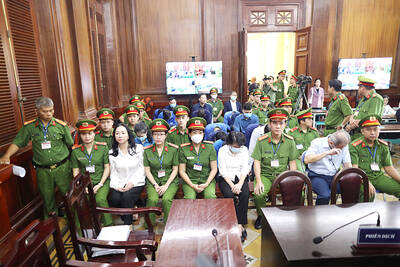
A top Vietnamese property tycoon was on Thursday sentenced to death in one of the biggest corruption cases in history, with an estimated US$27 billion in damages. A panel of three hand-picked jurors and two judges rejected all defense arguments by Truong My Lan, chair of major developer Van Thinh Phat, who was found guilty of swindling cash from Saigon Commercial Bank (SCB) over a decade. “The defendant’s actions ... eroded people’s trust in the leadership of the [Communist] Party and state,” read the verdict at the trial in Ho Chi Minh City. After the five-week trial, 85 others were also sentenced on

‘DELUSIONAL’: Targeting the families of Hamas’ leaders would not push the group to change its position or to give up its demands for Palestinians, Ismail Haniyeh said Israeli aircraft on Wednesday killed three sons of Hamas’ top political leader in the Gaza Strip, striking high-stakes targets at a time when Israel is holding delicate ceasefire negotiations with the militant group. Hamas said four of the leader’s grandchildren were also killed. Ismail Haniyeh’s sons are among the highest-profile figures to be killed in the war so far. Israel said they were Hamas operatives, and Haniyeh accused Israel of acting in “the spirit of revenge and murder.” The deaths threatened to strain the internationally mediated ceasefire talks, which appeared to gain steam in recent days even as the sides remain far
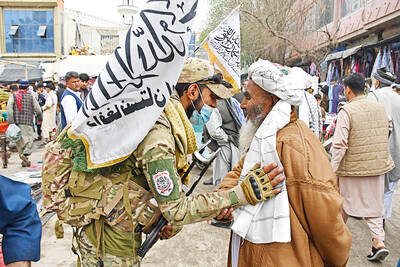
The Taliban’s reclusive supreme leader made a rare public appearance yesterday, an Afghan government spokesman said, leading thousands of worshipers in prayers marking Eid al-Fitr. Hibatullah Akhundzada has made only a handful of public appearances since inheriting the leadership of the Taliban in 2016 and leading the movement back to power with the withdrawal of US forces in 2021. Taliban government spokesman Zabihullah Mujahid said prayer in the largest mosque in Kandahar was “performed under the leadership of the supreme leader.” In a statement on X, he said the early-morning service “was attended by thousands of compatriots” in the southern province considered the


 RSS
RSS