


Rescuers called off the search operation yesterday for victims of a suicide-truck-bomb blast, after pulling the body of a surgical nurse out of the ruins of a military hospital near Chechnya and saying hope had disappeared of finding any survivors in the rubble.
With the discovery of the nurse's body and at least four others overnight, the death toll rose to 50, said Lieutenant Colonel Yuri Miroshnichenko, spokesman for the Emergency Situations Ministry in southern Russia. Sixty-four injured remained hospitalized, he said.
Authorities said they didn't expect to find any more bodies and the operation switched to a clean-up effort at the site of the four-story brick hospital, which collapsed like a house of cards when an unidentified driver rammed a truck full of explosives into it Friday night.
Russian officials said they suspected Chechen rebels were behind the attack at the hospital in the North Ossetia region city of Mozdok, since it bore similarities to other blasts and targeted a facility treating Russian soldiers injured fighting in Chechnya.
Russian President Vladimir Putin vowed Saturday that terrorists acts will not stop what he called efforts aimed at fostering peace in Chechnya, where Russian forces have battled separatists in two wars during the last decade.
In a condolence telegram, Putin called the bombing "yet another confirmation of the inhumanity and cruelty of the bandits who are trying to destabilize the situation in the Northern Caucasus" -- the region that includes Chechnya. A series of suicide bombings blamed on Chechen rebels -- including last month's double suicide bombing at a rock festival in Moscow -- have killed about 150 people since May.
"But the terrorists will not succeed in imposing their criminal will," said the telegram, distributed by Putin's press service.
Russian forces already control most of Chechnya, but they still suffer daily guerrilla attacks and the troops' tactics, which sometimes fail to distinguish between civilians and fighters, have alienated huge chunks of the Chechen population and drawn criticism from human-rights groups.
Putin has refused to negotiate with rebels and has instead tried to sideline them. He endorsed a March constitutional referendum, which asked Chechens to approve their republic's status as part of Russia. The referendum overwhelmingly passed, according to official ballot results, and now will be followed by a regional presidential election scheduled for Oct. 5.
But Friday's attack was the latest blow to Russian authorities who have been at pains to show that stability is returning to Chechnya. Russia's Defense Minister Sergei Ivanov said the disaster was compounded by military commanders' negligence in not enforcing security rules.
The attack prompted an order for round-the-clock patrols at hospitals, oil and energy facilities and major buildings across Chechnya, the ITAR-Tass news agency said.
Yesterday, the Emergency Situations Ministry said that the dead included at least 22 military personnel. Earlier figures also noted that at least 12 local residents and eight hospital workers were among the dead. The bodies of five people initially believed to be trapped alive under the rubble were pulled out yesterday, dashing all hope of finding any survivors, emergency officials said.
Russian forces withdrew from Chechnya following a 1994-1996 war that left separatists in charge. They returned in 1999 -- with Putin, then prime minister, gaining popularity for his tough stance against the rebels -- after a series of 1999 apartment-building bombings, which killed 300 people. Ivanov said Saturday that explosives used in the latest attack resembled those used in the apartment house bombings.

Republican US lawmakers on Friday criticized US President Joe Biden’s administration after sanctioned Chinese telecoms equipment giant Huawei unveiled a laptop this week powered by an Intel artificial intelligence (AI) chip. The US placed Huawei on a trade restriction list in 2019 for contravening Iran sanctions, part of a broader effort to hobble Beijing’s technological advances. Placement on the list means the company’s suppliers have to seek a special, difficult-to-obtain license before shipping to it. One such license, issued by then-US president Donald Trump’s administration, has allowed Intel to ship central processors to Huawei for use in laptops since 2020. China hardliners

Conjoined twins Lori and George Schappell, who pursued separate careers, interests and relationships during lives that defied medical expectations, died this month in Pennsylvania, funeral home officials said. They were 62. The twins, listed by Guinness World Records as the oldest living conjoined twins, died on April 7 at the Hospital of the University of Pennsylvania, obituaries posted by Leibensperger Funeral Homes of Hamburg said. The cause of death was not detailed. “When we were born, the doctors didn’t think we’d make 30, but we proved them wrong,” Lori said in an interview when they turned 50, the Philadelphia Inquirer reported. The
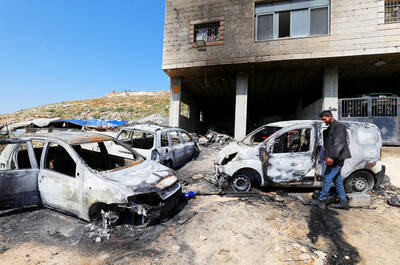
RAMPAGE: A Palestinian man was left dead after dozens of Israeli settlers searching for a missing 14-year-old boy stormed a village in the Israeli-occupied West Bank US President Joe Biden on Friday said he expected Iran to attack Israel “sooner, rather than later” and warned Tehran not to proceed. Asked by reporters about his message to Iran, Biden simply said: “Don’t,” underscoring Washington’s commitment to defend Israel. “We are devoted to the defense of Israel. We will support Israel. We will help defend Israel and Iran will not succeed,” he said. Biden said he would not divulge secure information, but said his expectation was that an attack could come “sooner, rather than later.” Israel braced on Friday for an attack by Iran or its proxies as warnings grew of
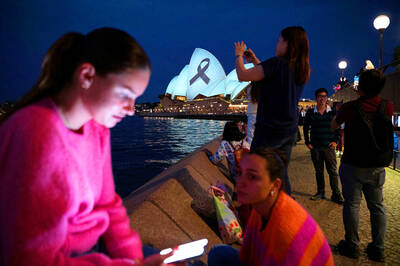
A prominent Christian leader has allegedly been stabbed at the altar during a Mass yesterday in southwest Sydney. Bishop Mar Mari Emmanuel was saying Mass at Christ The Good Shepherd Church in Wakeley just after 7pm when a man approached him at the altar and allegedly stabbed toward his head multiple times. A live stream of the Mass shows the congregation swarm forward toward Emmanuel before it was cut off. The church leader gained prominence during the COVID-19 pandemic, amassing a large online following, Officers attached to Fairfield City police area command attended a location on Welcome Street, Wakeley following reports a number


 RSS
RSS