


President George W. Bush vows to smoke him out of caves and holes. Defense Secretary Donald H. Rumsfeld speaks of "draining the swamp." Vice President Dick Cheney wants his "head on a platter."
The Bush administration is doing its best to demonize and degrade suspected terrorist Osama bin Laden to rally support for retaliation and whet Americans' appetite for bringing the exiled Saudi Arabian millionaire to justice "dead or alive."
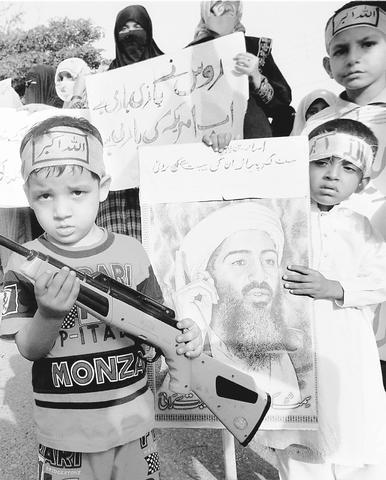
PHOTO: AP
US officials call bin Laden the prime suspect in the Sept. 11 suicide hijacking attacks believed to have killed more than 6,000 people.
Public evidence linking bin Laden and his al-Qaida organization to the 19 hijackers is mostly circumstantial. That, however, has not stopped Bush and top members of his administration from using dehumanizing terms to describe him, often implying bin Laden and his fighters are loathsome animals.
"They run to the hills; they find holes to get in. And we will do whatever it takes to smoke them out and get them running," Bush said.
This is not the first time an US president has demonized an enemy. Former Presidents Bill Clinton and George Bush did so against Iraqi President Saddam Hussein. The elder Bush even compared him to Hitler and sometimes gave the name "Saddam" a snarling, nasal pronunciation.
Clinton and his top aides depicted former Yugoslav President Slobodan Milosevic, now in custody in The Hague and awaiting trial on war crimes, as a bloodthirsty tyrant in advance of NATO's 11-week bombing campaign in 1999.
Former President Bush used harsh language against former Panamanian leader Manuel Noriega, ousted from power in a 1989 US invasion and now serving a 30-year sentence in Miami on drug-trafficking charges.
Dehumanizing an enemy is not only a common practice for leaders seeking to steel their countries for military action, "it is required," said Anthony H. Cordesman, a defense analyst at the Washington-based Center for Strategic and International Studies.
"If the United States doesn't raise it to this profile, many countries are not going to take us seriously. We have to signal that this is totally serious," Cordesman said.
But personalizing an enemy also carries risks, suggested Fred Greenstein, a Princeton political science professor: "You rev up expectations. But that can set the stakes inappropriately high -- because then you've got to go for this guy."
He noted the obvious: despite the rhetoric leveled at Saddam, he remains in power today, 10 years after the Gulf War.
After using the "dead or alive" phrase, Bush toned down some of his subsequent references to bin Laden so as not to inflame potential allies as he searched for diplomatic partners.
But administration officials made it clear bin Laden remains public enemy No. 1.
In his Thursday night speech to Congress and the nation, Bush warned Afghanistan's leaders that they would share bin Laden's fate if he and his followers are not handed over immediately.
"Our war on terror begins with al-Qaida. ... It will not end until every terrorist group of global reach has been found, stopped and defeated," he said.
To Richard Murphy, a former US assistant secretary of state who now is with the private Council on Foreign Relations, "The rhetoric is very much designed for the American ear."
But Murphy said that it also sent mixed signals to the Arab world. "An Arab broadcasting station asked me, `Does `smoke him out of the hole' mean you're going to start chemical warfare?'"
To many Americans, bin Laden, 47, is a mysterious figure: thin, bearded and over 1.8m tall.
The US links him to the 1993 World Trade Center bombing, the 1998 terrorist attacks on two US embassies in east Africa and last October's attack on the USS Cole in Yemen.
Few are ready to criticize Bush or his advisers for using strong language, given the enormity of the slaughter of innocents that French President Jacques Chirac has called "beyond crime ... there are no words to qualify it."
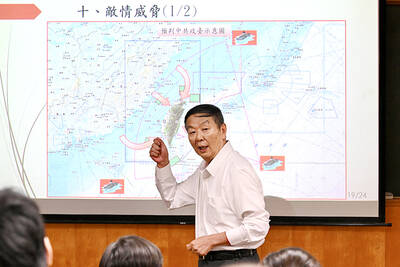
RETHINK? The defense ministry and Navy Command Headquarters could take over the indigenous submarine project and change its production timeline, a source said Admiral Huang Shu-kuang’s (黃曙光) resignation as head of the Indigenous Submarine Program and as a member of the National Security Council could affect the production of submarines, a source said yesterday. Huang in a statement last night said he had decided to resign due to national security concerns while expressing the hope that it would put a stop to political wrangling that only undermines the advancement of the nation’s defense capabilities. Taiwan People’s Party Legislator Vivian Huang (黃珊珊) yesterday said that the admiral, her older brother, felt it was time for him to step down and that he had completed what he
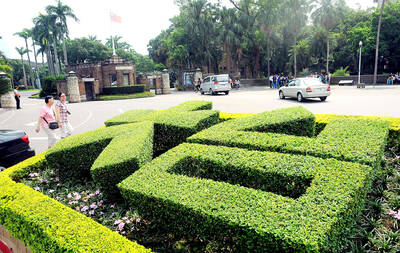
Taiwan has experienced its most significant improvement in the QS World University Rankings by Subject, data provided on Sunday by international higher education analyst Quacquarelli Symonds (QS) showed. Compared with last year’s edition of the rankings, which measure academic excellence and influence, Taiwanese universities made great improvements in the H Index metric, which evaluates research productivity and its impact, with a notable 30 percent increase overall, QS said. Taiwanese universities also made notable progress in the Citations per Paper metric, which measures the impact of research, achieving a 13 percent increase. Taiwanese universities gained 10 percent in Academic Reputation, but declined 18 percent
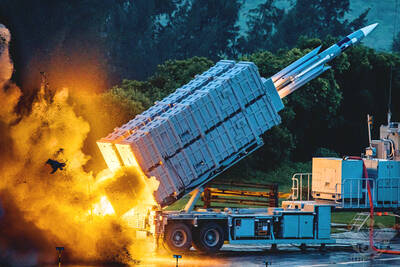
UNDER DISCUSSION: The combatant command would integrate fast attack boat and anti-ship missile groups to defend waters closest to the coastline, a source said The military could establish a new combatant command as early as 2026, which would be tasked with defending Taiwan’s territorial waters 24 nautical miles (44.4km) from the nation’s coastline, a source familiar with the matter said yesterday. The new command, which would fall under the Naval Command Headquarters, would be led by a vice admiral and integrate existing fast attack boat and anti-ship missile groups, along with the Naval Maritime Surveillance and Reconnaissance Command, said the source, who asked to remain anonymous. It could be launched by 2026, but details are being discussed and no final timetable has been announced, the source
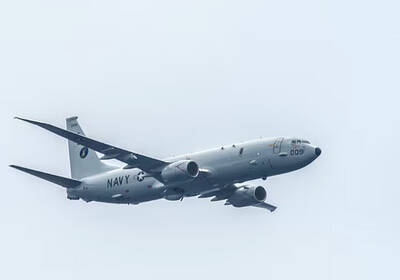
CHINA REACTS: The patrol and reconnaissance plane ‘transited the Taiwan Strait in international airspace,’ the 7th Fleet said, while Taipei said it saw nothing unusual The US 7th Fleet yesterday said that a US Navy P-8A Poseidon flew through the Taiwan Strait, a day after US and Chinese defense heads held their first talks since November 2022 in an effort to reduce regional tensions. The patrol and reconnaissance plane “transited the Taiwan Strait in international airspace,” the 7th Fleet said in a news release. “By operating within the Taiwan Strait in accordance with international law, the United States upholds the navigational rights and freedoms of all nations.” In a separate statement, the Ministry of National Defense said that it monitored nearby waters and airspace as the aircraft


 RSS
RSS