


The government has earmarked NT$520 million (US$16.3 million) for a three-year program to enhance the country’s English learning environment and facilitate cultivation of English talent.
Minister Without Portfolio Ovid Tseng (曾志朗) made the announcement yesterday in his opening remarks at a forum hosted by the Cabinet’s Research, Development and Evaluation Commission.
Panelists at the forum on advancing the nation’s competitiveness said it was essential that steps be taken to improve English proficiency nationwide and urged the government to think of ways to upgrade the general public’s English comprehension.
Tseng made headlines after he shouted at a taekwondo referee in English at the East Asian Games in Hong Kong last month to appeal against a decision the referee made against Taiwanese competitor Tseng Ching-hsiang (曾敬翔).
“A video of my protest was viewed more than half a million times online,” the minister said. “Many athletics students told me afterwards that they realized they needed to learn to speak English well so that they would be able to express their opinions and communicate with others at international tournaments,” he said.
Clara Yu (于漪), former president of the Monterey Institute of International Studies in the US, said people should not be intimidated by the language, as it was relatively easy to deal with combinations of 26 letters, compared with the thousands of Chinese characters.
Yu said the South Korean government set a good example in its support of English learning.
She said English education has been linked with national competitiveness ever since the South Korean government appointed its Presidential Commission on Educational Reform in 1994.
South Korea is set to hire an additional 23,000 English teachers by 2013 as part of a project initiated by South Korean President Lee Myung-bak that would inject US$4.2 billion into English education over the next five years, Yu said.
Yu said Taiwanese should “start early” when learning English, citing research into why some Japanese native speakers have difficulty distinguishing L’s from R’s as an example.
The research monitored infants from monolingual Japanese and US families.
“It turned out that at seven months old, both groups of babies could distinguish L’s and R’s equally well. But at month 10, the Japanese babies had lost their ability to tell L’s from R’s,” she said.
Joanna Lei (雷倩), a former Chinese Nationalist Party (KMT) lawmaker who has worked abroad for many years, said Taiwan lagged far behind other Asian countries in English proficiency.
“Many people do not think it’s a big deal that people in Hong Kong and Singapore are more proficient in English than Taiwanese. But what might come as a shock to them is that two-thirds of Malaysians can read English newspapers,” while many mid-level and top executives at Thai companies can engage in discussions with international strategists without difficulty, Lei said.
While it was essential to address the problem, the government should be careful to avoid creating an “English gap” among people, she said.
“If we want our children to start learning English early but neglect building adequate infrastructure in terms of sufficiently qualified teachers and teaching methods, we might end up creating an ‘English gap,’” Lei said.
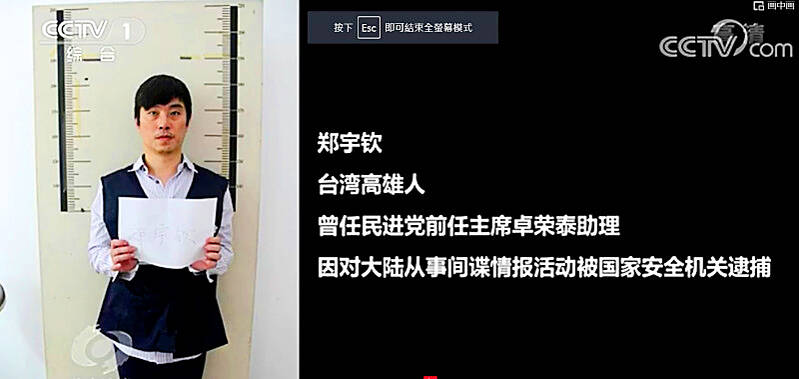
Former Czech Republic-based Taiwanese researcher Cheng Yu-chin (鄭宇欽) has been sentenced to seven years in prison on espionage-related charges, China’s Ministry of State Security announced yesterday. China said Cheng was a spy for Taiwan who “masqueraded as a professor” and that he was previously an assistant to former Cabinet secretary-general Cho Jung-tai (卓榮泰). President-elect William Lai (賴清德) on Wednesday last week announced Cho would be his premier when Lai is inaugurated next month. Today is China’s “National Security Education Day.” The Chinese ministry yesterday released a video online showing arrests over the past 10 years of people alleged to be
THE HAWAII FACTOR: While a 1965 opinion said an attack on Hawaii would not trigger Article 5, the text of the treaty suggests the state is covered, the report says NATO could be drawn into a conflict in the Taiwan Strait if Chinese forces attacked the US mainland or Hawaii, a NATO Defense College report published on Monday says. The report, written by James Lee, an assistant research fellow at Academia Sinica’s Institute of European and American Studies, states that under certain conditions a Taiwan contingency could trigger Article 5 of NATO, under which an attack against any member of the alliance is considered an attack against all members, necessitating a response. Article 6 of the North Atlantic Treaty specifies that an armed attack in the territory of any member in Europe,

LIKE FAMILY: People now treat dogs and cats as family members. They receive the same medical treatments and tests as humans do, a veterinary association official said The number of pet dogs and cats in Taiwan has officially outnumbered the number of human newborns last year, data from the Ministry of Agriculture’s pet registration information system showed. As of last year, Taiwan had 94,544 registered pet dogs and 137,652 pet cats, the data showed. By contrast, 135,571 babies were born last year. Demand for medical care for pet animals has also risen. As of Feb. 29, there were 5,773 veterinarians in Taiwan, 3,993 of whom were for pet animals, statistics from the Animal and Plant Health Inspection Agency showed. In 2022, the nation had 3,077 pediatricians. As of last
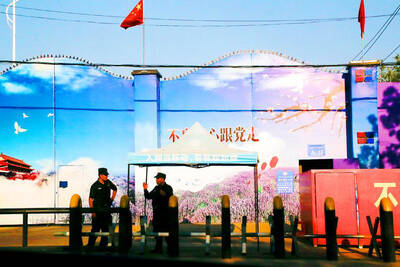
XINJIANG: Officials are conducting a report into amending an existing law or to enact a special law to prohibit goods using forced labor Taiwan is mulling an amendment prohibiting the importation of goods using forced labor, similar to the Uyghur Forced Labor Prevention Act (UFLPA) passed by the US Congress in 2021 that imposed limits on goods produced using forced labor in China’s Xinjiang region. A government official who wished to remain anonymous said yesterday that as the US customs law explicitly prohibits the importation of goods made using forced labor, in 2021 it passed the specialized UFLPA to limit the importation of cotton and other goods from China’s Xinjiang Uyghur region. Taiwan does not have the legal basis to prohibit the importation of goods


 RSS
RSS