


As a schoolteacher, Ariel Shen has been observing the nation’s declining birth rate from up close.
Five years ago, each classroom at her middle school in Taipei had 28 students, but now that number has dropped to 20, and the trend shows no sign of abating.
She is thinking about starting a business just to stay secure financially.
“My colleagues and I are definitely very concerned,” 37-year-old Shen said. “Some have already had to leave for other schools.”
Taiwan, with a population of 23 million, now has the dubious distinction of having the lowest birth rate in the world, the Washington-based Population Reference Bureau think tank said.
The Ministry of the Interior says just 1.05 children are born per woman, down from 7.04 in 1951 and 2.10 as late as 1984.
“It’s not just the lowest level ever in Taiwan, it’s the lowest level in history. Nobody has ever gone that low,” said Carl Haub, a demographer at the Washington bureau.
The development is a paradox in a society that remains devoted to Chinese tradition, where offspring are considered a blessing and a guarantee a family’s lineage will continue into the future.
Part of the explanation is economic and reflects the way a child has changed from being an asset in the rural society of half a century ago — an extra pair of hands at the family farm — to a major financial burden.
Rising prices of everything from healthcare to education have made many think twice before they have another child.
“There’s also an unmeasurable part of it, and no one can quantify this. Young people don’t come out of school with the idea that they want to raise a family,” Haub said. “There’s a reaction among young women, who see how many children their mothers had, and watched them spend all that time looking after household matters, and that’s not necessarily what they want to do.”
Weakening family ties consolidate this mindset, as young people migrate from the countryside into the cities, away from the watchful eyes of their parents and grandparents.
This relieves them from pressure put on them by the older generation to produce children, and many instead opt for a materially comfortable single existence.
They are encouraged by modern media that hail the ideal of individual fulfillment, a far cry from the family-oriented tradition, experts said.
The consequences will be felt sooner than many expect, and it will be only a few years before things start changing profoundly, they said.
Last month, the education ministry said that more than one in three of Taiwan’s 164 colleges were likely to be forced to close by 2021 because of a shortage of students.
Much more serious, the dearth of births will eventually mean there are not enough people in the labor force to support a growing number of elderly.
Current forecasts are that in 2051, more than one in three Taiwanese will be 65 years or older, up from one in 10 now.
Importing labor from China on a massive scale would seem a solution, given the linguistic and cultural similarities, but it is not politically feasible, analysts said.
Perhaps a majority of people in Taiwan are concerned about being devoured by a rapidly growing Chinese giant, and letting large armies of workers come would do nothing to reassure them.
This means that if Taiwan wants to maintain its population, it has to increase its fertility rate, analysts say.
“The government has to take action now,” Haub said.
However, the government has shown little inclination to introduce effective measures, said Chen Yu-hua, a demographer at National Taiwan University.
“It seems the government does not have any strong political will to do anything about it. It doesn’t provide any incentive for the people,” she said.
There is also no particular pressure yet from public opinion to act, as the general understanding of the issues remains low, Chen said.
With a population density ranked as the 15th-highest in the world, many would welcome a drop in numbers, but the key issue is how to achieve this, she said.
“You need to have proportional decrease for each age group, not just a decrease among the young,” Chen said, referring to the problem of a thinning work force supporting millions of retirees.
But a “proportional decrease” is not practically possible — a government cannot cut the number of those already born — and therefore Taiwan has no other choice but a gradual reduction, not the steep one seen now, she said.
“Many people think a decrease of the population is good for Taiwan. It will help the environment,” she said. “But we really need to be concerned about the fertility issue. If we want to rely on ourselves, we need to encourage Taiwanese people to produce a new generation.”
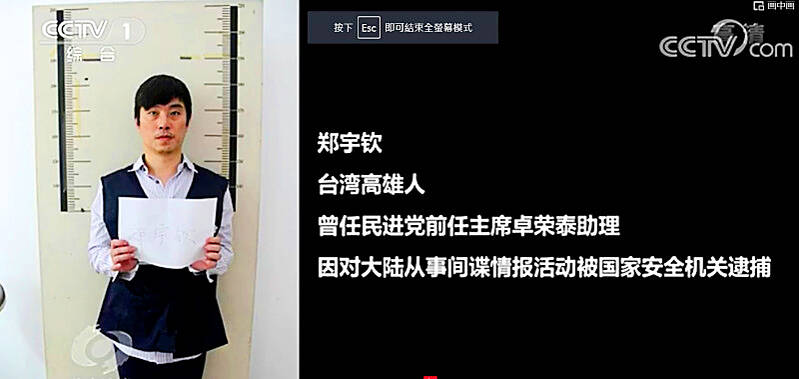
Former Czech Republic-based Taiwanese researcher Cheng Yu-chin (鄭宇欽) has been sentenced to seven years in prison on espionage-related charges, China’s Ministry of State Security announced yesterday. China said Cheng was a spy for Taiwan who “masqueraded as a professor” and that he was previously an assistant to former Cabinet secretary-general Cho Jung-tai (卓榮泰). President-elect William Lai (賴清德) on Wednesday last week announced Cho would be his premier when Lai is inaugurated next month. Today is China’s “National Security Education Day.” The Chinese ministry yesterday released a video online showing arrests over the past 10 years of people alleged to be

THE HAWAII FACTOR: While a 1965 opinion said an attack on Hawaii would not trigger Article 5, the text of the treaty suggests the state is covered, the report says NATO could be drawn into a conflict in the Taiwan Strait if Chinese forces attacked the US mainland or Hawaii, a NATO Defense College report published on Monday says. The report, written by James Lee, an assistant research fellow at Academia Sinica’s Institute of European and American Studies, states that under certain conditions a Taiwan contingency could trigger Article 5 of NATO, under which an attack against any member of the alliance is considered an attack against all members, necessitating a response. Article 6 of the North Atlantic Treaty specifies that an armed attack in the territory of any member in Europe,

LIKE FAMILY: People now treat dogs and cats as family members. They receive the same medical treatments and tests as humans do, a veterinary association official said The number of pet dogs and cats in Taiwan has officially outnumbered the number of human newborns last year, data from the Ministry of Agriculture’s pet registration information system showed. As of last year, Taiwan had 94,544 registered pet dogs and 137,652 pet cats, the data showed. By contrast, 135,571 babies were born last year. Demand for medical care for pet animals has also risen. As of Feb. 29, there were 5,773 veterinarians in Taiwan, 3,993 of whom were for pet animals, statistics from the Animal and Plant Health Inspection Agency showed. In 2022, the nation had 3,077 pediatricians. As of last
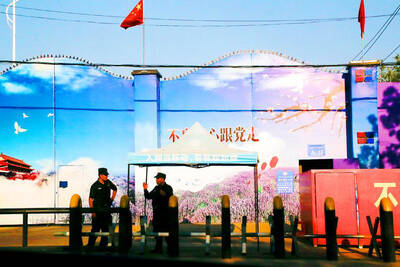
XINJIANG: Officials are conducting a report into amending an existing law or to enact a special law to prohibit goods using forced labor Taiwan is mulling an amendment prohibiting the importation of goods using forced labor, similar to the Uyghur Forced Labor Prevention Act (UFLPA) passed by the US Congress in 2021 that imposed limits on goods produced using forced labor in China’s Xinjiang region. A government official who wished to remain anonymous said yesterday that as the US customs law explicitly prohibits the importation of goods made using forced labor, in 2021 it passed the specialized UFLPA to limit the importation of cotton and other goods from China’s Xinjiang Uyghur region. Taiwan does not have the legal basis to prohibit the importation of goods


 RSS
RSS