


The controversy over whether revising regulations to prohibit “risky” beef imports could override a recently signed protocol with the US illustrates the delicate matter of Taiwan’s sovereignty, analysts said.
Taiwan recently signed a protocol with the US to expand market access from boneless beef of cattle younger than 30 months to include bone-in beef and other beef products that have not been contaminated with “specific risk materials.”
Responding to a public outcry over the lifting of the ban on bovine offal and ground beef amid fears of bovine spongiform encephalopathy (BSE), commonly known as mad-cow disease, the government said it would change import inspection procedures to effectively block the products.
Dissatisfied with the remedial measures and mainly citing legality concerns, lawmakers across party lines vowed to amend the Act Governing Food Sanitation (食品衛生管理法) by yesterday to address what they considered flaws in the protocol.
But legislators have yet to reach a consensus on the details after President Ma Ying-jeou (馬英九) urged the Chinese Nationalist Party (KMT) caucus not to make changes that would violate the protocol.
The debate has raised questions of whether treaties, agreements, protocols or accords with other countries are subject to legislative approval and whether international deals carry higher authority than domestic legislation where they conflict.
The Taiwan-US beef protocol is just the latest in a string of deals that have highlighted this dispute, following nine cross-strait pacts signed with China under the current administration.
In the case of US beef, National Security Council (NSC) Secretary-General Su Chi (蘇起) said the protocol should override the law.
“That is the way I think, and those who hold different opinions should feel free to seek a constitutional interpretation” from the Council of Grand Justices, Su said.
Hsu Chih-hsiung (許志雄), a specialist on constitutional law, said Su’s conclusion revealed his poor understanding of jurisprudence.
“If an international deal is above domestic law, could it be that it is also above the Constitution?” he asked.
A treaty requires legislative approval to make it valid with the same authority as law, Hsu said, adding that “the protocol is neither a treaty nor has it been approved by the legislature.”
From the perspective of constitutional law, the handling of the protocol should not have bypassed the legislature.
Because it did so, “there is no way that the protocol can take precedence over domestic legislation,” he said.
The grand justices made their views clear on related issues in Interpretation No. 329, said Chang Wen-chen (張文貞), an associate law professor at National Taiwan University.
The 1993 interpretation explained the meaning of “treaty” in the Constitution and what kind of agreement should be sent to the legislature for deliberation.
In the interpretation, the justices expanded the meaning of “treaty” to include “administrative agreements” whose contents involve matters that are important to the nation and the rights and duties of the people. The justices said these agreements, unless authorized by law or determined by the legislature in advance, should be sent to the legislature for deliberation, Chang said.
The status of treaties and administrative agreements — a matter the Constitution does not explicitly address — is also clarified in the interpretation. They “hold the same status as the law” when they are either approved by the legislature in advance or ratified by it afterwards, Chang said.
Chang said the reason the justices regarded administrative agreements — which in most countries are handled differently from treaties and do not need legislative approval — as being the same as treaties was because of Taiwan’s international situation.
“As Taiwan is not a normal country in terms of its international status not being universally recognized, it is hardly possible for it to join international treaties. Given this, on many occasions, international agreements that were essentially treaties took the form of administrative agreements,” Chang said.
If the Taiwan-US protocol, part of an administrative agreement, is defined as one that involves matters important to the nation and the rights and duties of the people, it is subject to approval by the legislature and can be overridden by an amendment to the food sanitation law, she said.
If the protocol is not defined as a matter important to the nation and the rights and duties of the people, the protocol is by nature an administrative order and any effect inconsistent with domestic law will be abrogated, she said.
Wong Ming-hsien (翁明賢), chair of the Graduate Institute of International Affairs and Strategic Studies at Tamkang University, also said domestic legislation takes precedence over international agreements. This is an internationally accepted legal principle based on respect for the exercise of a nation’s sovereignty, he said.
“For example, the US views its Taiwan Relations Act as being above the three Sino-US joint communiques, since it has continued to provide Taiwan with defensive weapons over the years rather than following the 817 Communique of 1982 on limiting arms sales to Taiwan. Another example is the Lisbon Treaty, which requires ratification by each member of the EU,” Wong said.
However, Wong said that if the legislature amends the food sanitation law to override the protocol, the US might not view the problem from a legal perspective but rather see it as “a matter of trust.”
Because of the lack of diplomatic relations, the US could say that it signed the protocol on the basis of its trust in Taiwan and not its sovereignty as a country, he said.
“In view of this, if there’s a breach of trust, the theory that domestic legislation takes precedence over international agreements might seem unacceptable to the US as it recognizes neither Taiwan’s nationhood nor the legality of its domestic legislation,” Wong said.
Wong said that one potential consequence worth consideration was that the US could seek to get even with Taiwan on other fronts.
Tsai Horng-ming (蔡宏明), a former advisor to the NSC and an associate professor at National Taiwan Normal University’s Graduate Institute of International Affairs and Global Strategy, was not pessimistic about the option of amending the food sanitation law.
Tsai cited the example of Thailand losing a lawsuit to the US in the 1980s, when the General Agreement on Tariffs and Trade (the WTO’s predecessor) struck down Bangkok’s ban on US tobacco. The government should be prepared to go to the WTO court if it undermines the beef protocol through other measures, he said.
“Thailand lost the tobacco case, but the remarks made by its minister were inspiring,” Tsai said. “He said: ‘We accepted the ruling — meaning we did not succumb to US pressure in bilateral talks.”
The best way for Taiwan to avoid US pressure is to turn to dispute settlement under the WTO if the US is unhappy with the government’s administrative means or our domestic legislation,” Tsai said.
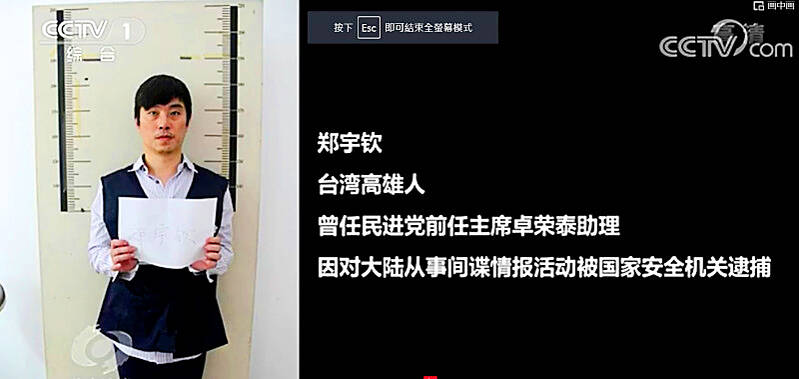
Former Czech Republic-based Taiwanese researcher Cheng Yu-chin (鄭宇欽) has been sentenced to seven years in prison on espionage-related charges, China’s Ministry of State Security announced yesterday. China said Cheng was a spy for Taiwan who “masqueraded as a professor” and that he was previously an assistant to former Cabinet secretary-general Cho Jung-tai (卓榮泰). President-elect William Lai (賴清德) on Wednesday last week announced Cho would be his premier when Lai is inaugurated next month. Today is China’s “National Security Education Day.” The Chinese ministry yesterday released a video online showing arrests over the past 10 years of people alleged to be
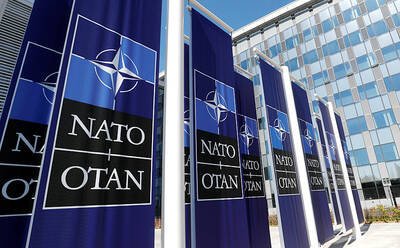
THE HAWAII FACTOR: While a 1965 opinion said an attack on Hawaii would not trigger Article 5, the text of the treaty suggests the state is covered, the report says NATO could be drawn into a conflict in the Taiwan Strait if Chinese forces attacked the US mainland or Hawaii, a NATO Defense College report published on Monday says. The report, written by James Lee, an assistant research fellow at Academia Sinica’s Institute of European and American Studies, states that under certain conditions a Taiwan contingency could trigger Article 5 of NATO, under which an attack against any member of the alliance is considered an attack against all members, necessitating a response. Article 6 of the North Atlantic Treaty specifies that an armed attack in the territory of any member in Europe,

LIKE FAMILY: People now treat dogs and cats as family members. They receive the same medical treatments and tests as humans do, a veterinary association official said The number of pet dogs and cats in Taiwan has officially outnumbered the number of human newborns last year, data from the Ministry of Agriculture’s pet registration information system showed. As of last year, Taiwan had 94,544 registered pet dogs and 137,652 pet cats, the data showed. By contrast, 135,571 babies were born last year. Demand for medical care for pet animals has also risen. As of Feb. 29, there were 5,773 veterinarians in Taiwan, 3,993 of whom were for pet animals, statistics from the Animal and Plant Health Inspection Agency showed. In 2022, the nation had 3,077 pediatricians. As of last
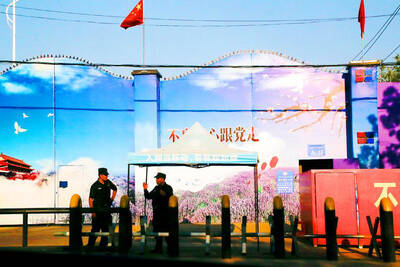
XINJIANG: Officials are conducting a report into amending an existing law or to enact a special law to prohibit goods using forced labor Taiwan is mulling an amendment prohibiting the importation of goods using forced labor, similar to the Uyghur Forced Labor Prevention Act (UFLPA) passed by the US Congress in 2021 that imposed limits on goods produced using forced labor in China’s Xinjiang region. A government official who wished to remain anonymous said yesterday that as the US customs law explicitly prohibits the importation of goods made using forced labor, in 2021 it passed the specialized UFLPA to limit the importation of cotton and other goods from China’s Xinjiang Uyghur region. Taiwan does not have the legal basis to prohibit the importation of goods


 RSS
RSS