


Despite signing a protocol lifting the ban on US bone-in beef and beef products from cattle younger than 30 months, excluding cow tonsils and the distal ileum of the small intestine, Premier Wu Den-yih (吳敦義) said yesterday that the government would not lift the ban on ground beef and beef offal from the US.
“There will be no ground [US] beef and [US] beef offal on the market ... According to my understanding, no one will apply to import [the products], and the Department of Health [DOH] will reject their requests on the basis of related rules and regulations,” Wu told reporters at the Executive Yuan, without elaborating.
In an attempt to ease public concern over the safety of US beef, Wu responded positively to the request made by some local governments, lawmakers and consumer groups to exclude ground beef and internal organs from imports by imposing administrative measures.
“It’s neither a problem of risk assessment, nor food safety. The problem now is that people doubt about the products. The government has to face [their doubts] squarely,” Wu said.
Under DOH administrative measures, importers will be required to join an association through which they can apply to import ground meat and internal organs, Executive Yuan Spokesman Su Jun-pin (蘇俊賓) said.
The government said previously that it would also ban the import of brains, spinal cords, eyes and skulls from cattle less than 30 months of age in the supplementary clause under the protocol between Taiwan and the US.
However, the government did not make the supplementary clause public.
The protocol states that the four products, defined as non-specific risk materials or without food-safety hazards, can be imported. It says that as long as importers do not place orders and these items are detected during the import inspection process, the DOH may return the box or boxes.
The American Institute in Taiwan (AIT) declined to respond directly to Wu’s statement, except to say that the details of the deal were contained in the protocol signed by the Taipei Economic and Cultural Representative Office (TECRO) and AIT.
AIT press officer Christopher Kavanagh reiterated Washington’s stance that US beef has been deemed by international standards created by the World Organization for Animal Health (OIE) to be safe for human consumption and that the public should look at the science-based evidence.
At the legislature yesterday, Chinese Nationalist Party (KMT) Legislator Yang Li-huan (楊麗環) asked Department of Health Minister Yaung Chih-liang (楊志良) what the government would do if a case of variant Creutzfeldt-Jakob disease (vCJD), the human form of bovine spongiform encephalopathy (BSE), or mad cow disease, was discovered in Taiwan because of US beef consumption.
Yang appeared to be unaware of the implications of the scenario she described given the disease’s incubation period.
Yaung said the ban would be immediately resumed if vCJD were discovered in Taiwan.
“We can do so immediately by following our own food regulations and laws,” Yaung said.
Yaung, however, urged the public not to panic about US beef because the policy to allow imports was made after careful consideration.
“The potential danger from eating US beef is almost zero,” he said.
KMT Legislator Sun Ta-chien (孫大千) was not happy with that.
“When you say it is ‘almost safe,’ you mean there is still a risk,” Sun said.
Yaung promised the government would carefully examine imported US beef.
“We will demand a lot of evidence to prove it is safe before it is sold,” Yaung said.
Meanwhile, KMT Legislator Lee Ching-hua (李慶華) defended Yaung over the minister’s alleged resignation, saying that Yaung was a victim of the US beef import controversy.
“The truth is [the relaxation] was decided secretly by a few people, while Minister Yaung was kept in the dark,” Lee said, without elaborating.
ADDITIONAL REPORTING BY FLORA WANG AND JENNY W. HSU
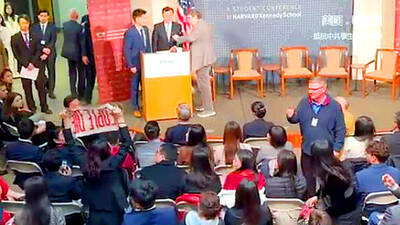
A group of Taiwanese-American and Tibetan-American students at Harvard University on Saturday disrupted Chinese Ambassador to the US Xie Feng’s (謝鋒) speech at the school, accusing him of being responsible for numerous human rights violations. Four students — two Taiwanese Americans and two from Tibet — held up banners inside a conference hall where Xie was delivering a speech at the opening ceremony of the Harvard Kennedy School China Conference 2024. In a video clip provided by the Coalition of Students Resisting the CCP (Chinese Communist Party), Taiwanese-American Cosette Wu (吳亭樺) and Tibetan-American Tsering Yangchen are seen holding banners that together read:

UNAWARE: Many people sit for long hours every day and eat unhealthy foods, putting them at greater risk of developing one of the ‘three highs,’ an expert said More than 30 percent of adults aged 40 or older who underwent a government-funded health exam were unaware they had at least one of the “three highs” — high blood pressure, high blood lipids or high blood sugar, the Health Promotion Administration (HPA) said yesterday. Among adults aged 40 or older who said they did not have any of the “three highs” before taking the health exam, more than 30 percent were found to have at least one of them, Adult Preventive Health Examination Service data from 2022 showed. People with long-term medical conditions such as hypertension or diabetes usually do not
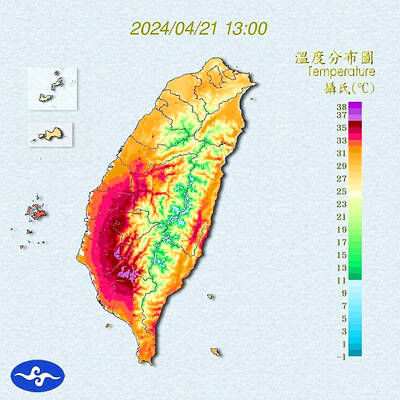
Heat advisories were in effect for nine administrative regions yesterday afternoon as warm southwesterly winds pushed temperatures above 38°C in parts of southern Taiwan, the Central Weather Administration (CWA) said. As of 3:30pm yesterday, Tainan’s Yujing District (玉井) had recorded the day’s highest temperature of 39.7°C, though the measurement will not be included in Taiwan’s official heat records since Yujing is an automatic rather than manually operated weather station, the CWA said. Highs recorded in other areas were 38.7°C in Kaohsiung’s Neimen District (內門), 38.2°C in Chiayi City and 38.1°C in Pingtung’s Sandimen Township (三地門), CWA data showed. The spell of scorching
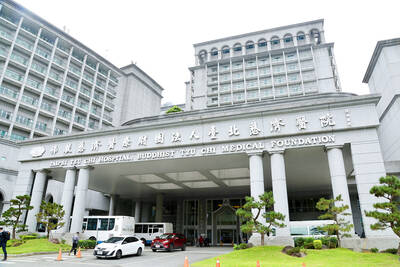
POLICE INVESTIGATING: A man said he quit his job as a nurse at Taipei Tzu Chi Hospital as he had been ‘disgusted’ by the behavior of his colleagues A man yesterday morning wrote online that he had witnessed nurses taking photographs and touching anesthetized patients inappropriately in Taipei Tzu Chi Hospital’s operating theaters. The man surnamed Huang (黃) wrote on the Professional Technology Temple bulletin board that during his six-month stint as a nurse at the hospital, he had seen nurses taking pictures of patients, including of their private parts, after they were anesthetized. Some nurses had also touched patients inappropriately and children were among those photographed, he said. Huang said this “disgusted” him “so much” that “he felt the need to reveal these unethical acts in the operating theater


 RSS
RSS