


The Ministry of Foreign Affairs (MOFA) yesterday said there was no timetable in Taiwan’s possible inclusion in a European visa-waiver program but that things were moving in a “positive direction.”
A Central News Agency report quoted Chiu Jong-jen (邱仲仁), the director-general of the Department of the European Affairs, as saying that if things go well, Taiwan could be part of the Schengen Agreement’s short-term visa-waiver program as early as April next year.
Chiu said the proposal to include Taiwan in the program would hopefully be ratified by the end of this month before seeking approval from the Council of Europe and the European Parliament (EP), but that the newly signed Lisbon Treaty, which will bring a dramatic change in the EU governance system, could delay the process.
Charles Tannock, the chairman of the Taiwan Friendship Group in the EP, told reporters yesterday that in his exchanges with the Cyprus ambassador he had said: “I managed to achieve one little goal for the friends of Taiwan, namely they [Cyprus] will no longer obstruct the EU’s gradual process towards granting short-term Taiwanese visitors visa-free status in the Schengen Area, and this hopefully will happen early next year.”
Taiwan has been lobbying for visa-waiver privileges to Schengen countries for a number of years. Recently, the UK and Ireland agreed to grant six-month visa-free privileges to Taiwanese passport holders.
The European Economic and Trade Office in Taiwan declined to comment on the matter.
MOFA Spokesman Henry Chen (陳銘政), who was more reserved when asked about the timetable, said the ministry was working hard on achieving the status. The developments have been positive so far, he said.
In his speech, Tannock praised Taiwan as a highly valued trading partner to the EU and said that the global credit crunch would serve as a “wake-up call” and encourage both sides to forge a Taiwan-EU Trade Enhancement Measure similar to a free-trade agreement.
Tannock, who publicly supports Taiwan’s bid for more participation in international organizations, also said that despite the lack of formal ties with any of the 27 EU countries, Taiwan still has many friends in the EU bloc and the country’s thriving democracy could be a positive influence on China.
Meanwhile, Premier Wu Den-yih (吳敦義) said yesterday that Taiwan hoped to develop closer relations with Ireland.
Wu told visiting members of the Ireland-Taiwan Parliamentary Friendship Society — led by John Perry, a member of Ireland’s parliament — that Taiwan cherishes and values its friendship with Ireland.
Wu said developing closer ties between the two nations was important and that both Taiwan and Ireland should pursue more cooperation in culture, education and trade.
The premier said that as cross-strait relations improve, Taiwan also hopes to better relations with Europe, the US and Japan.
“Taiwan does not want to become a flashpoint in the world,” he said, adding that it wants to be a responsible member of the global village.
Taiwan has been actively seeking to join the UN Framework Convention on Climate Change (UNFCCC) and the International Civil Aviation Organization to share information about energy saving and aviation with the rest of the world, Wu said.
The Executive Yuan held a meeting on Oct. 12 to finalize the nation’s strategy for seeking participation in the UNFCCC and hoped to join the next meeting planned for December in Copenhagen.
Wu also said Taiwan hoped to gain full membership at the WHO despite the fact it was only an observer at the World Health Assembly this year.
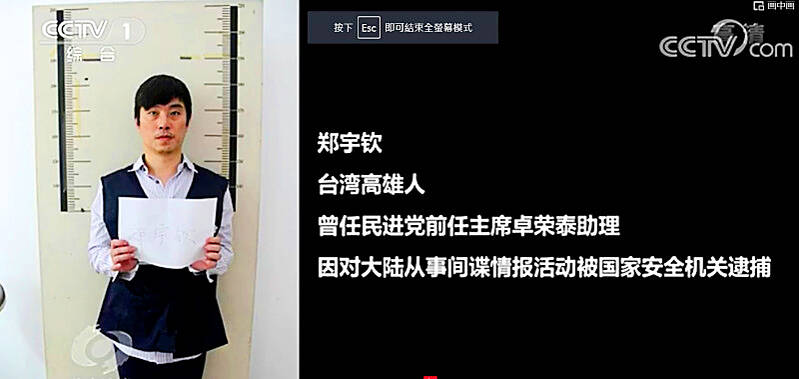
Former Czech Republic-based Taiwanese researcher Cheng Yu-chin (鄭宇欽) has been sentenced to seven years in prison on espionage-related charges, China’s Ministry of State Security announced yesterday. China said Cheng was a spy for Taiwan who “masqueraded as a professor” and that he was previously an assistant to former Cabinet secretary-general Cho Jung-tai (卓榮泰). President-elect William Lai (賴清德) on Wednesday last week announced Cho would be his premier when Lai is inaugurated next month. Today is China’s “National Security Education Day.” The Chinese ministry yesterday released a video online showing arrests over the past 10 years of people alleged to be
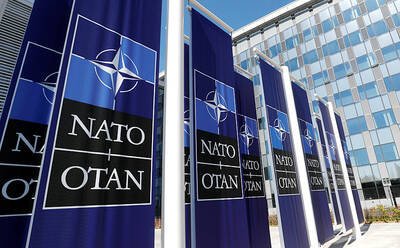
THE HAWAII FACTOR: While a 1965 opinion said an attack on Hawaii would not trigger Article 5, the text of the treaty suggests the state is covered, the report says NATO could be drawn into a conflict in the Taiwan Strait if Chinese forces attacked the US mainland or Hawaii, a NATO Defense College report published on Monday says. The report, written by James Lee, an assistant research fellow at Academia Sinica’s Institute of European and American Studies, states that under certain conditions a Taiwan contingency could trigger Article 5 of NATO, under which an attack against any member of the alliance is considered an attack against all members, necessitating a response. Article 6 of the North Atlantic Treaty specifies that an armed attack in the territory of any member in Europe,

LIKE FAMILY: People now treat dogs and cats as family members. They receive the same medical treatments and tests as humans do, a veterinary association official said The number of pet dogs and cats in Taiwan has officially outnumbered the number of human newborns last year, data from the Ministry of Agriculture’s pet registration information system showed. As of last year, Taiwan had 94,544 registered pet dogs and 137,652 pet cats, the data showed. By contrast, 135,571 babies were born last year. Demand for medical care for pet animals has also risen. As of Feb. 29, there were 5,773 veterinarians in Taiwan, 3,993 of whom were for pet animals, statistics from the Animal and Plant Health Inspection Agency showed. In 2022, the nation had 3,077 pediatricians. As of last
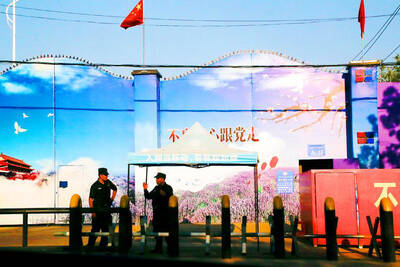
XINJIANG: Officials are conducting a report into amending an existing law or to enact a special law to prohibit goods using forced labor Taiwan is mulling an amendment prohibiting the importation of goods using forced labor, similar to the Uyghur Forced Labor Prevention Act (UFLPA) passed by the US Congress in 2021 that imposed limits on goods produced using forced labor in China’s Xinjiang region. A government official who wished to remain anonymous said yesterday that as the US customs law explicitly prohibits the importation of goods made using forced labor, in 2021 it passed the specialized UFLPA to limit the importation of cotton and other goods from China’s Xinjiang Uyghur region. Taiwan does not have the legal basis to prohibit the importation of goods


 RSS
RSS