


The Chinese Nationalist Party (KMT) legislative caucus yesterday nixed a proposal by the Department of Health (DOH) to impose a health tax on betel nuts, saying it would hurt the livelihoods of rural residents.
KMT legislative caucus whip Lu Hsueh-chang (呂學樟) said the DOH’s tax proposal — aimed at protecting public health — was a good idea, but the livelihood of the public, particularly those in rural areas, should be taken into consideration when a new law is initiated.
“It is inappropriate and unnecessary to impose a betel nut tax,” Lu said.
Taiwan has about 1.37 million betel nut chewers, the DOH’s latest survey showed.
BIGGEST CASH CROP
The betel nut, grown on more than 50,000 hectares of land around the country, is the nation’s biggest cash crop.
Last year, betel nut production reached NT$8.6 billion (US$266 million), more than double the production value of rice, Council of Agriculture figures showed.
DOH Minister Yaung Chih-liang (楊志良) said at the Legislative Yuan on Thursday that the department was considering levying a health tax on betel nuts to reduce consumption and generate tax revenue.
The minister supported the idea of imposing a tax of NT$0.13 per betel nut, or NT$2 to NT$3 for each pack of 20 nuts on average.
“We’ve been collecting cigarette taxes with success,” Yaung said to legislators. “Why not levy a tax or surtax on betel nut consumption?”
He acknowledged at the time, however, that it would be very difficult to collect such a tax, as betel nuts are not sold in packs like cigarettes.
HARD TO TAX
Chao Kun-yu (趙坤郁), a deputy director at the Bureau of Health Promotion, said that selling agricultural products like betel nuts do not require a business license and it would be hard to tell vendors to count the number of betel nuts they sell and tax them individually.
Chao said that the health department would accelerate its oral cancer screening campaign given that 90 percent of people in Taiwan suffering from oral and esophageal cancer were betel nut chewers.
Citing foreign medical reports indicating that effective oral cancer screening contributes to lowering fatalities by 43 percent, Chao said that efforts to screen for oral cancer should take precedence over the tax legislation.
About 5,000 new oral cancer cases are reported in the country each year, with 2,300 people losing their lives to the disease.
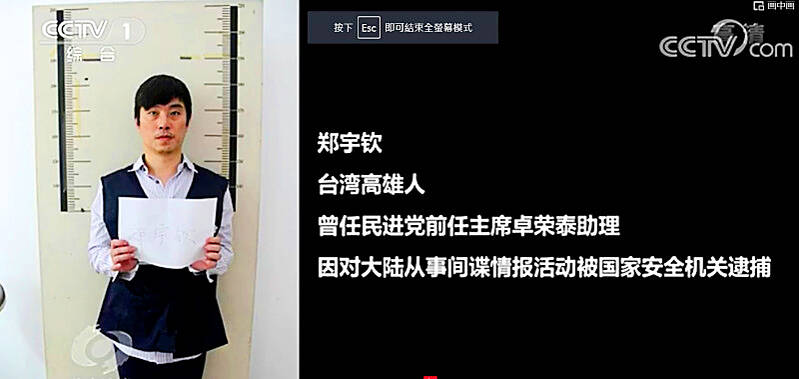
Former Czech Republic-based Taiwanese researcher Cheng Yu-chin (鄭宇欽) has been sentenced to seven years in prison on espionage-related charges, China’s Ministry of State Security announced yesterday. China said Cheng was a spy for Taiwan who “masqueraded as a professor” and that he was previously an assistant to former Cabinet secretary-general Cho Jung-tai (卓榮泰). President-elect William Lai (賴清德) on Wednesday last week announced Cho would be his premier when Lai is inaugurated next month. Today is China’s “National Security Education Day.” The Chinese ministry yesterday released a video online showing arrests over the past 10 years of people alleged to be

THE HAWAII FACTOR: While a 1965 opinion said an attack on Hawaii would not trigger Article 5, the text of the treaty suggests the state is covered, the report says NATO could be drawn into a conflict in the Taiwan Strait if Chinese forces attacked the US mainland or Hawaii, a NATO Defense College report published on Monday says. The report, written by James Lee, an assistant research fellow at Academia Sinica’s Institute of European and American Studies, states that under certain conditions a Taiwan contingency could trigger Article 5 of NATO, under which an attack against any member of the alliance is considered an attack against all members, necessitating a response. Article 6 of the North Atlantic Treaty specifies that an armed attack in the territory of any member in Europe,
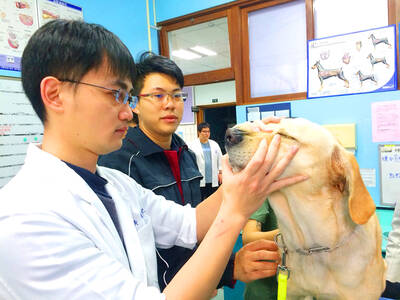
LIKE FAMILY: People now treat dogs and cats as family members. They receive the same medical treatments and tests as humans do, a veterinary association official said The number of pet dogs and cats in Taiwan has officially outnumbered the number of human newborns last year, data from the Ministry of Agriculture’s pet registration information system showed. As of last year, Taiwan had 94,544 registered pet dogs and 137,652 pet cats, the data showed. By contrast, 135,571 babies were born last year. Demand for medical care for pet animals has also risen. As of Feb. 29, there were 5,773 veterinarians in Taiwan, 3,993 of whom were for pet animals, statistics from the Animal and Plant Health Inspection Agency showed. In 2022, the nation had 3,077 pediatricians. As of last

XINJIANG: Officials are conducting a report into amending an existing law or to enact a special law to prohibit goods using forced labor Taiwan is mulling an amendment prohibiting the importation of goods using forced labor, similar to the Uyghur Forced Labor Prevention Act (UFLPA) passed by the US Congress in 2021 that imposed limits on goods produced using forced labor in China’s Xinjiang region. A government official who wished to remain anonymous said yesterday that as the US customs law explicitly prohibits the importation of goods made using forced labor, in 2021 it passed the specialized UFLPA to limit the importation of cotton and other goods from China’s Xinjiang Uyghur region. Taiwan does not have the legal basis to prohibit the importation of goods


 RSS
RSS