


On the plaza in front of the Fongshan City Administrative Office where relief supplies for victims of Typhoon Morakot were stacked, a girl was reading a book as she waited for the next convoy carrying donated goods to arrive.
Hung Fang-ying, who graduated last year with a degree in information management from Fooyin University, was there to help unload the goods and carry them into the office — a temporary distribution hub opened by Taiwan’s Red Cross Society in Kaohsiung County for neighboring villages and townships.
It was a job she volunteered to do every day, beginning soon after the typhoon devastated southern Taiwan earlier last month, but it was a job that was surprisingly difficult to find.

PHOTO: CNA
“I contacted several places to work as a volunteer, but so many people were willing to help that the Fongshan City Administrative Office was the only place where there was an opening,” Hung said.
“I didn’t have money to make a donation, but I was willing to help,” she said. “I was deeply moved to see so many people wholeheartedly helping with the relief work, including elementary school kids.”
From the time the typhoon hit until Aug. 20, when the volunteer operation ended, Hung was one of at least 80 people who helped at the Fongshan (鳳山) office every afternoon.
As Hung’s difficulty in finding a way to help attests, the outpouring of sympathy from private citizens to the plight of the disaster victims was widespread.
More than NT$15 billion (US$457 million) has been donated to help relief and recovery efforts, and tens of thousands people have volunteered their time.
Hung said that while many of those helping in Fongshan were strangers who found out about the opportunity on the Internet, they all shared the same desire — wanting to help.
Private relief efforts, however, have also cast a spotlight on the importance and wide reach of local nonprofit groups in disaster relief efforts, especially in contrast to the efforts of central and local governments, which were criticized as being disorganized and slow.
In Fongshan, for instance, 400 volunteers, including Hung, gathered every day to help with tasks organized by personnel from the Red Cross Society of the Republic of China.
The local Red Cross, founded 105 years ago, now has branches in each city and county, making it the largest private nonprofit in Taiwan.
After the massive earthquake that hit central Taiwan on Sept. 21, 1999 — the worst temblor to hit the country in a century — the Red Cross set up disaster prevention centers in almost every locality to train volunteer rescuers and workers, and those centers have played active roles since the typhoon hit.
Tsai Ruei-yu, a 74-year-old housewife and a Red Cross member who serves as chief of the Jenwu community service team in Kaohsiung County, said most of the volunteers, regardless of their age, fully devoted their time and energy to the service.
As materials donated by citizens from across Taiwan poured into the office, volunteer workers seldom had time to rest.
“Carrying bottled water is not easy, and many of them did the job from morning to night,” Tsai said.
“The whole nation was shocked by the damage done by the typhoon and at the suffering of the typhoon victims, leading many young adults, including white-collar office workers and college students, to flock here to offer help voluntarily,” she said.
Tsai herself spent all her time at the Fongshan City Administrative Office.
“I paid no attention to my own home,” she said.
Tsai, a veteran volunteer who has helped build fire-prevention awareness among local women for over 20 years, also served victims of the 1999 earthquake as a team member of Taiwan’s Red Cross Society.
Although that earthquake was devastating, many people believe Morakot was more damaging.
Lin Kun-feng (林坤鋒), 45, chief delegate of the Red Cross Society’s Kaohsiung branch, said Morakot seriously deluged many villages and townships in Kaohsiung and Pingtung counties, areas for which he is responsible.
Shortly after Morakot dumped massive amounts of rainfall on southern Taiwan on Aug. 7 and early Aug. 8, the Red Cross Society asked its branches across the country to get ready for rescue and relief operations.
On Aug. 8, more than 100 rescuers and volunteer workers swiftly moved to assist people stranded in Kaohsiung’s Cishan (旗山) and Liouguei (六龜) villages and Pingtung’s Linbian (林邊) and Jiadong (佳冬) townships — all areas hit hard by Morakot.
Leading more than 200 volunteers at the disaster relief command center set up by the military at Cishan Junior High School, Lin and two deputies were in charge of logistics operations, such as transporting the injured to hospitals and delivering relief materials to victims.
“Until recently, I had no time to see my father who was taken to the hospital on Aug. 7 by my wife,” Lin said.
Both Lin and his wife, Huang Kuei-lan (黃貴蘭), also a section chief of the Red Cross’ Kaohsiung branch, devoted all their time to helping during the rescue operations.
Their 13-year-old daughter and 10-year-old son were left alone at home to fight floodwaters that inundated their house as well.
Although Lin had only three or four hours to rest after finishing his many tasks for the day, he was too preoccupied to fall asleep.
“I was worried that a phone call would bring me more bad news because it was a matter of life or death, especially during the first 72 hours of the disaster,” he said.
“I received numerous phone calls from victims for help and also from volunteer workers’ families who were also concerned about their safety. A strong desire, however, drove me to go on and not give up, because so many people needed us to be with them,” he said.
Commenting on widespread public discontent over the government’s slow response to the disaster, Lin said the reaction was somewhat understandable because the disaster areas were widely scattered, making rescue operations extremely difficult.
“But something went wrong in the government sector,” he said. “Government authorities must sharpen their general management of related agencies in the future, both vertically and horizontally. This typhoon also underscored the need to step up daily training.”
Lin An-yu, a volunteer worker who has participated in many rescue operations with the Red Cross Society over the past years, said he deeply shared the sorrow of the victims when hearing them crying at the shelter at night.
As a person who suffered a similar fate when his house collapsed in just 20 seconds during the 1999 earthquake, the volunteer said he would encourage the victims to face up to the reality, try to release their grief and then do something to help others in need.
“Eventually, they will find that they are not the most unfortunate people in the world,” Lin said.

A group of Taiwanese-American and Tibetan-American students at Harvard University on Saturday disrupted Chinese Ambassador to the US Xie Feng’s (謝鋒) speech at the school, accusing him of being responsible for numerous human rights violations. Four students — two Taiwanese Americans and two from Tibet — held up banners inside a conference hall where Xie was delivering a speech at the opening ceremony of the Harvard Kennedy School China Conference 2024. In a video clip provided by the Coalition of Students Resisting the CCP (Chinese Communist Party), Taiwanese-American Cosette Wu (吳亭樺) and Tibetan-American Tsering Yangchen are seen holding banners that together read:

UNAWARE: Many people sit for long hours every day and eat unhealthy foods, putting them at greater risk of developing one of the ‘three highs,’ an expert said More than 30 percent of adults aged 40 or older who underwent a government-funded health exam were unaware they had at least one of the “three highs” — high blood pressure, high blood lipids or high blood sugar, the Health Promotion Administration (HPA) said yesterday. Among adults aged 40 or older who said they did not have any of the “three highs” before taking the health exam, more than 30 percent were found to have at least one of them, Adult Preventive Health Examination Service data from 2022 showed. People with long-term medical conditions such as hypertension or diabetes usually do not
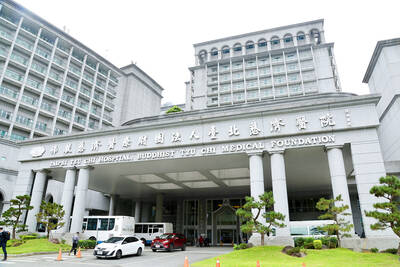
POLICE INVESTIGATING: A man said he quit his job as a nurse at Taipei Tzu Chi Hospital as he had been ‘disgusted’ by the behavior of his colleagues A man yesterday morning wrote online that he had witnessed nurses taking photographs and touching anesthetized patients inappropriately in Taipei Tzu Chi Hospital’s operating theaters. The man surnamed Huang (黃) wrote on the Professional Technology Temple bulletin board that during his six-month stint as a nurse at the hospital, he had seen nurses taking pictures of patients, including of their private parts, after they were anesthetized. Some nurses had also touched patients inappropriately and children were among those photographed, he said. Huang said this “disgusted” him “so much” that “he felt the need to reveal these unethical acts in the operating theater
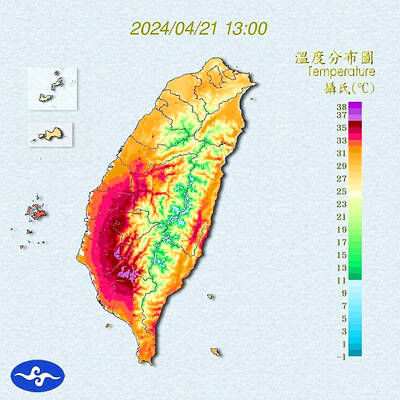
Heat advisories were in effect for nine administrative regions yesterday afternoon as warm southwesterly winds pushed temperatures above 38°C in parts of southern Taiwan, the Central Weather Administration (CWA) said. As of 3:30pm yesterday, Tainan’s Yujing District (玉井) had recorded the day’s highest temperature of 39.7°C, though the measurement will not be included in Taiwan’s official heat records since Yujing is an automatic rather than manually operated weather station, the CWA said. Highs recorded in other areas were 38.7°C in Kaohsiung’s Neimen District (內門), 38.2°C in Chiayi City and 38.1°C in Pingtung’s Sandimen Township (三地門), CWA data showed. The spell of scorching


 RSS
RSS