


President Ma Ying-jeou (馬英九), while campaigning for the presidential election, had devoted a chapter of his election platform to human rights, and in his inaugural speech last May reiterated his promises to improve the nation’s human rights and to respect press freedom. Earlier this month, Ma signed two UN covenants — the International Covenant on Civil and Political Rights and the International Covenant on Economic, Social and Cultural Rights — which he described as marking a milestone in the country’s efforts to protect human rights.
Human rights activists and Ma’s critics, however, challenged his administration’s commitment to human rights based on its reaction to several incidents over the last year, including Ma’s rejection of Tibetan spiritual leader the Dalai Lama’s proposed visit to Taiwan and the police’s handling of protests against the visit of Association for Relations Across the Taiwan Strait Chairman Chen Yunlin (陳雲林) in November.
DALAI LAMA
Prior to the election on March 22 last year, Ma, then the Chinese Nationalist Party (KMT) presidential candidate, condemned China for its bloody crackdown in Tibet, and added that he would welcome a visit by the Dalai Lama if he became president.
Ma’s attitude seemed to change soon after he took office on May 20 last year. In a meeting with foreign reporters in December, Ma said the timing for a visit by the Dalai Lama was not right.
Violent clashes between the police and protesters during a demonstration in November against Chen’s visit also sparked concern among human rights groups about human rights under the Ma administration. More than 100 people, including protesters and police officers, were injured in the clashes, with TV footage showing several people being beaten by police.
During Chen’s visit to Taipei, police also stopped people carrying Republic of China flags and shut down a record store that was playing a pro-Taiwan song. The government did not apologize for reports of police brutality.
In its Freedom in the World 2009 report issued in January, US-based Freedom House expressed concern over the confrontations during Chen’s visit.
Taiwan Association for Human Rights chairperson Lin Chia-fan (林佳範) said Ma’s endorsement of the two UN covenants was an important step in Taiwan’s human rights history, but added that the police crackdown on protesters during Chen’s visit revealed a contradiction between Ma’s words and his administration’s actions.
The government’s proposed amendment of the Assembly and Parade Act (集會遊行法), Lin said, was another example of the Ma administration’s lack of determination to protect human rights.
The Cabinet’s version of the amendment implemented Ma’s campaign promise of relaxing regulations so that demonstrators would not need to apply for permission before holding a rally. The pan-green camp and human rights groups, however, criticized a clause in the amendment that would allow a fine of up to NT$50,000 for organizers who failed to notify police of a planned demonstration.
The amendment would also give police the right to ban a rally or change its route if they believed it would jeopardize national security, social order or the public interest.
“Ma’s words and promises are not enough. He should demand that all government bodies act on his words and implement policies to improve human rights,” Lin said.
DETENTION
Lin said the government should also work harder to safeguard the human rights of defendants in criminal cases and prisoners in the wake of the prosecution of former president Chen Shui-bian (陳水扁).
The “preventative detention” of Chen Shui-bian and a number of other Democratic Progressive Party members last year also sparked concerns among jurists and human rights groups over the protection of the rights of defendants and prisoners in Taiwan.
Jerome Cohen, an expert in Asian Law at New York University and Ma’s mentor during his studies at Harvard University, in January challenged the judiciary’s handling of the case against Chen Shui-bian in an opinion piece titled “Chen judges bungle their chance” that appeared in the South China Morning Post.
Cohen accused judges of ruining a chance to show the “independence, impartiality and competence” of Taiwan’s judiciary, adding that the country’s vibrant democracy was under threat from its seemingly flawed judicial system.
A fair trial for the former president, he said, “would vindicate the values of clean government, deter potential wrongdoers and heighten confidence in courts.”
Other human rights groups, including the Taiwan-Canadian Friendship Group, also expressed concern over the issue and called on the judiciary to guard against abusing the system of preventative detention.
On the issue of press freedom, Ma had vowed during his presidential campaign to oppose government intervention in the media and signed a declaration launched by the Association of Taiwan Journalists targeting product placement in news programs.
Association of Taiwan Journalists chairman Leon Chuang (莊豐嘉) said Ma and his administration have failed to fulfill the promise, as former aides of Ma were given management positions at the state-owned Radio Taiwan International and the Central News Agency (CNA) after he took office.
BIG ADVERTISER
The government also sought to control media content through placement marketing, Chuang said.
“The government has become one of the biggest advertisers in local media. The media have criticized the government less because they don’t want to displease the advertiser,” he added.
In the Freedom House survey, Taiwan’s press freedom ranking fell by 11 places from last year’s list.
The report indicated that the reason Taiwan’s ranking had declined was because “media in Taiwan faced assault and growing government pressure.”
Lin said Ma should establish a national human rights commission and invite human rights activists to work with the government to improve the nation’s human rights situation.
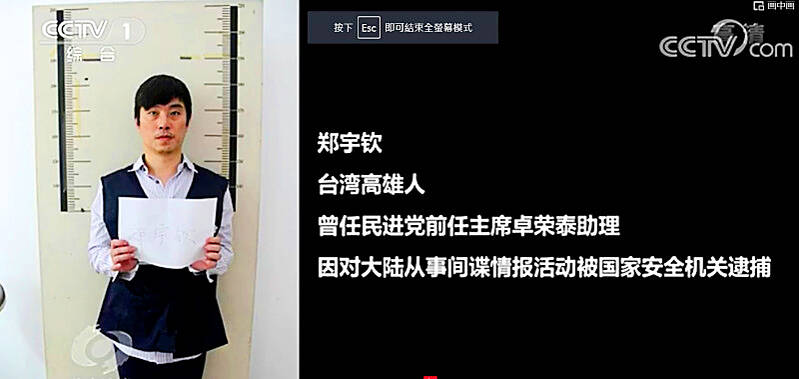
Former Czech Republic-based Taiwanese researcher Cheng Yu-chin (鄭宇欽) has been sentenced to seven years in prison on espionage-related charges, China’s Ministry of State Security announced yesterday. China said Cheng was a spy for Taiwan who “masqueraded as a professor” and that he was previously an assistant to former Cabinet secretary-general Cho Jung-tai (卓榮泰). President-elect William Lai (賴清德) on Wednesday last week announced Cho would be his premier when Lai is inaugurated next month. Today is China’s “National Security Education Day.” The Chinese ministry yesterday released a video online showing arrests over the past 10 years of people alleged to be
THE HAWAII FACTOR: While a 1965 opinion said an attack on Hawaii would not trigger Article 5, the text of the treaty suggests the state is covered, the report says NATO could be drawn into a conflict in the Taiwan Strait if Chinese forces attacked the US mainland or Hawaii, a NATO Defense College report published on Monday says. The report, written by James Lee, an assistant research fellow at Academia Sinica’s Institute of European and American Studies, states that under certain conditions a Taiwan contingency could trigger Article 5 of NATO, under which an attack against any member of the alliance is considered an attack against all members, necessitating a response. Article 6 of the North Atlantic Treaty specifies that an armed attack in the territory of any member in Europe,
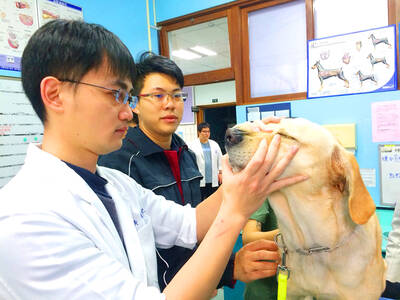
LIKE FAMILY: People now treat dogs and cats as family members. They receive the same medical treatments and tests as humans do, a veterinary association official said The number of pet dogs and cats in Taiwan has officially outnumbered the number of human newborns last year, data from the Ministry of Agriculture’s pet registration information system showed. As of last year, Taiwan had 94,544 registered pet dogs and 137,652 pet cats, the data showed. By contrast, 135,571 babies were born last year. Demand for medical care for pet animals has also risen. As of Feb. 29, there were 5,773 veterinarians in Taiwan, 3,993 of whom were for pet animals, statistics from the Animal and Plant Health Inspection Agency showed. In 2022, the nation had 3,077 pediatricians. As of last
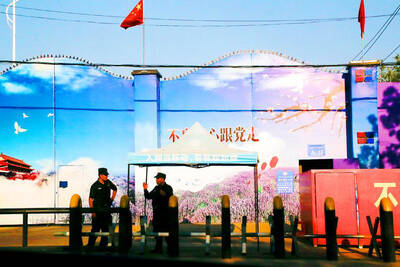
XINJIANG: Officials are conducting a report into amending an existing law or to enact a special law to prohibit goods using forced labor Taiwan is mulling an amendment prohibiting the importation of goods using forced labor, similar to the Uyghur Forced Labor Prevention Act (UFLPA) passed by the US Congress in 2021 that imposed limits on goods produced using forced labor in China’s Xinjiang region. A government official who wished to remain anonymous said yesterday that as the US customs law explicitly prohibits the importation of goods made using forced labor, in 2021 it passed the specialized UFLPA to limit the importation of cotton and other goods from China’s Xinjiang Uyghur region. Taiwan does not have the legal basis to prohibit the importation of goods


 RSS
RSS