


Statistics released last month on the results of this year's college entrance examination sent a shock wave through the education community, with the sharp increase in the number of students who scored zero in English composition.
The figures, published by the College Entrance Examination Center, showed that the number of examinees who scored zero in the guided writing section hit a five-year high of 22,462, out of a total of 141,858 test-takers. This compares with 16,168 examinees who netted a zero last year.
The number of students who scored zero in the English translation section also rose sharply from 15,660 last year to 22,179 this year.
The percentage of students who performed poorly in the writing section was closely in line with the findings of Hugo Tseng (曾泰元), a professor of English language and literature at Soochow University who graded about 2,000 of the English compositions in the entrance examination this year.
SPELLING
“There was obviously a decline in students' English writing proficiency ... the most surprising decline was in spelling,” said Tseng, who has worked with the center to grade college entrance examination papers over the past decade. “Spelling is the most basic facet of a language. Without this building block, a person would never be proficient — let alone be able to write a simple sentence.”
Very few examinees — less than 10 percent — were able to write a well-structured English composition, Tseng said.
“The majority of the compositions [I graded] did not have any structure,” he said.
The sharp increase in the number of examinees who failed in the writing section could have been a result of a more complicated and difficult writing topic, as this was the first time examinees were given a static picture instead of a comic strip.
Students were required to describe and elaborate on a picture with a person standing in front of a pile of debris — a test Tseng said involved students' cognition ability.
“Describing a picture is much more difficult because students have to use logic and analysis, while a comic strip already has a storyline,” said Chen Chao-ming (陳超明), a professor of English at National Chengchi University (NCCU).
Although the writing test was admittedly more difficult, it also highlighted several key problems.
“Our high school graduates lack analytical skills. They lack training,” Chen said, adding that the examinees were unable to describe the scene because of their limited vocabulary.
“They did not know the word 'collapse.' They could not even use the word 'fall' [to describe the debris] even if they had learned this word in junior high school,” Chen said.
Even his undergraduate students at NCCU had difficulty reciting the whole alphabet or giving the spelling of the 12 months, he said.
The decline in spelling ability could be the result of teachers' excessive emphasis on “input” to students.
Teachers spend too much time teaching students materials from textbooks but fail to demand a corresponding “output” from students, Chen said.
The decline in students' English writing ability also stands in sharp contrast with the government's increasing emphasis on English learning.
Asked what he thought was wrong with the system, Tseng said: “I wonder if our high schools reserve special sessions to teach English writing.”
The truth is they are not required to do so. English writing classes are optional rather than mandatory.
GUIDELINES
Current high school curriculum guidelines require schools to reserve four sessions — approximately 200 minutes — per week for English classes, but they do not necessarily have to provide English writing classes.
Even if schools would like to offer English writing lessons, school authorities could only do so after the schools' English teaching staff win over teachers of other subjects in a vote for teaching hours at the beginning of every semester.
“If we fail to obtain any [elective] teaching hours at the vote, we can't schedule any [writing] classes that semester,” a high school English teacher surnamed Hsieh (謝) said in Taichung.
Despite the lack of official writing classes, the curriculum guidelines still set goals for high school students' English writing proficiency.
The guidelines state that high school graduates should be able to “correctly distinguish a capital letter from a small letter and use punctuation marks.”
Graduates should have the ability to “correctly merge and paraphrase sentences” and make correct sentences by using appropriate phrases or sentence patterns.
Students should be able to write a smooth and clear paragraph by the time they finish high school, the guidelines say.
But the harsh reality is that with only four English sessions per week, teachers may not have enough time to teach students how to write properly.
“I distribute work sheets to freshmen and mention some writing concepts when teaching the materials readings in the textbook. That's all I can do,” Hsieh said.
Gary Chi (紀昇助), an English teacher at Taipei's Huajiang Senior High School, said he could only assign students weekly translation practice.
“I've found that it would be too much to ask them to write a passage before they could construct a grammatical sentence. And really, they can't write grammatical sentences,” Chi said.
Chi said he tried to introduce basic writing concepts to his students, but “writing is almost as difficult as calculus” to the students.
Chi said although he wanted to spend extra time helping students polish their writing, he was exhausted after spending every week grading the compositions of his 88 students.
Doing so also seriously put him behind his regular teaching schedule, Chi said, acknowledging the difficulty for teachers to help individual student with their writing in a large class.
DOWNSIZE
“What we are doing now is wrong. Classes should be downsized to 15 students, starting from primary school,” he said.
Chen also emphasized the importance of teachers changing their methodology from explaining grammar to allowing students to actually use language.
“We will never make it if we still teach the English language as an academic subject,” he said.
Tseng said learning how to write in English should begin in junior high school with sentence-making and gradually evolve to writing in paragraphs in senior high school.
Another problem at the policy level, he said, was that the Ministry of Education should stop measuring every student's writing proficiency with the curriculum guidelines.
“This is like measuring the ability of students with different levels of proficiency using the same criterion. This is impractical,” he said. “Everyone has a different problem. There should be an approach catering to everyone's needs.”

Former president Ma Ying-jeou’s (馬英九) mention of Taiwan’s official name during a meeting with Chinese President Xi Jinping (習近平) on Wednesday was likely a deliberate political play, academics said. “As I see it, it was intentional,” National Chengchi University Graduate Institute of East Asian Studies professor Wang Hsin-hsien (王信賢) said of Ma’s initial use of the “Republic of China” (ROC) to refer to the wider concept of “the Chinese nation.” Ma quickly corrected himself, and his office later described his use of the two similar-sounding yet politically distinct terms as “purely a gaffe.” Given Ma was reading from a script, the supposed slipup
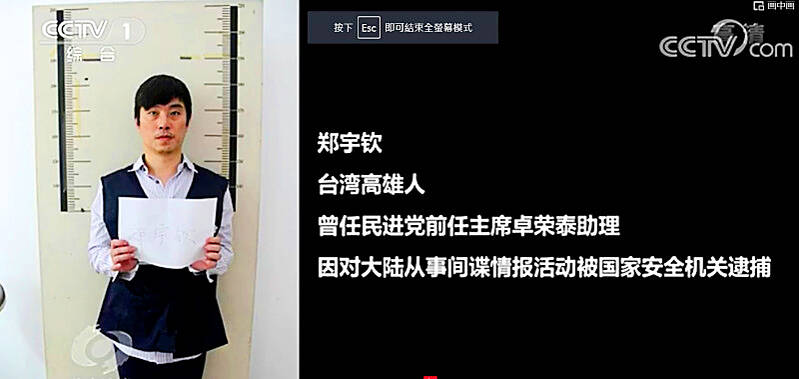
Former Czech Republic-based Taiwanese researcher Cheng Yu-chin (鄭宇欽) has been sentenced to seven years in prison on espionage-related charges, China’s Ministry of State Security announced yesterday. China said Cheng was a spy for Taiwan who “masqueraded as a professor” and that he was previously an assistant to former Cabinet secretary-general Cho Jung-tai (卓榮泰). President-elect William Lai (賴清德) on Wednesday last week announced Cho would be his premier when Lai is inaugurated next month. Today is China’s “National Security Education Day.” The Chinese ministry yesterday released a video online showing arrests over the past 10 years of people alleged to be
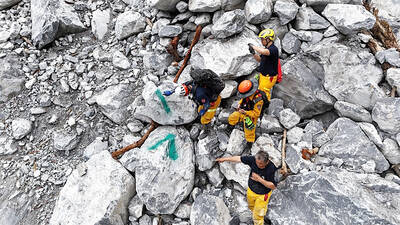
The bodies of two individuals were recovered and three additional bodies were discovered on the Shakadang Trail (砂卡礑) in Taroko National Park, eight days after the devastating earthquake in Hualien County, search-and-rescue personnel said. The rescuers reported that they retrieved the bodies of a man and a girl, suspected to be the father and daughter from the Yu (游) family, 500m from the entrance of the trail on Wednesday. The rescue team added that despite the discovery of the two bodies on Friday last week, they had been unable to retrieve them until Wednesday due to the heavy equipment needed to lift
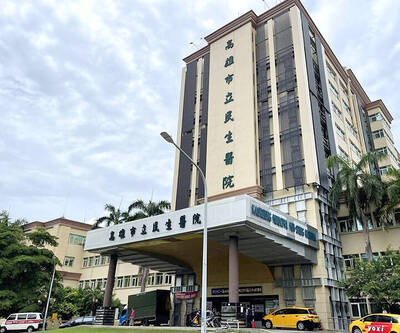
MIX-UP: Kaohsiung Municipal Min-Sheng Hospital director Yen Chia-chi was suspended from his duties after surgeons operated on the wrong patient last week The Kaohsiung Department of Health yesterday fined Kaohsiung Municipal Min-Sheng Hospital NT$500,0000 for misidentifying two patients and consequently causing one of them to undergo the wrong surgery last week. The hospital’s director Yen Chia-chi (顏家祺) was suspended from his duties. The surgeon who was scheduled to operate on the patient was given a major demerit and is subject to subsequent disciplinary actions. Demerits were given to the anesthesiologist, the nurse in the operation room, the nurse in the ward and the worker who helped transfer the patient from the ward to the operation room for having failed to verify the patient’s identity. Meanwhile, the


 RSS
RSS