


When Walter Kirkby was incarcerated at the Japanese prison camp in Jinguashi (金瓜石) during World War II, one of the rare happy moments was singing a song composed by one of his fellow prisoners of war (POWs).
“It kept our spirits up,” said the 88-year-old Englishman from the northern county of Yorkshire.
Kirkby was one of the 1,100 British Commonwealth and Allied POWs interned at the Kinkaseki camp during World War II and the only one to return to the site yesterday morning to commemorate a time of torment.

PHOTO: KO SHU-LING, TAIPEI TIMES
Jinguashi was home to the infamous Kinkaseki “Hell Camp” from November 1942 until the surrender of the Imperial Japanese Army in Taiwan in August 1945. The POWs were subjected to inhumane treatment, denied the most basic of medical facilities and flogged by their jailers — some of who were Taiwanese. And many prisoners were, quite literally, worked to death.
Kirkby spent three-and-a-half years in Kinkaseki between 1942 and 1945 after being captured in Singapore and then shipped to Taiwan.
Singing the song Down the Mine on the bus to the picturesque Taipei County township yesterday, Kirkby said conditions in the camp’s mine were harsh — unbearably hot and humid. The prisoners had no proper gear and many got sick.
There were also many accidents, he said. One time the roof of the mine caved in, breaking his right arm and leg and injuring his back. He could not work for a month. His back still bothers him to this day.
Kirkby said he went down to the mine in the morning when it was dark and did not come back up until the lights were on. To go to the mine from the camp, Kirkby said he and his fellow prisoners had to climb up and down a mountain, a journey that took hours.
For a hard day’s work, they got only a small bowl of rice with a few vegetables and no meat or fish. Kirkby said if they did not get enough copper out they had to go back to the mine.
They were constantly punished, Kirkby said, beaten with sticks. He saw many of his comrades die in front of him.
“I can never forget them, never forgive them, never,” he said.
When asked whether he still held a grudge against the Japanese, he said “I certainly don’t like them, that’s for sure. The farther they are away from me the better. Let me put it that way.”
Kirkby said coming back to the site brought back bad memories and he was at a loss for words to describe how he felt. He was welling up at one point during the ceremony.
“It’s nice to know that some people think of what was happening in the past. It’s definitely important to remember,” he said. “You realize someone cares about you. Someone thinks about you.”
What the Taiwan POW Camps Memorial Society has done for the POWs is more than his government ever did, he said.
Christine Gate, Kirkby’s daughter, said that her father did not speak much about the days at the camp when they were growing up until 30 years ago when he began being active with the reunion with POW survivors. It was a reunion in September that made Kirkby want to come back to the camp, she said.
Gate said when she listened to her father’s tale, it was hard to imagine how a human being could do such things to another human being.
While Kirkby said he will never forget nor forgive his captors, she said the past is gone and it was important to forgive but that she understood her father’s feelings after what he went through.
Kirkby’s son-in-law, Robert Gate, said that the trip was a healing process for his father-in-law. He said Kirkby had shifted unpleasant memories to the back of his mind for many years and now he can accept them and let go.
Michael Hurst, director of the Taiwan POW Camps Memorial Society, said that Kirkby was one of the younger POW survivors, most of whom are in their 90s. He did not foresee many coming back in the future because traveling half way around the world was not easy for them.
“It’s a matter of time and age and health,” he said. “You never know, this could be the last year for the POWs. It’s hard to say.”
“We must never forget the past because if we do, chances are we will end up having another war and we don’t want that,” Hurst said. “It’s important to pass their [the POWs] stories on to generations to come so that they will be remembered and we won’t repeat our mistakes.”
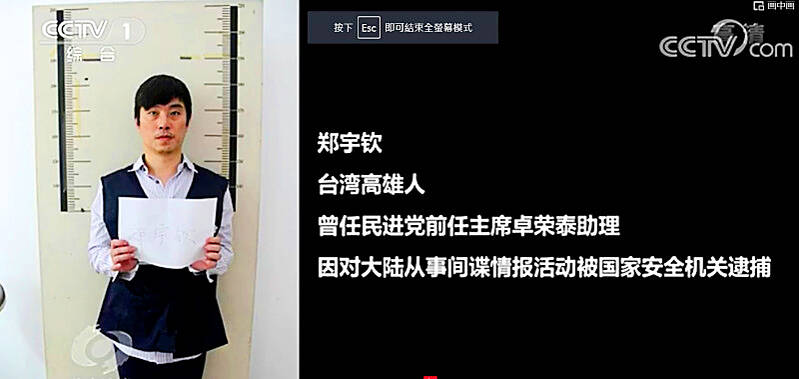
Former Czech Republic-based Taiwanese researcher Cheng Yu-chin (鄭宇欽) has been sentenced to seven years in prison on espionage-related charges, China’s Ministry of State Security announced yesterday. China said Cheng was a spy for Taiwan who “masqueraded as a professor” and that he was previously an assistant to former Cabinet secretary-general Cho Jung-tai (卓榮泰). President-elect William Lai (賴清德) on Wednesday last week announced Cho would be his premier when Lai is inaugurated next month. Today is China’s “National Security Education Day.” The Chinese ministry yesterday released a video online showing arrests over the past 10 years of people alleged to be

THE HAWAII FACTOR: While a 1965 opinion said an attack on Hawaii would not trigger Article 5, the text of the treaty suggests the state is covered, the report says NATO could be drawn into a conflict in the Taiwan Strait if Chinese forces attacked the US mainland or Hawaii, a NATO Defense College report published on Monday says. The report, written by James Lee, an assistant research fellow at Academia Sinica’s Institute of European and American Studies, states that under certain conditions a Taiwan contingency could trigger Article 5 of NATO, under which an attack against any member of the alliance is considered an attack against all members, necessitating a response. Article 6 of the North Atlantic Treaty specifies that an armed attack in the territory of any member in Europe,
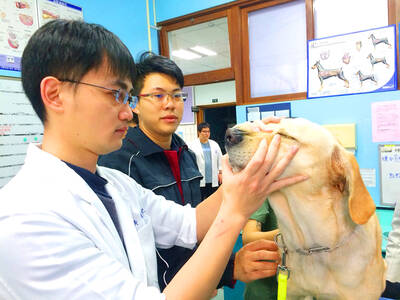
LIKE FAMILY: People now treat dogs and cats as family members. They receive the same medical treatments and tests as humans do, a veterinary association official said The number of pet dogs and cats in Taiwan has officially outnumbered the number of human newborns last year, data from the Ministry of Agriculture’s pet registration information system showed. As of last year, Taiwan had 94,544 registered pet dogs and 137,652 pet cats, the data showed. By contrast, 135,571 babies were born last year. Demand for medical care for pet animals has also risen. As of Feb. 29, there were 5,773 veterinarians in Taiwan, 3,993 of whom were for pet animals, statistics from the Animal and Plant Health Inspection Agency showed. In 2022, the nation had 3,077 pediatricians. As of last
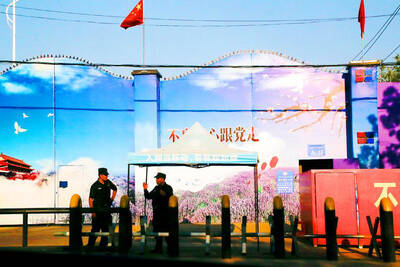
XINJIANG: Officials are conducting a report into amending an existing law or to enact a special law to prohibit goods using forced labor Taiwan is mulling an amendment prohibiting the importation of goods using forced labor, similar to the Uyghur Forced Labor Prevention Act (UFLPA) passed by the US Congress in 2021 that imposed limits on goods produced using forced labor in China’s Xinjiang region. A government official who wished to remain anonymous said yesterday that as the US customs law explicitly prohibits the importation of goods made using forced labor, in 2021 it passed the specialized UFLPA to limit the importation of cotton and other goods from China’s Xinjiang Uyghur region. Taiwan does not have the legal basis to prohibit the importation of goods


 RSS
RSS