


When 55-year-old Chiu was diagnosed with breast cancer last September, she was told that after undergoing surgery and chemotherapy, she could better battle a reoccurrence of the cancer by taking a new target-therapy drug called Herceptin. However, she could not afford to pay for the drug because it would cost her NT$1 million a year.
Chiu said her doctor, knowing she couldn’t afford the drug, suggested she take fewer doses, because “less is still better than none at all.”
“My doctor told me that some people are on a NT$500,000 plan, and there are a few people using the NT$350,000 plan,” said Chiu, a mother of two whose husband regularly needs dialysis to cleanse his kidneys.
“But even if I had that much money [NT$350,000], I would save it for living expenses,” she said.
Her two children have already started working, but they each have their own families and Chiu said she did not want to burden them with her “luxury drug.”
“I wouldn’t want to spend my entire savings [on Herceptin]. I still need it for my day-to-day expenses and for my family,” she said. “So when I heard how much the drug costs, I couldn’t even open my mouth to tell my family about it.”
“I didn’t have NT$350,000, and even if I did, I would save it for my family. If I could choose again, I would still save it for my family,” she said lowering her head, hairless from the chemotherapy, to look at her hands.
With less than NT$100,000 in her bank account, she told herself, “I’ll see where life takes me.”
But her cancer reappeared. Early this year, the cancer spread to her bones, and in July, to her liver.
Because the cancer was now so widespread, she finally qualified for coverage under the National Health Insurance (NHI) system for Herceptin treatment in August.
“I watched as the drug entered my body, drop by drop, and I thought, does this drug mean I still have hope, or does it mean I am nearing the end?” she said.
Chiu is one of the more than 6,000 women affected by breast cancer each year in Taiwan.
Breast cancer is the only form of cancer that has been medically proven to be effectively treated with target therapy drugs, said Wang Cheng-hsu (王正旭), president of the Hope Society for Cancer Care.
In target therapy, the chemotherapy targets the molecules that feed tumor growth and allows tumors to spread, which not only effectively prevents cancer recurrence, but also decreases the side effects of conventional chemotheraphy.
Large-scale clinical trials have proven that Herceptin can effectively reduce the recurrence of breast cancer by 36 percent to 52 percent, and reduce the mortality rate by 33 percent to 41 percent, said Chang Hsieh-kun, an attending physician of Chang Gung Memorial Hospital’s medical oncology division and internal medicine department.
But NHI only covers Herceptin for patients whose cancer has metastasized to other parts of the body.
In the UK, Germany, Canada and other developed countries, the governments fully cover the use of Herceptin both for early breast cancer treatment and metastatic breast cancer, while only metastatic breast cancer is reimbursed in Taiwan, Chang said.
“This means that a cancer patient has to wait until the cancer gets really bad in order to receive treatment,” Chang said.
While it might appear to be a greater burden on the NHI to fund target therapy drugs like Herceptin for early stage breast cancer, the contrary is true, he said.
“If we wait until the cancer spreads, the money [for Herceptin] still has to be spent eventually, but if we can stop cancer before it spreads, not only will this benefit cancer patients, but also decrease the social costs involved in caring for them,” he said.
“It’s actually cheaper [for the government] to pay for the drug in early stages of cancer,” Chang said.
Breast cancer is one cancer that is usually detected fairly early, which means patients have the chance to benefit from target therapy drugs before it’s too late, Wang said.
Chiu, like many other cancer patients, is angry that she had to wait until her cancer invaded other parts of her body to receive Herceptin treatment.
“If I was told that there is no cure for my sickness, then at least I could be reassured that this was a problem which could not be solved and I couldn’t do anything about it,” Chiu said.
“Instead I was told that there was a solution, but the solution was too expensive … How is that supposed to make me feel?” she said.
Many patients have to choose between using up their life savings to battle their cancer or giving up.
“Many patients say to me, ‘Should I be glad that my cancer hasn’t spread yet, or feel unlucky because the NHI doesn’t cover my drug?’” Wang said.
Even though cancer is the No. 1 cause of death in Taiwan, killing about 35,000 people annually, only 6 percent of the national health expenditure is spent on cancer treatment, the Bureau of National Health Insurance (BNHI) said in a 2004 report.
The Hope Society for Cancer Care has urged the bureau to speed up the approval process for cancer drugs.
It takes an average of 13.27 months for a drug to go from obtaining marketing approval to the bureau approving it for coverage, Wang said.
Some drugs can take four to six years.
“How can cancer patients wait that long?” Wang said.
BNHI spokesperson Huang Sui-fang (黃穗芬) said that a certain amount of time is needed for a drug to go through the approval process because the bureau must invite experts to meet and discuss whether the drug should be covered under the NHI program.
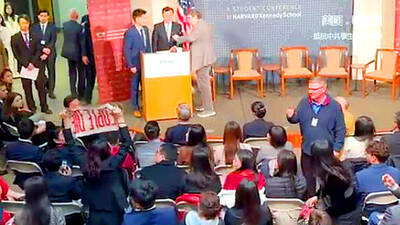
A group of Taiwanese-American and Tibetan-American students at Harvard University on Saturday disrupted Chinese Ambassador to the US Xie Feng’s (謝鋒) speech at the school, accusing him of being responsible for numerous human rights violations. Four students — two Taiwanese Americans and two from Tibet — held up banners inside a conference hall where Xie was delivering a speech at the opening ceremony of the Harvard Kennedy School China Conference 2024. In a video clip provided by the Coalition of Students Resisting the CCP (Chinese Communist Party), Taiwanese-American Cosette Wu (吳亭樺) and Tibetan-American Tsering Yangchen are seen holding banners that together read:

UNAWARE: Many people sit for long hours every day and eat unhealthy foods, putting them at greater risk of developing one of the ‘three highs,’ an expert said More than 30 percent of adults aged 40 or older who underwent a government-funded health exam were unaware they had at least one of the “three highs” — high blood pressure, high blood lipids or high blood sugar, the Health Promotion Administration (HPA) said yesterday. Among adults aged 40 or older who said they did not have any of the “three highs” before taking the health exam, more than 30 percent were found to have at least one of them, Adult Preventive Health Examination Service data from 2022 showed. People with long-term medical conditions such as hypertension or diabetes usually do not
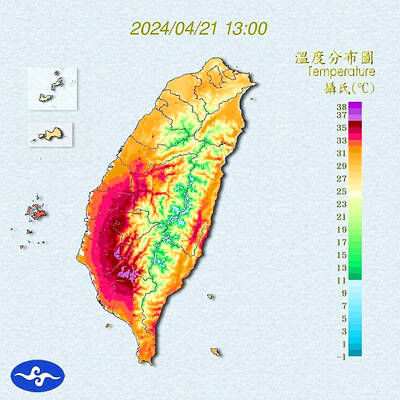
Heat advisories were in effect for nine administrative regions yesterday afternoon as warm southwesterly winds pushed temperatures above 38°C in parts of southern Taiwan, the Central Weather Administration (CWA) said. As of 3:30pm yesterday, Tainan’s Yujing District (玉井) had recorded the day’s highest temperature of 39.7°C, though the measurement will not be included in Taiwan’s official heat records since Yujing is an automatic rather than manually operated weather station, the CWA said. Highs recorded in other areas were 38.7°C in Kaohsiung’s Neimen District (內門), 38.2°C in Chiayi City and 38.1°C in Pingtung’s Sandimen Township (三地門), CWA data showed. The spell of scorching
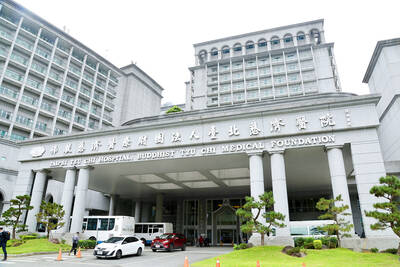
POLICE INVESTIGATING: A man said he quit his job as a nurse at Taipei Tzu Chi Hospital as he had been ‘disgusted’ by the behavior of his colleagues A man yesterday morning wrote online that he had witnessed nurses taking photographs and touching anesthetized patients inappropriately in Taipei Tzu Chi Hospital’s operating theaters. The man surnamed Huang (黃) wrote on the Professional Technology Temple bulletin board that during his six-month stint as a nurse at the hospital, he had seen nurses taking pictures of patients, including of their private parts, after they were anesthetized. Some nurses had also touched patients inappropriately and children were among those photographed, he said. Huang said this “disgusted” him “so much” that “he felt the need to reveal these unethical acts in the operating theater


 RSS
RSS