


Former Department of Health minister Chen Chien-jen (陳建仁) yesterday criticized the health authorities for relying on melamine standards set by the US and European countries rather than adopting their own.
The comments were made during a question-and-answer session following a lecture at Academia Sinica, where Chen is a research fellow at the Genomic Research Center.
Chen said the nation’s health officials should conduct a comprehensive health risk assessment of melamine, which should take into consideration the rate of exposure to the agent rather than looking at the tolerable daily intake values set by the US Food and Drug Administration.
“Taiwan should have its own set of melamine standards because we have a higher exposure rate than the US and European countries … If we only follow their standards, then it means we didn’t do our own risk assessment,” Chen said.
Melamine is an industrial chemical used by some Chinese food makers to produce a false high level of protein in a wide variety of foods. The chemical is used to make plastics.
In August, a shipment of 25 tonnes of China-made milk powder containing melamine was found to have been sold in Taiwan, causing panic among consumers. Since then, Taiwan has been engulfed in a food scare, with a number of Taiwanese companies recalling their products after non-dairy creamers imported from China were also found to contain melamine.
Some of the products, however, were allowed to remain on the shelves temporarily last month after the department revised its standard for acceptable levels of melamine content in food to 2.5 parts per million (ppm).
In the face of widespread criticism, the department reverted to a standard for melamine content at “undetectable” using the most sensitive test — liquid chromatography/tandem mass spectrometry — which can detect melamine levels as low as 0.05ppm.
Chen yesterday declined to comment on whether he approved of the manner in which the department has dealt with the melamine scandal, but said there were areas for improvement, such as having clear, evidence-based standards for pulling products from the shelves or for reintroducing them on the market.
“When setting standards [for recalling products], they [health officials] should also consider the impact it will have on the food industry,” he said.
Because of limitations in testing instruments and possible contamination from containers, it is unreasonable to expect zero melamine in foods, but health officials should ensure that the melamine concentration is so low that “it couldn’t have been added on purpose,” Chen said.
During his lecture, titled “the environment, genes and human diseases,” Chen emphasized the importance of disease surveillance and reporting. He used the SARS outbreak of 2003 as an example, saying that the situation would have been much less severe if China had allowed more transparency in its reporting on SARS.
ADDITIONAL REPORTING BY CNA
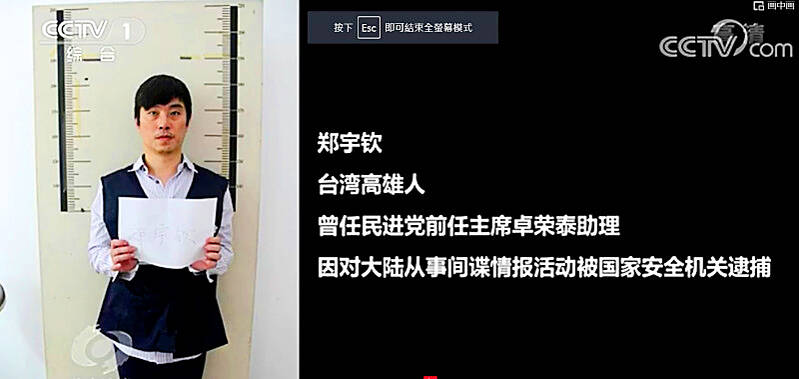
Former Czech Republic-based Taiwanese researcher Cheng Yu-chin (鄭宇欽) has been sentenced to seven years in prison on espionage-related charges, China’s Ministry of State Security announced yesterday. China said Cheng was a spy for Taiwan who “masqueraded as a professor” and that he was previously an assistant to former Cabinet secretary-general Cho Jung-tai (卓榮泰). President-elect William Lai (賴清德) on Wednesday last week announced Cho would be his premier when Lai is inaugurated next month. Today is China’s “National Security Education Day.” The Chinese ministry yesterday released a video online showing arrests over the past 10 years of people alleged to be
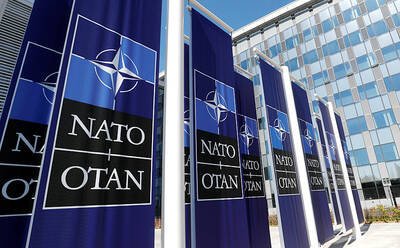
THE HAWAII FACTOR: While a 1965 opinion said an attack on Hawaii would not trigger Article 5, the text of the treaty suggests the state is covered, the report says NATO could be drawn into a conflict in the Taiwan Strait if Chinese forces attacked the US mainland or Hawaii, a NATO Defense College report published on Monday says. The report, written by James Lee, an assistant research fellow at Academia Sinica’s Institute of European and American Studies, states that under certain conditions a Taiwan contingency could trigger Article 5 of NATO, under which an attack against any member of the alliance is considered an attack against all members, necessitating a response. Article 6 of the North Atlantic Treaty specifies that an armed attack in the territory of any member in Europe,
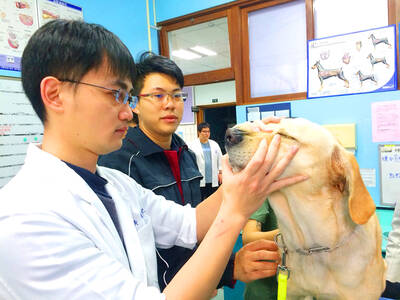
LIKE FAMILY: People now treat dogs and cats as family members. They receive the same medical treatments and tests as humans do, a veterinary association official said The number of pet dogs and cats in Taiwan has officially outnumbered the number of human newborns last year, data from the Ministry of Agriculture’s pet registration information system showed. As of last year, Taiwan had 94,544 registered pet dogs and 137,652 pet cats, the data showed. By contrast, 135,571 babies were born last year. Demand for medical care for pet animals has also risen. As of Feb. 29, there were 5,773 veterinarians in Taiwan, 3,993 of whom were for pet animals, statistics from the Animal and Plant Health Inspection Agency showed. In 2022, the nation had 3,077 pediatricians. As of last
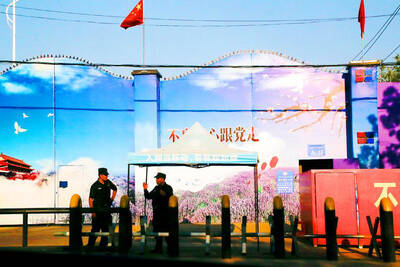
XINJIANG: Officials are conducting a report into amending an existing law or to enact a special law to prohibit goods using forced labor Taiwan is mulling an amendment prohibiting the importation of goods using forced labor, similar to the Uyghur Forced Labor Prevention Act (UFLPA) passed by the US Congress in 2021 that imposed limits on goods produced using forced labor in China’s Xinjiang region. A government official who wished to remain anonymous said yesterday that as the US customs law explicitly prohibits the importation of goods made using forced labor, in 2021 it passed the specialized UFLPA to limit the importation of cotton and other goods from China’s Xinjiang Uyghur region. Taiwan does not have the legal basis to prohibit the importation of goods


 RSS
RSS