


Two years of collaboration between researchers from Taiwan, the US and South Korea recently found that the outer Solar System might not be as crowded as astronomers thought.
The Taiwanese-American Occultation Survey (TAOS) — a cooperation project between Academia Sinica’s Institute of Astronomy and Astrophysics, the Harvard-Smithsonian Center for Astrophysics, the Lawrence Livermore National Laboratory’s Institute of Geophysics and Planetary Physics, National Central University’s (NCU) Institute of Astronomy and Yonsei University in South Korea — observed orbiting objects in the Kuiper Belt, the region beyond Neptune, since 2005, NCU said in a press release yesterday.
The research targeted objects — mostly chunks of rocks or ice — between 3km and 28km in diameter by recording the luminosity of stars as the objects passed and occluded them, NCU said.
The method made TAOS the only research team in the world that could probe these objects, as they were too small to be seen directly through a telescope, the school said.
“We were able to observe the outer Solar System ... These objects were very small, only larger than an ordinary track field,” NCU professor of astrology Chen Wen-ping (陳文屏) said.
Analysis of some 7 billion bits of data collected by the project over the past two years showed that no occultation was recorded, NCU said.
NCU vice chancellor Ip Wing-huen (葉永烜), a noted astronomer in Taiwan, said the research team estimated there were between 10 times to 100 times less orbiting objects in the Kuiper Belt than astronomers had previously estimated.
The research was published in the Astrophysical Journal Letters last Wednesday.
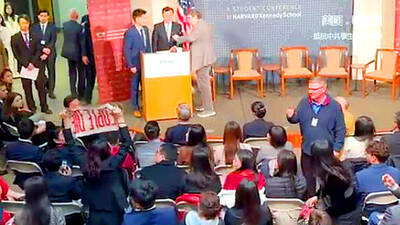
A group of Taiwanese-American and Tibetan-American students at Harvard University on Saturday disrupted Chinese Ambassador to the US Xie Feng’s (謝鋒) speech at the school, accusing him of being responsible for numerous human rights violations. Four students — two Taiwanese Americans and two from Tibet — held up banners inside a conference hall where Xie was delivering a speech at the opening ceremony of the Harvard Kennedy School China Conference 2024. In a video clip provided by the Coalition of Students Resisting the CCP (Chinese Communist Party), Taiwanese-American Cosette Wu (吳亭樺) and Tibetan-American Tsering Yangchen are seen holding banners that together read:

UNAWARE: Many people sit for long hours every day and eat unhealthy foods, putting them at greater risk of developing one of the ‘three highs,’ an expert said More than 30 percent of adults aged 40 or older who underwent a government-funded health exam were unaware they had at least one of the “three highs” — high blood pressure, high blood lipids or high blood sugar, the Health Promotion Administration (HPA) said yesterday. Among adults aged 40 or older who said they did not have any of the “three highs” before taking the health exam, more than 30 percent were found to have at least one of them, Adult Preventive Health Examination Service data from 2022 showed. People with long-term medical conditions such as hypertension or diabetes usually do not
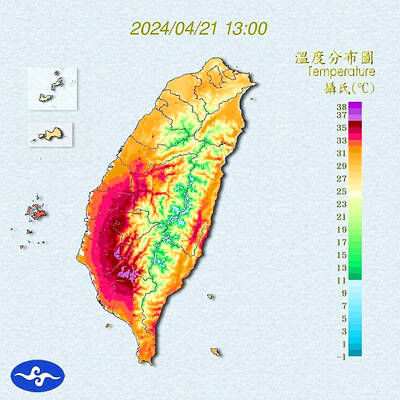
Heat advisories were in effect for nine administrative regions yesterday afternoon as warm southwesterly winds pushed temperatures above 38°C in parts of southern Taiwan, the Central Weather Administration (CWA) said. As of 3:30pm yesterday, Tainan’s Yujing District (玉井) had recorded the day’s highest temperature of 39.7°C, though the measurement will not be included in Taiwan’s official heat records since Yujing is an automatic rather than manually operated weather station, the CWA said. Highs recorded in other areas were 38.7°C in Kaohsiung’s Neimen District (內門), 38.2°C in Chiayi City and 38.1°C in Pingtung’s Sandimen Township (三地門), CWA data showed. The spell of scorching
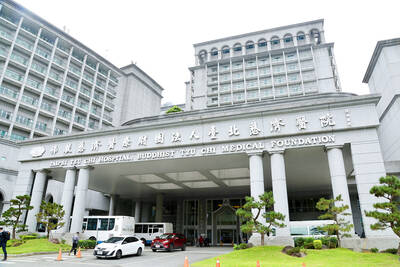
POLICE INVESTIGATING: A man said he quit his job as a nurse at Taipei Tzu Chi Hospital as he had been ‘disgusted’ by the behavior of his colleagues A man yesterday morning wrote online that he had witnessed nurses taking photographs and touching anesthetized patients inappropriately in Taipei Tzu Chi Hospital’s operating theaters. The man surnamed Huang (黃) wrote on the Professional Technology Temple bulletin board that during his six-month stint as a nurse at the hospital, he had seen nurses taking pictures of patients, including of their private parts, after they were anesthetized. Some nurses had also touched patients inappropriately and children were among those photographed, he said. Huang said this “disgusted” him “so much” that “he felt the need to reveal these unethical acts in the operating theater


 RSS
RSS