


New research by a team at National Yang-Ming University has indicated a way forward in the treatment of certain hereditary disorders.
Messenger ribonucleic acids (mRNA), which are essential in the production of proteins in eukaryotic genes, including human genes, through translation, are made from nuclear pre-messenger RNAs though a splicing process. Sometimes errors occur in the complex splicing process, leading to the production of mutated proteins.
It had previously been believed that the splicing and translation was a one-way process, but National Science Council-sponsored researcher Cheng Soo-cheng (鄭淑珍), a professor at the university’s Institute of Microbiology and Immunology, said yesterday her research team had found that both of the catalytic steps in splicing were reversible.
Her research was published in the journal Science yesterday.
The research shed new light on how some mutated-protein productions are avoided, as well as how future treatments for certain genetic disorders can be done.
“Nuclear pre-messenger RNAs are the ‘raw materials’ for mRNAs, containing both the non-coding sections called introns, and code-containing sections called exons,” Cheng told a press conference.
In the splicing process, a spliceosome, composed of five small nuclear RNAs and more than 100 protein factors, performs two consecutive transesterification reactions to remove the introns and join the exons, Cheng said, adding that the final product is mature mRNA that is ready to make proteins via a translation process.
“Many hereditary diseases, such as Mediterranean anemia, spinal muscular atrophy and retinitis pigmentosa, are caused by certain gene mutations that affect the splicing process,” she said.
“Traditionally, the protein production paradigm postulates that once a splicing error occurs, the resulting protein is bound to be wrong as well — however, we observed in vitro that under certain conditions, such as fluctuation of pH level, this process can be reversed,” Cheng said.
Cheng’s team, which includes 26-year-old Tseng Chi-kang (曾紀綱), a PhD student working in her lab, speculates that the purpose of the reverse process is to give the cells a “second chance” to produce correctly spliced mRNAs.
“Although we have not confirmed that this process occurs naturally in human cells as well, we hope that, armed with this knowledge, we can develop new treatment methods for diseases that are caused by incorrect splicing,” she said.

A group of Taiwanese-American and Tibetan-American students at Harvard University on Saturday disrupted Chinese Ambassador to the US Xie Feng’s (謝鋒) speech at the school, accusing him of being responsible for numerous human rights violations. Four students — two Taiwanese Americans and two from Tibet — held up banners inside a conference hall where Xie was delivering a speech at the opening ceremony of the Harvard Kennedy School China Conference 2024. In a video clip provided by the Coalition of Students Resisting the CCP (Chinese Communist Party), Taiwanese-American Cosette Wu (吳亭樺) and Tibetan-American Tsering Yangchen are seen holding banners that together read:

UNAWARE: Many people sit for long hours every day and eat unhealthy foods, putting them at greater risk of developing one of the ‘three highs,’ an expert said More than 30 percent of adults aged 40 or older who underwent a government-funded health exam were unaware they had at least one of the “three highs” — high blood pressure, high blood lipids or high blood sugar, the Health Promotion Administration (HPA) said yesterday. Among adults aged 40 or older who said they did not have any of the “three highs” before taking the health exam, more than 30 percent were found to have at least one of them, Adult Preventive Health Examination Service data from 2022 showed. People with long-term medical conditions such as hypertension or diabetes usually do not
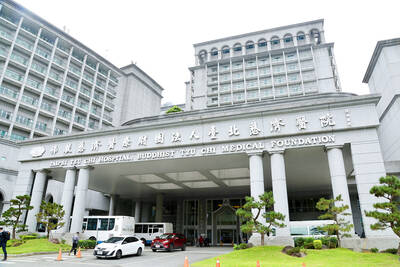
POLICE INVESTIGATING: A man said he quit his job as a nurse at Taipei Tzu Chi Hospital as he had been ‘disgusted’ by the behavior of his colleagues A man yesterday morning wrote online that he had witnessed nurses taking photographs and touching anesthetized patients inappropriately in Taipei Tzu Chi Hospital’s operating theaters. The man surnamed Huang (黃) wrote on the Professional Technology Temple bulletin board that during his six-month stint as a nurse at the hospital, he had seen nurses taking pictures of patients, including of their private parts, after they were anesthetized. Some nurses had also touched patients inappropriately and children were among those photographed, he said. Huang said this “disgusted” him “so much” that “he felt the need to reveal these unethical acts in the operating theater
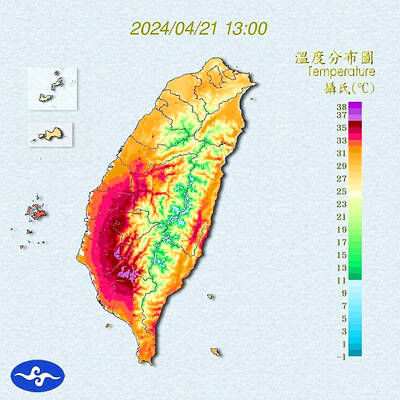
Heat advisories were in effect for nine administrative regions yesterday afternoon as warm southwesterly winds pushed temperatures above 38°C in parts of southern Taiwan, the Central Weather Administration (CWA) said. As of 3:30pm yesterday, Tainan’s Yujing District (玉井) had recorded the day’s highest temperature of 39.7°C, though the measurement will not be included in Taiwan’s official heat records since Yujing is an automatic rather than manually operated weather station, the CWA said. Highs recorded in other areas were 38.7°C in Kaohsiung’s Neimen District (內門), 38.2°C in Chiayi City and 38.1°C in Pingtung’s Sandimen Township (三地門), CWA data showed. The spell of scorching


 RSS
RSS