


Starting on Thursday, the ownership and operation of the Alishan (阿里山) mountain train will be transferred to a privately owned enterprise in a "three-in-one" Build-Operate-Transfer (BOT) project that will last 33 years, relieving the government of a NT$200 million (US$6.6 million) annual loss the train incurs.
However, a group of environmentalists yesterday lambasted the Council of Agriculture’s Forestry Bureau, saying that with inexperienced drivers manning the trains, the government is disregarding the safety and lives of tourists.
“The Alishan Railway is one of three high altitude railways in the world, and drivers apprentice for years before they can safely operate the trains,” said Lynn Lin (林子凌), secretary-general of the Wild at Heart Legal Defense Association.
But of the 50 drivers in Hung-du Alishan International Development Corp’s (HAIDC) lineup, only nine experienced drivers will be transferred from the bureau, while others will be novices, Lin said.
Even under management of the bureau, a derailment killed 17 people in 2003, leaving 171 more injured, Lin said.
From March to last month, four additional derailments occurred, Lin said, adding that although no one was seriously injured, it showed that track maintenance and driver skills were of paramount importance.
Lin said the mountain train was not the only cause of concern.
“The government offered the company lucrative incentives to take over the money-losing trains — the rights to build two hotels, one atop Alishan and another at the foot of the mountain next to the station where people board the trains,” she said.
To build the hotel atop Alishan, between 300 and 400 old trees will be chopped down, Lin said, not to mention the added damage more tourists would bring.
“And since the hotel has yet to pass its Environmental Impact Assessment [EIA], by transferring the project to a developer, the bureau is breaching the EIA law, which prohibits acts of development before a project passes its EIA,” she said.
In addition to environmentalists, the Alishan community is also “appalled” at the idea of a hotel in their neighborhood, Alishan Community Development Association chairman Liao Jing-tai (廖景泰) said.
“When tourists come to Alishan, we want them to see it in its natural condition — not with its trees chopped down,” Liao said.
Liao also said the government was employing a double standard.
“While the Alishan people — mostly descendants of lumber workers whose families have lived here for almost 100 years — were removed from that section of Alishan in 1966 by the government and told that no one could inhabit the place anymore, a hotel will now be built there,” Liao said.
In response to the accusations, Forestry Bureau Deputy Director-General Lee Tao-sheng (李桃生) said the safety of the trains under HAIDC would be the same as it is now, and the transfer decision was economically sound.
“Nine experienced drivers will go from the bureau to HAIDC, which is sufficient to cover the current train schedule, at one train on weekdays and two during weekends,” Lee said.
In addition to the drivers, 55 other bureau employees, including maintenance technicians, will serve the company, Lee said.
“The particular piece of property had been designated for hotel usage since 1966 — pending the agreement of the Cabinet. Now, the Cabinet has given the project a green light,” he said.
“BOT transfers of governmental projects is an international trend. In addition to the NT$900 million rent the government will collect in the 33 years, NT$1.06 billion in train-related expenditure can be saved, which, compared with a NT$200 million annual loss, saves a lot of tax dollars,” Lee said.
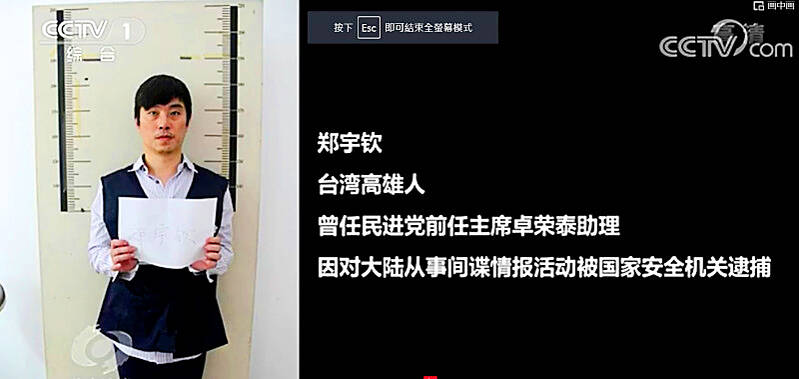
Former Czech Republic-based Taiwanese researcher Cheng Yu-chin (鄭宇欽) has been sentenced to seven years in prison on espionage-related charges, China’s Ministry of State Security announced yesterday. China said Cheng was a spy for Taiwan who “masqueraded as a professor” and that he was previously an assistant to former Cabinet secretary-general Cho Jung-tai (卓榮泰). President-elect William Lai (賴清德) on Wednesday last week announced Cho would be his premier when Lai is inaugurated next month. Today is China’s “National Security Education Day.” The Chinese ministry yesterday released a video online showing arrests over the past 10 years of people alleged to be

THE HAWAII FACTOR: While a 1965 opinion said an attack on Hawaii would not trigger Article 5, the text of the treaty suggests the state is covered, the report says NATO could be drawn into a conflict in the Taiwan Strait if Chinese forces attacked the US mainland or Hawaii, a NATO Defense College report published on Monday says. The report, written by James Lee, an assistant research fellow at Academia Sinica’s Institute of European and American Studies, states that under certain conditions a Taiwan contingency could trigger Article 5 of NATO, under which an attack against any member of the alliance is considered an attack against all members, necessitating a response. Article 6 of the North Atlantic Treaty specifies that an armed attack in the territory of any member in Europe,

LIKE FAMILY: People now treat dogs and cats as family members. They receive the same medical treatments and tests as humans do, a veterinary association official said The number of pet dogs and cats in Taiwan has officially outnumbered the number of human newborns last year, data from the Ministry of Agriculture’s pet registration information system showed. As of last year, Taiwan had 94,544 registered pet dogs and 137,652 pet cats, the data showed. By contrast, 135,571 babies were born last year. Demand for medical care for pet animals has also risen. As of Feb. 29, there were 5,773 veterinarians in Taiwan, 3,993 of whom were for pet animals, statistics from the Animal and Plant Health Inspection Agency showed. In 2022, the nation had 3,077 pediatricians. As of last

XINJIANG: Officials are conducting a report into amending an existing law or to enact a special law to prohibit goods using forced labor Taiwan is mulling an amendment prohibiting the importation of goods using forced labor, similar to the Uyghur Forced Labor Prevention Act (UFLPA) passed by the US Congress in 2021 that imposed limits on goods produced using forced labor in China’s Xinjiang region. A government official who wished to remain anonymous said yesterday that as the US customs law explicitly prohibits the importation of goods made using forced labor, in 2021 it passed the specialized UFLPA to limit the importation of cotton and other goods from China’s Xinjiang Uyghur region. Taiwan does not have the legal basis to prohibit the importation of goods


 RSS
RSS