


Taipei Times: Straits Exchange Foundation Chairman Chiang Pin-kung (江丙坤) met Chinese President Hu Jintao (胡錦濤) in Beijing on Friday afternoon after a deal was struck on cross-strait weekend charter flights and expanding Chinese tourism in Taiwan. Do you think the agreements should be approved by the legislature?
Tsai Ing-wen: Like a treaty signed with a foreign country, an executive agreement signed with China requires the approval of the legislature.
The problem with the agreements is the negotiation process was not transparent. We do not know who goes where to talk about what, when they go and with whom they talked. So we are worried.
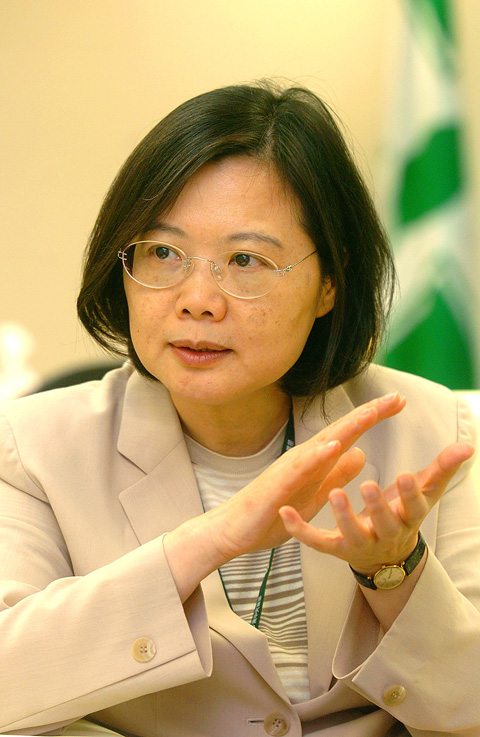
PHOTO: CHIEN JUNG-FONG, TAIPEI TIMES
It is a very sensitive issue and concerns Taiwan’s interests, but the negotiation process was not transparent and there is no due process for the legislature to make inquiries.
TT: The DPP has lodged many protests in that regard. Does the DPP have any concrete demands for the administration so they can pressure Beijing for negotiations on other issues such as membership in the IMF or World Bank?
Tsai: Cross-strait issues concern the public interest, so the KMT should sit down with the opposition party. We can talk about what issues can be placed on the table and when would be the best time to conduct the negotiations. It is important that the ruling and opposition parties reach a consensus.
It took the DPP administration about eight years to form a social consensus on charter flight services and Chinese tourism. The KMT administration must do the same if it wishes to put a new issue on the agenda.
So, it’s not a question of whether the DPP should make any suggestions to the administration but whether the administration is willing to conduct local negotiations.
TT: The DPP administration mapped out several cross-strait policies during its eight years in power. However, the public seemed to think otherwise. What’s your take on that?
Tsai: It isn’t right to say that there was no progress under the DPP administration. The DPP laid the groundwork for charter flight services, “small three links” and Chinese tourism.
I don’t think the KMT could be so bold as to do what we did if it had won the presidential election in 2000. We opened the “small three links” and charter flights. We substantially amended the Act Governing Relations between the Peoples of the Taiwan Area and the Mainland Area (台灣地區與大陸地區人民關係條例) to accommodate further liberalization in cross-strait relations.
Some may be unhappy with the progress we made, but in a democracy, the government cannot relax cross-strait policy simply because it wants to. It must take the feelings of the people into consideration. I hope the KMT government has learned its lesson from the public displeasure over its decision to increase fuel prices.
TT: You just mentioned that taking public feeling into consideration is important. The public is unhappy with the way the Cabinet handled commodities and fuel price hikes. Does the DPP have any plan to take the issue to the streets?
Tsai: Some people have told me that the government seems to be against the people. So what can the DPP do? Two things. First, we can remind the administration about things that they neglect, and we can tell them that we care about what the public think. Second, we can listen to the public and help them have their voices heard.
If the public is really unhappy with the administration, the DPP does not need to organize a demonstration as the people will take to the streets on their own initiative. People take to the street because they are disappointed with the government and think the government does not listen to them. We don’t want to see the KMT become such a government because we’re in the same boat. There is no use for the DPP to organize a protest if the people do not want to. In any case, the DPP will stand together with the people.
TT: What do you think of President Ma’s recent talk about the model of “one Germany, two states”?
Tsai: We are worried that he’s more focused on the “roof” rather than the “two separate houses” underneath. We prefer to see the owners of the two houses work together to build a roof rather than the other way around. It is important to be clear about who owns each house.
Such talk may be an improvement for Ma, but not a significant one. It poses a great danger if he puts more emphasis on the roof than on the two separate houses.
TT: The KMT administration is generally known for its pro-China attitude. Do you think there’s a blind spot in harboring that attitude?
Tsai: They assume that Taiwan’s economy will improve if the country develops a closer relationship with China. There is no reason for us to put a roadblock on the administration’s effort to improve cross-strait relations, but to pin the country’s economy on China, you can call it a blind spot, if you will.
TT: China is big and its influence is growing, while Taiwan is small in comparison. What do you think is Taiwan’s leverage? What is Taiwan’s bargaining chip?
Tsai: First, we must have sufficient defense capability. Second, because Taiwan is very small, unity is key and it is very important to form a consensus. Third, Taiwan’s democracy must be developed healthily, so the international community will be willing to help us advance our agenda and maintain balance in the Taiwan Strait.
Finally, and most importantly, national leaders must be able to create common interests with other countries. It will require a competent national security team to do the job, including the National Security Council and the National Security Bureau. Such experts are crucial but unfortunately scarce.
TT: The DPP won much praise for its efforts to strengthen Taiwan-centered consciousness during its eight years in power, but it was also heavily criticized for being impractical and inflexible. What are your thoughts on that?
Tsai: The country was still in a transitional phase when the DPP was in power. Over the eight years, the DPP engaged in a social movement to secure Taiwan’s sovereignty, but some complained that the president should not have done that and that the administration should have acted more reasonably. One must not forget, however, that the social transformation is not yet complete, although some progress was made.
We do not expect the KMT administration to make more progress on the sovereignty issue, but we hope it doesn’t backtrack because we paid a high price over the past eight years to get the country this far.
TT: On next year’s local chief elections, some have expressed doubts about your ability to lead the party to victory at the polls because you don’t have campaign experience. What would you say to your critics?
Tsai: I may not have much experience in elections, but it is also an issue whether those who do have experience are relevant to winning next year’s elections.
Over the years, we have come to realize one thing: To win an election, the image of the party and public trust in the party are important. The party’s recent election defeats have borne out this theory.
The main tasks of the party leader are to reclaim public trust in the party and to reshape the party’s image.
As for mapping campaign strategies and mobilizing supporters, the party has many experts in these areas and it is important to put the right people in the right place. It is equally important that the party is united and determined to win the elections.
That is why I have formed an election strategy task force. The convener is very experienced and he will work with his team members, who are seasoned strategists, to map out campaign strategies and implement them.
TT: You mentioned the importance of party image and party unity, but it is also true that the DPP has very weak connections with grassroots supporters.
Tsai: That is correct. That’s because we are a younger party, compared with the KMT, and we are not like the KMT, which has spent 50 or 60 years developing its relationship with grassroots supporters.
The rise of the DPP came from public identification with our ideals and not the party’s close relationship with the public on a local level. A party like that can be easily defeated if its image is tarnished and people lose their confidence. That’s also why the DPP has risen so fast and fallen as swiftly.
To expand our grassroots support, we will strengthen our services and rationally communicate our ideals to the public. As for funding their activities or bus tours or giving red envelopes on special occasions, it’s not because we are reluctant but because we don’t have many resources to do so.
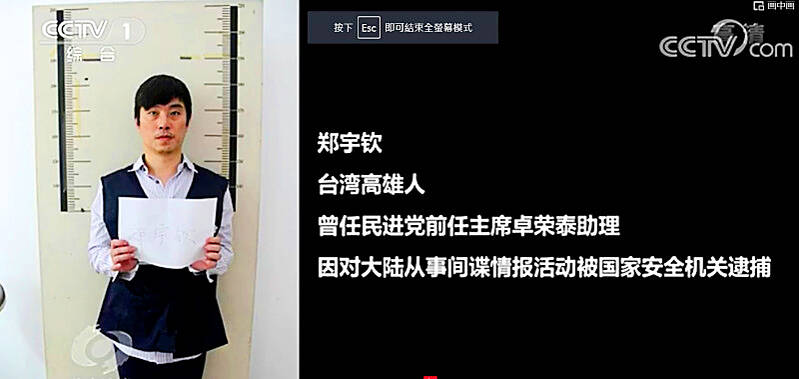
Former Czech Republic-based Taiwanese researcher Cheng Yu-chin (鄭宇欽) has been sentenced to seven years in prison on espionage-related charges, China’s Ministry of State Security announced yesterday. China said Cheng was a spy for Taiwan who “masqueraded as a professor” and that he was previously an assistant to former Cabinet secretary-general Cho Jung-tai (卓榮泰). President-elect William Lai (賴清德) on Wednesday last week announced Cho would be his premier when Lai is inaugurated next month. Today is China’s “National Security Education Day.” The Chinese ministry yesterday released a video online showing arrests over the past 10 years of people alleged to be
THE HAWAII FACTOR: While a 1965 opinion said an attack on Hawaii would not trigger Article 5, the text of the treaty suggests the state is covered, the report says NATO could be drawn into a conflict in the Taiwan Strait if Chinese forces attacked the US mainland or Hawaii, a NATO Defense College report published on Monday says. The report, written by James Lee, an assistant research fellow at Academia Sinica’s Institute of European and American Studies, states that under certain conditions a Taiwan contingency could trigger Article 5 of NATO, under which an attack against any member of the alliance is considered an attack against all members, necessitating a response. Article 6 of the North Atlantic Treaty specifies that an armed attack in the territory of any member in Europe,

LIKE FAMILY: People now treat dogs and cats as family members. They receive the same medical treatments and tests as humans do, a veterinary association official said The number of pet dogs and cats in Taiwan has officially outnumbered the number of human newborns last year, data from the Ministry of Agriculture’s pet registration information system showed. As of last year, Taiwan had 94,544 registered pet dogs and 137,652 pet cats, the data showed. By contrast, 135,571 babies were born last year. Demand for medical care for pet animals has also risen. As of Feb. 29, there were 5,773 veterinarians in Taiwan, 3,993 of whom were for pet animals, statistics from the Animal and Plant Health Inspection Agency showed. In 2022, the nation had 3,077 pediatricians. As of last
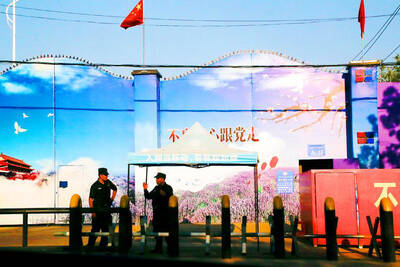
XINJIANG: Officials are conducting a report into amending an existing law or to enact a special law to prohibit goods using forced labor Taiwan is mulling an amendment prohibiting the importation of goods using forced labor, similar to the Uyghur Forced Labor Prevention Act (UFLPA) passed by the US Congress in 2021 that imposed limits on goods produced using forced labor in China’s Xinjiang region. A government official who wished to remain anonymous said yesterday that as the US customs law explicitly prohibits the importation of goods made using forced labor, in 2021 it passed the specialized UFLPA to limit the importation of cotton and other goods from China’s Xinjiang Uyghur region. Taiwan does not have the legal basis to prohibit the importation of goods


 RSS
RSS