


Embroidery may seem like an old-fashioned hobby but Chang Mei-yun (張美筠), a world master of the craft, says demand is growing for the skills necessary to restore antique textiles to their former glory.
In her quest to become the master embroiderer she is today, Chang has criss-crossed the globe studying needlework in all its guises, learning some 1,587 stitching techniques along the way.
Her dedication elevated her into the elite ranks of the handful of embroiderers with the expertise needed to restore embroidered antiques.

PHOTO: CNA
“I sometimes relied on word of mouth to learn a special technique and often exchanged my skills to learn it,” said Chang, director of the embroidery research and development center at the Tainan University of Technology.
Chang says her adventures have take her to places off the beaten track. She once traveled to a remote Turkish monastery that had not received visitors in three decades to learn a traditional stitching pattern.
Now 56, Chang started learning needlecraft as a teenager and honed her skills in Japan, where she became the first and only Taiwanese certified by the Japanese cultural authorities for the restoration of embroidered artifacts.
The experience in Japan led her to participate in a project in the Soviet Union, where she lived off and on for nine years, restoring imperial embroidery in the Kremlin.
“The Russians were very respectful and protective of art items. They welcomed a helping hand from those who shared their concept,” Chang said. “I was very fortunate to see the embroidery artifacts from the Eastern Roman Empire and learned to restore them.”
Today, Chang’s clients include museums and private collectors around the world and she has reportedly been asked by the National Museum of American History in Washington to mend a nearly 200-year-old Star Spangled Banner.
Chang declined to comment on the reports, citing client confidentiality, although she did say she would visit the US and Italy soon for research.
Chang said she sees strong potential in embroidery restoration as cultural and historical conservation efforts gain momentum in many countries.
In Taiwan, for example, some 20,000 samples of antique embroidery owned by museums require restoration. In addition, private collectors are spending tens of millions of US dollars on European vintage embroidery that needs attention, Chang said.
The Cultural Revolution in China also left a vast amount of embroidered artifacts damaged, she said, as Red Guards set out to deface or destroy objects deemed to be symbols of feudalism.
The cost of restoring antique embroidery can reach up to several million NT dollars depending on the extent of the damage, Chang said.
Tainan University’s embroidery center, which Chang heads, was founded in 2000 and has 145 students, with applications steadily increasing as the craft becomes more popular.
“Restoring antique embroidery is a delicate work of precision as we have to repair it while retaining its ancient look,” she said.
The process, including assessing the damage, analyzing the materials, treating the threads and mending, can take months.
Chang, a devout Christian, said she had found peace of mind in her embroidery during a long recovery from thyroid cancer almost a decade ago.
“Embroidering helped me find inner peace and faith when doctors almost gave up on me,” she said.
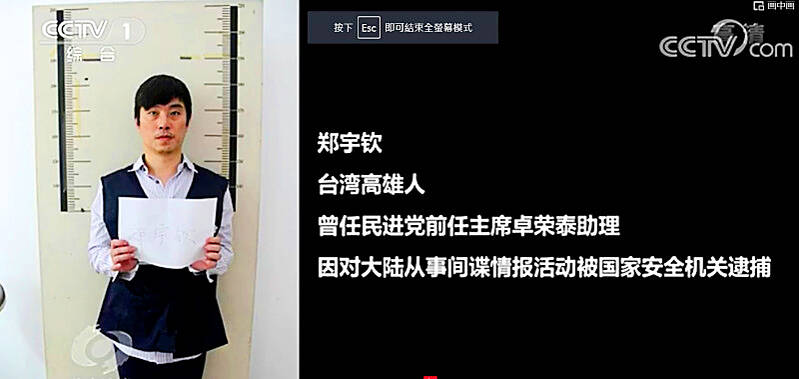
Former Czech Republic-based Taiwanese researcher Cheng Yu-chin (鄭宇欽) has been sentenced to seven years in prison on espionage-related charges, China’s Ministry of State Security announced yesterday. China said Cheng was a spy for Taiwan who “masqueraded as a professor” and that he was previously an assistant to former Cabinet secretary-general Cho Jung-tai (卓榮泰). President-elect William Lai (賴清德) on Wednesday last week announced Cho would be his premier when Lai is inaugurated next month. Today is China’s “National Security Education Day.” The Chinese ministry yesterday released a video online showing arrests over the past 10 years of people alleged to be
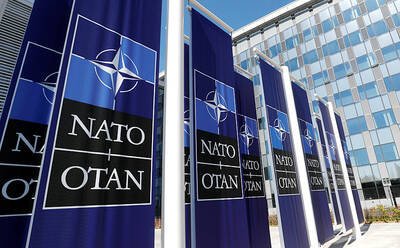
THE HAWAII FACTOR: While a 1965 opinion said an attack on Hawaii would not trigger Article 5, the text of the treaty suggests the state is covered, the report says NATO could be drawn into a conflict in the Taiwan Strait if Chinese forces attacked the US mainland or Hawaii, a NATO Defense College report published on Monday says. The report, written by James Lee, an assistant research fellow at Academia Sinica’s Institute of European and American Studies, states that under certain conditions a Taiwan contingency could trigger Article 5 of NATO, under which an attack against any member of the alliance is considered an attack against all members, necessitating a response. Article 6 of the North Atlantic Treaty specifies that an armed attack in the territory of any member in Europe,

LIKE FAMILY: People now treat dogs and cats as family members. They receive the same medical treatments and tests as humans do, a veterinary association official said The number of pet dogs and cats in Taiwan has officially outnumbered the number of human newborns last year, data from the Ministry of Agriculture’s pet registration information system showed. As of last year, Taiwan had 94,544 registered pet dogs and 137,652 pet cats, the data showed. By contrast, 135,571 babies were born last year. Demand for medical care for pet animals has also risen. As of Feb. 29, there were 5,773 veterinarians in Taiwan, 3,993 of whom were for pet animals, statistics from the Animal and Plant Health Inspection Agency showed. In 2022, the nation had 3,077 pediatricians. As of last
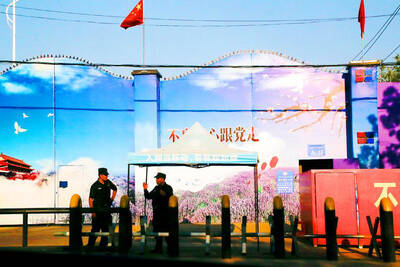
XINJIANG: Officials are conducting a report into amending an existing law or to enact a special law to prohibit goods using forced labor Taiwan is mulling an amendment prohibiting the importation of goods using forced labor, similar to the Uyghur Forced Labor Prevention Act (UFLPA) passed by the US Congress in 2021 that imposed limits on goods produced using forced labor in China’s Xinjiang region. A government official who wished to remain anonymous said yesterday that as the US customs law explicitly prohibits the importation of goods made using forced labor, in 2021 it passed the specialized UFLPA to limit the importation of cotton and other goods from China’s Xinjiang Uyghur region. Taiwan does not have the legal basis to prohibit the importation of goods


 RSS
RSS