


There is a way to help a nation develop clean energy sources that would conserve the environment without sacrificing economic gains, and with some policy framework tweaking, the scheme could work for Taiwan, said Stefan Schurig, climate and energy director of the World Future Council.
The policy tool he was referring to is called the “Feed-in Tariff (FIT),” a scheme that has worked in Germany and 40 other countries since the late 1970s, successfully boosting the speed of technological development for renewable energy while also providing jobs and stimulating GDP growth.
“[Because of FIT], Germany has become a global leader in solar energy, owning 55 percent of the world’s solar cell panels,” he said during a visit to Taipei last month.

PHOTO: HSIEH FENG-CHIU, TAIPEI TIMES
Schurig came to Taiwan to attend a climate change hearing hosted by the e-parliament, a forum that saw legislators from across the region gather to discuss policy and technologies capable of combating global warming.
The idea behind FIT is simple, Schurig said.
“The government sets a favorable price for all energy generated by clean sources, such as wind and solar power, then mandates all grid operators [power line owners] to purchase them, from clean energy providers, at those prices,” he said.
In other words, “however much electricity a windmill owner can put out, grid operators are mandated by law to purchase them, and at a good, set price,” he said.
Another component of FIT is that relatively newer renewable energy technologies receive better prices, encouraging investors to put money into developing innovative ways to generate power, he said.
“For example, since wind turbines technologies are mature, they are purchased at about 10 euro cents per watt per hour, whereas relatively newer technologies like photovoltaic [PV] power can be sold for as much as 60 euro cents per watt hour — but in the future with the advancement of PV technology, the prices will similarly go down,” he said.
Coal-generated power, on the other hand, can only be sold at about eight euro cents per unit, he said.
The final component of the scheme is that all power users share the additional cost of the electricity, induced by being generated from clean sources, which has several advantages, Shurig said.
“Currently about 11 percent of Germany’s electricity comes from clean sources. If you divide the extra cost by all power users across the nation, that only translates to about 1.5 euros per household extra per month,” he said.
The scheme works seamlessly as a “transitional policy” because when clean energy only comprises a small percentage of the total energy output of a nation, the additional cost shared by all power users is “barely noticeable,” Shurig said.
“And as an energy technology matures and is capable of producing more power output, its set price decreases, so that everyone’s power bills remain relatively the same,” he said.
Since the renewable developments do not come from tax dollars, not only are governments alleviated of the burden of providing subsidies, should a country elect a new government, the renewable power plants cannot be taken away, since they are bought and owned by the people, he said.
Joe Hsu (徐鼎昌), unit chief of the Ministry of Foreign Affairs’ task force on international environmental affairs, said FIT could work for Taiwan.
Hsu said, however, that government incentives were very important to encourage businesses to develop innovative clean energy technologies at home.
“We have the technology to manufacture very advanced solar panels, but we mostly export them — only 0.7 percent of Taiwan’s energy currently come from clean sources — this is largely because of our lack of an environmental policy scheme,” he said. “Taiwan needs two policy segments to increase that percentage: First we need an emissions cap — this can be achieved as soon as our greenhouse gas emission reduction act passes the new legislature.”
Although the Taipower Company currently purchases wind energy and solar energy from private generators at a favorable price — NT$2 and NT$17 per unit, respectively, compared to NT$1.0 for coal-burning electricity — Hsu said the lack of a greenhouse gas emission cap for businesses may still make it cheaper and more convenient for power generators to employ the traditional coal-burning method.
“The government should also set for power companies an obligated percentage of electricity to come from clean sources — this would need further planning,” he said.
In addition to developing clean energy sources, Taiwan could also reduce its greenhouse gas emission with energy conservation strategies, said Honda Chen (陳鴻達), chief secretary of the Bureau of Labor Insurance, who formerly served as a researcher at the Energy and Environment Research Laboratories at the Industrial Technology Research Institute.
“Present electricity prices in Taiwan are too low and could be raised as an economic tool to control the market,” Chen said.
“Since Taiwan’s electricity is subsidized by the government, allowing coal-burning generated electricity to be cheap even though Taipower is running at a loss, Taiwan’s massive emission per capita is lower only than the US,’” Chen said.
If Taiwan’s electricity prices increase, the FIT would work even better, said Jesper Grolin, executive director of the e-parliament and a former professor of environment and economics.
The improvement would come because “the narrowed gap between traditional and renewable energy prices would compete fairly in market,” he said.
The FIT is a state effort to reduce the cost of developing renewables and making them competitive in the energy market, and to set a stable investment climate for renewable technologies, Grolin said.
“The current market fails to reflect true prices of electricity produced by traditional coal-burning power plants when they receive governmental subsidies,” he said.
“Should Taiwan set a good price for PV, wind or solar thermal power, entrepreneurs that are abundant in the country will be motivated to mass produce them,” Grolin said.
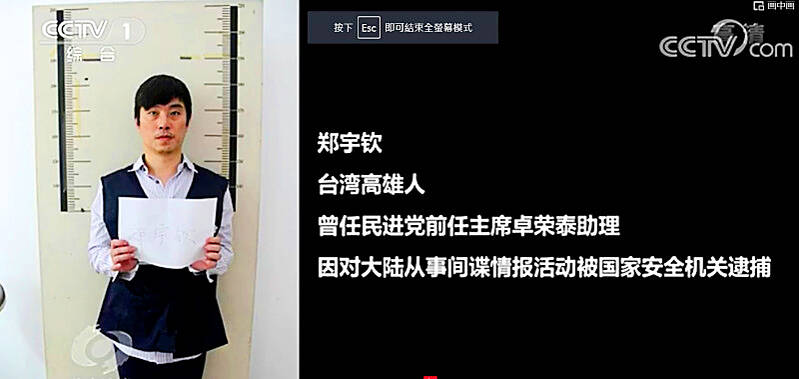
Former Czech Republic-based Taiwanese researcher Cheng Yu-chin (鄭宇欽) has been sentenced to seven years in prison on espionage-related charges, China’s Ministry of State Security announced yesterday. China said Cheng was a spy for Taiwan who “masqueraded as a professor” and that he was previously an assistant to former Cabinet secretary-general Cho Jung-tai (卓榮泰). President-elect William Lai (賴清德) on Wednesday last week announced Cho would be his premier when Lai is inaugurated next month. Today is China’s “National Security Education Day.” The Chinese ministry yesterday released a video online showing arrests over the past 10 years of people alleged to be
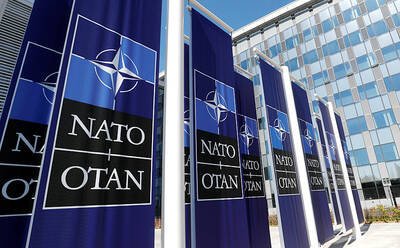
THE HAWAII FACTOR: While a 1965 opinion said an attack on Hawaii would not trigger Article 5, the text of the treaty suggests the state is covered, the report says NATO could be drawn into a conflict in the Taiwan Strait if Chinese forces attacked the US mainland or Hawaii, a NATO Defense College report published on Monday says. The report, written by James Lee, an assistant research fellow at Academia Sinica’s Institute of European and American Studies, states that under certain conditions a Taiwan contingency could trigger Article 5 of NATO, under which an attack against any member of the alliance is considered an attack against all members, necessitating a response. Article 6 of the North Atlantic Treaty specifies that an armed attack in the territory of any member in Europe,

LIKE FAMILY: People now treat dogs and cats as family members. They receive the same medical treatments and tests as humans do, a veterinary association official said The number of pet dogs and cats in Taiwan has officially outnumbered the number of human newborns last year, data from the Ministry of Agriculture’s pet registration information system showed. As of last year, Taiwan had 94,544 registered pet dogs and 137,652 pet cats, the data showed. By contrast, 135,571 babies were born last year. Demand for medical care for pet animals has also risen. As of Feb. 29, there were 5,773 veterinarians in Taiwan, 3,993 of whom were for pet animals, statistics from the Animal and Plant Health Inspection Agency showed. In 2022, the nation had 3,077 pediatricians. As of last

XINJIANG: Officials are conducting a report into amending an existing law or to enact a special law to prohibit goods using forced labor Taiwan is mulling an amendment prohibiting the importation of goods using forced labor, similar to the Uyghur Forced Labor Prevention Act (UFLPA) passed by the US Congress in 2021 that imposed limits on goods produced using forced labor in China’s Xinjiang region. A government official who wished to remain anonymous said yesterday that as the US customs law explicitly prohibits the importation of goods made using forced labor, in 2021 it passed the specialized UFLPA to limit the importation of cotton and other goods from China’s Xinjiang Uyghur region. Taiwan does not have the legal basis to prohibit the importation of goods


 RSS
RSS