


In regions with low seismicity such as Europe and parts of the US, many bridge superstructures borrow ideas from Lego blocks in that segments are pre-cast and assembled at the final construction site.
Now the technique has been modified and could be applied in earthquake-prone Taiwan, the National Center for Research on Earthquake Engineering announced yesterday.
The new technique will be used for the first time in Taichung, where two bridges will be built to connect the Formosa Freeway (Freeway No. 3) with Taichung City's expressway system, with construction beginning as early as May.

PHOTO: COURTESY OF NATIONAL APPLIED RESEARCH LABORATORIES
"Building pre-cast segmental bridges offers several advantages," said project leader Chang Kuo-chun (張國鎮), professor and chairman of the National Taiwan University Department of Civil Engineering.
Because pre-cast bridge segments are fabricated in factories, they are solid in quality when compared with bridges that are constructed on-site, Chang said, adding that while traditional bridges average a 50-year lifespan, the pre-cast segmental bridges may last up to 75 years.
"The bridges have accelerated construction time and better work environments for workers because less construction occurs in high-rise settings. Also, there is less traffic disruption because of the shorter construction time," he said.
But one of the biggest advantages of pre-cast segmental bridges is that because they are only assembled on-site, less land is required for construction, so the bridges create a reduced environmental impact, he said.
As a result, pre-cast segmental bridges abroad are mostly built in environmentally sensitive regions, such as the famous Linn Cove viaduct in North Carolina in the US, where the bridge blocks were suspended in a top-down style and the bridge hugs the belt of the cove loosely to preserve the original beauty of the scenic area, he said.
The key to making pre-cast segment bridges work in Taiwan lies in padding them with complementary seismic isolation systems, or threading energy dissipating (ED) reinforcement steel rods through the blocks after assembly, Chang said.
"We have made three types of bridge columns: one with no ED rods, one with moderate ED rods and one with high ED rods," he said.
A computerized earthquake test revealed that the third type with high ED rods demonstrated the best seismicity resistance, Chang said, adding that whether the second type or third type better suits the needs of Taiwan required more research and experimentation.
"However, the first type of columns [no ED rod] can be built in the least amount of time, which is good for places where construction time needs to be tightened, like when bridges are built in urban areas with heavy traffic," Chang said, adding that such columns would need to be fitted with seismic isolation systems.
The new bridges to connect the Formosa Freeway and the Taichung City expressway system will use exactly that, said deputy director of the Taiwan Area National Expressway Engineering Bureau design division Chen Kuo-long (
Asked whether the Suhua Freeway construction team might consider the newest technique, Chen said the change would "require a whole new drafting of the construction plan."
"However, it is true that this technique is good for environmentally sensitive regions," he said.
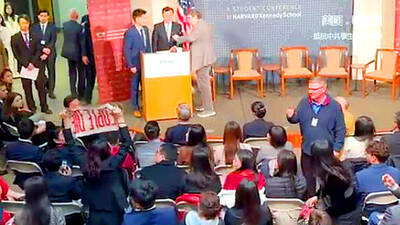
A group of Taiwanese-American and Tibetan-American students at Harvard University on Saturday disrupted Chinese Ambassador to the US Xie Feng’s (謝鋒) speech at the school, accusing him of being responsible for numerous human rights violations. Four students — two Taiwanese Americans and two from Tibet — held up banners inside a conference hall where Xie was delivering a speech at the opening ceremony of the Harvard Kennedy School China Conference 2024. In a video clip provided by the Coalition of Students Resisting the CCP (Chinese Communist Party), Taiwanese-American Cosette Wu (吳亭樺) and Tibetan-American Tsering Yangchen are seen holding banners that together read:

UNAWARE: Many people sit for long hours every day and eat unhealthy foods, putting them at greater risk of developing one of the ‘three highs,’ an expert said More than 30 percent of adults aged 40 or older who underwent a government-funded health exam were unaware they had at least one of the “three highs” — high blood pressure, high blood lipids or high blood sugar, the Health Promotion Administration (HPA) said yesterday. Among adults aged 40 or older who said they did not have any of the “three highs” before taking the health exam, more than 30 percent were found to have at least one of them, Adult Preventive Health Examination Service data from 2022 showed. People with long-term medical conditions such as hypertension or diabetes usually do not
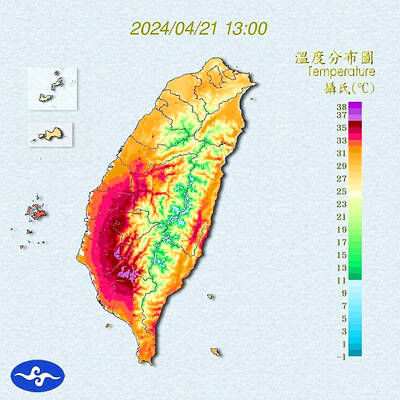
Heat advisories were in effect for nine administrative regions yesterday afternoon as warm southwesterly winds pushed temperatures above 38°C in parts of southern Taiwan, the Central Weather Administration (CWA) said. As of 3:30pm yesterday, Tainan’s Yujing District (玉井) had recorded the day’s highest temperature of 39.7°C, though the measurement will not be included in Taiwan’s official heat records since Yujing is an automatic rather than manually operated weather station, the CWA said. Highs recorded in other areas were 38.7°C in Kaohsiung’s Neimen District (內門), 38.2°C in Chiayi City and 38.1°C in Pingtung’s Sandimen Township (三地門), CWA data showed. The spell of scorching
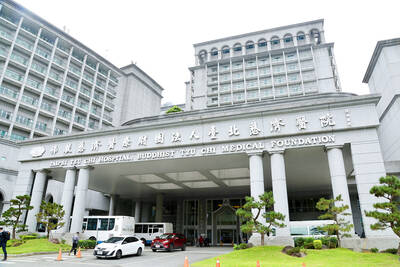
POLICE INVESTIGATING: A man said he quit his job as a nurse at Taipei Tzu Chi Hospital as he had been ‘disgusted’ by the behavior of his colleagues A man yesterday morning wrote online that he had witnessed nurses taking photographs and touching anesthetized patients inappropriately in Taipei Tzu Chi Hospital’s operating theaters. The man surnamed Huang (黃) wrote on the Professional Technology Temple bulletin board that during his six-month stint as a nurse at the hospital, he had seen nurses taking pictures of patients, including of their private parts, after they were anesthetized. Some nurses had also touched patients inappropriately and children were among those photographed, he said. Huang said this “disgusted” him “so much” that “he felt the need to reveal these unethical acts in the operating theater


 RSS
RSS