


While some argued over who outshone whom during Sunday's presidential debate, analysts gave the first televised debate a failing grade.
Soochow University political science professor Hsu Yung-ming (
Hsu said he would like to see more time allocated for candidates to answer questions. The 20 people asking questions did not represent a cross section of the public and academia did not play a role at all, he said.
Chan Chang-chuan (
While there are only two debates scheduled before the March 22 election, Chan said that he would like to see a third held with intellectuals participating. Media managers have been asked to provide questions for the second debate, scheduled for March 9.
Describing Sunday's event as a "boring platform presentation," Allen Houng (
"It seems only those who have a higher education, have access to a video camera or live in big cities were chosen," he said.
During the first segment of the debate, Democratic Progressive Party (DPP) presidential candidate Frank Hsieh (
Wang Tai-li (王泰俐), a journalism professor at National Chengchi University, said that the videotaped questions were an "innovative form of civil politics education."
She said the format is becoming a global standard, but she would like to see more people participate, saying that presidential debates should not be limited to only one form.
Ku Chung-hua (顧忠華), chairman of Citizen Congress Watch, criticized the time limits, saying: "It was beef soup without any beef in it."
While the two candidates had the opportunity to challenge each other with three questions in the second section of the debate, Ku said each candidate had only one minute to respond.
He was also disappointed by the questions the two candidates asked each other, Ku said, because they only focused on character issues such as corruption.
Hsieh got emotional when Ma questioned the integrity of his aides involved in graft charges. Chan said he understood Hsieh must have be upset by Ma's question, but it seemed he needed to work on his emotional management.
Since the candidates registered their candidacy on Jan. 27, Hsieh and Ma have slung plenty of mud at each other.
Hsieh has questioned Ma's loyalty, raising questions about his green card status and spying on democracy activists when he was a student in the US.
Ma, on the other hand, has been attacking Hsieh's character by saying he provided information about the democracy movement to intelligence agencies during the Martial Law era.
Little was seen of details on economic policy, foreign policy, national defense or cross-strait relations.
As presidential campaigning for the March 22 election officially began on Saturday, analysts said focusing on the issues may be the best way to win.
Chen Yen-hui (
Chen said he expected national identity would become a hot topic as the election approaches, because it is a DPP strong point.
Reluctant to define the green card controversy as political mudslinging, Chen said it would be more appropriate to define it as Ma's lack of crisis management ability.
"The matter would not have gotten out of hand had Ma told the truth from the very beginning," he said.
Analyzing Hsieh's campaign strategy, Chao Yung-mau (
Chao pointed out the importance of swing voters, who are more politically moderate and may play a decisive role in the vote.
"The decisive engagement of the battle lies in centrist voters and the middle class," he said. "They don't want to see pork barrel polices or short-term stimulus plans."
Chan said he would like to see the two presidential candidates engage in an issue-based campaign, but unfortunately this does not seem to be in the cards.
"No matter who wins the election, that person will be stealing the presidency if he does not tell the people exactly where he is going to steer the ship," he said.
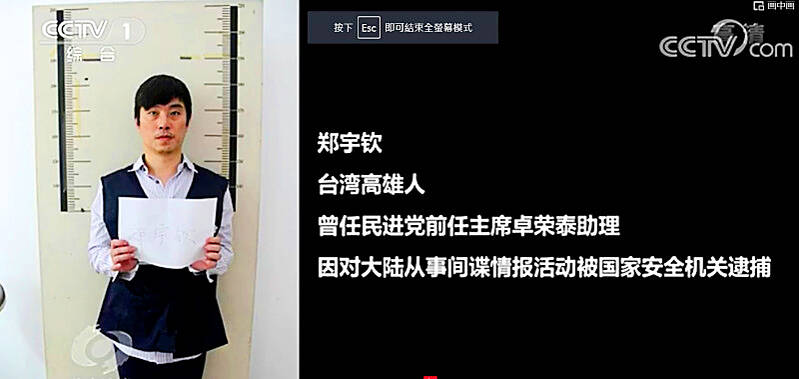
Former Czech Republic-based Taiwanese researcher Cheng Yu-chin (鄭宇欽) has been sentenced to seven years in prison on espionage-related charges, China’s Ministry of State Security announced yesterday. China said Cheng was a spy for Taiwan who “masqueraded as a professor” and that he was previously an assistant to former Cabinet secretary-general Cho Jung-tai (卓榮泰). President-elect William Lai (賴清德) on Wednesday last week announced Cho would be his premier when Lai is inaugurated next month. Today is China’s “National Security Education Day.” The Chinese ministry yesterday released a video online showing arrests over the past 10 years of people alleged to be
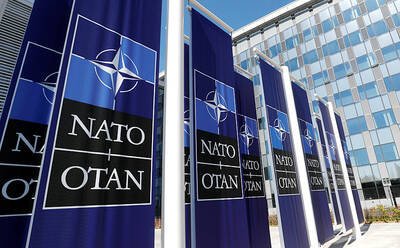
THE HAWAII FACTOR: While a 1965 opinion said an attack on Hawaii would not trigger Article 5, the text of the treaty suggests the state is covered, the report says NATO could be drawn into a conflict in the Taiwan Strait if Chinese forces attacked the US mainland or Hawaii, a NATO Defense College report published on Monday says. The report, written by James Lee, an assistant research fellow at Academia Sinica’s Institute of European and American Studies, states that under certain conditions a Taiwan contingency could trigger Article 5 of NATO, under which an attack against any member of the alliance is considered an attack against all members, necessitating a response. Article 6 of the North Atlantic Treaty specifies that an armed attack in the territory of any member in Europe,
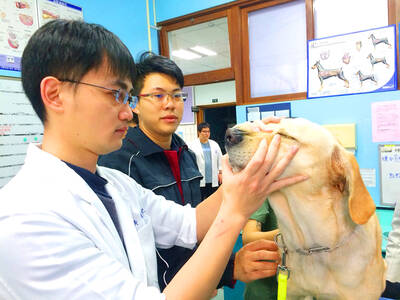
LIKE FAMILY: People now treat dogs and cats as family members. They receive the same medical treatments and tests as humans do, a veterinary association official said The number of pet dogs and cats in Taiwan has officially outnumbered the number of human newborns last year, data from the Ministry of Agriculture’s pet registration information system showed. As of last year, Taiwan had 94,544 registered pet dogs and 137,652 pet cats, the data showed. By contrast, 135,571 babies were born last year. Demand for medical care for pet animals has also risen. As of Feb. 29, there were 5,773 veterinarians in Taiwan, 3,993 of whom were for pet animals, statistics from the Animal and Plant Health Inspection Agency showed. In 2022, the nation had 3,077 pediatricians. As of last
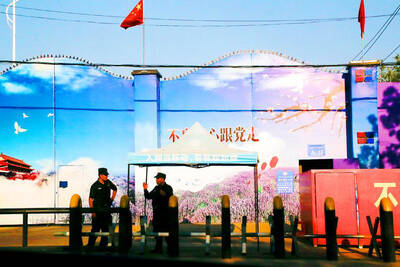
XINJIANG: Officials are conducting a report into amending an existing law or to enact a special law to prohibit goods using forced labor Taiwan is mulling an amendment prohibiting the importation of goods using forced labor, similar to the Uyghur Forced Labor Prevention Act (UFLPA) passed by the US Congress in 2021 that imposed limits on goods produced using forced labor in China’s Xinjiang region. A government official who wished to remain anonymous said yesterday that as the US customs law explicitly prohibits the importation of goods made using forced labor, in 2021 it passed the specialized UFLPA to limit the importation of cotton and other goods from China’s Xinjiang Uyghur region. Taiwan does not have the legal basis to prohibit the importation of goods


 RSS
RSS