


Chinese Nationalist Party (KMT) Chairman Wu Poh-hsiung (
"The KMT does not oppose the referendum, but we hope that the referendums can be held separately from the presidential election," Wu said after attending the party's forum on legislative affairs.
Wu was responding to President Chen Shui-bian's (陳水扁) plan to launch a "defensive referendum" if the two major parties fail to resolve the controversy surrounding the referendum seeking UN membership today when the Legislative Yuan opens its new session.
The party later decided on a total of 59 priority bills the caucus will handle during the session, seeking to delete the regulations regarding a defensive referendum in the Referendum Law (公民投票法) and prevent the president from launching a defensive referendum.
Other bills included drafts regarding the economy, government re-engineering, environmental protection and electoral affairs.
Wu said the party's caucus would not propose another referendum, adding that it would come up with a new method to express the country's desire to join international organizations.
Article 17 of the Referendum Law stipulates that the president may, following a resolution by the Executive Yuan, place national security matters before the public in a referendum when the nation is exposed to an external threat, otherwise known as a defensive referendum.
A defensive referendum is a presidential prerogative and does not require the consent of the legislature but only ratification by the Executive Yuan.
Wu said he had urged Chen to reshuffle the CEC and separate the referendums and presidential election, but the president had not accepted his advice.
The Democratic Progressive Party (DPP) has proposed holding a referendum on applying to join the UN using the name "Taiwan," while the KMT has suggested another referendum on "rejoining" the world body using the country's official name -- the Republic of China (ROC) -- or any other "practical" title that would uphold the nation's dignity.
DPP presidential candidate Frank Hsieh (
Hsieh made the suggestion for fear that failure of either referendum may create a false impression in the world that people in Taiwan do not want to be part of the global body.
Meanwhile, President Chen yesterday expressed his desire to see the two referendum proposals seeking UN membership succeed so the world could hear the voice of the Taiwanese people.
During a meeting with former South Korean UN deputy secretary-general Kim Hak-su at the Presidential Office yesterday afternoon, Chen expressed regret over the removal of Taiwan's name from a Web site listing countries that have recognized the independence of Kosovo.
"It is unfair for the 23 million people of Taiwan that a sovereign state like Taiwan does not have the right to recognize another sovereign country," he said. "Taiwan has been excluded from the UN system for too long. The key to Taiwan's diplomatic predicament lies in China's pressure."
Although there is a long way to go for Kosovo to become a UN member, Chen said 19 countries have recognized Kosovo and its lack of UN membership does not mean it is not an independent sovereignty.
"Like Kosovo, Taiwan is not yet a member of the UN, but there are 23 countries that have diplomatic relationships with us," he said. "It is a fact and the status quo that Taiwan is an independent sovereign state."
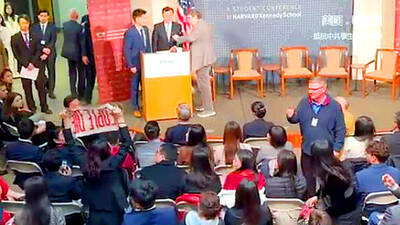
A group of Taiwanese-American and Tibetan-American students at Harvard University on Saturday disrupted Chinese Ambassador to the US Xie Feng’s (謝鋒) speech at the school, accusing him of being responsible for numerous human rights violations. Four students — two Taiwanese Americans and two from Tibet — held up banners inside a conference hall where Xie was delivering a speech at the opening ceremony of the Harvard Kennedy School China Conference 2024. In a video clip provided by the Coalition of Students Resisting the CCP (Chinese Communist Party), Taiwanese-American Cosette Wu (吳亭樺) and Tibetan-American Tsering Yangchen are seen holding banners that together read:

UNAWARE: Many people sit for long hours every day and eat unhealthy foods, putting them at greater risk of developing one of the ‘three highs,’ an expert said More than 30 percent of adults aged 40 or older who underwent a government-funded health exam were unaware they had at least one of the “three highs” — high blood pressure, high blood lipids or high blood sugar, the Health Promotion Administration (HPA) said yesterday. Among adults aged 40 or older who said they did not have any of the “three highs” before taking the health exam, more than 30 percent were found to have at least one of them, Adult Preventive Health Examination Service data from 2022 showed. People with long-term medical conditions such as hypertension or diabetes usually do not
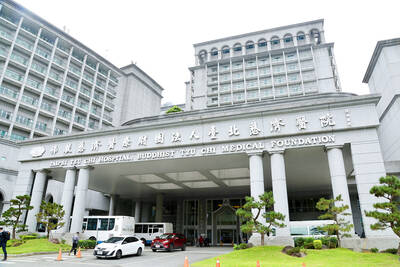
POLICE INVESTIGATING: A man said he quit his job as a nurse at Taipei Tzu Chi Hospital as he had been ‘disgusted’ by the behavior of his colleagues A man yesterday morning wrote online that he had witnessed nurses taking photographs and touching anesthetized patients inappropriately in Taipei Tzu Chi Hospital’s operating theaters. The man surnamed Huang (黃) wrote on the Professional Technology Temple bulletin board that during his six-month stint as a nurse at the hospital, he had seen nurses taking pictures of patients, including of their private parts, after they were anesthetized. Some nurses had also touched patients inappropriately and children were among those photographed, he said. Huang said this “disgusted” him “so much” that “he felt the need to reveal these unethical acts in the operating theater
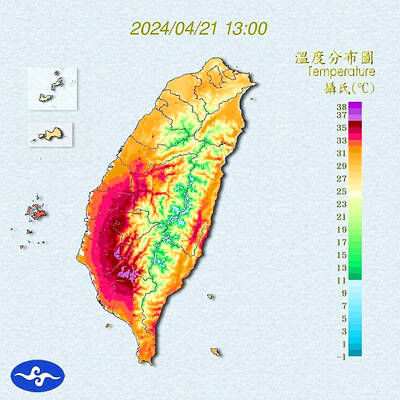
Heat advisories were in effect for nine administrative regions yesterday afternoon as warm southwesterly winds pushed temperatures above 38°C in parts of southern Taiwan, the Central Weather Administration (CWA) said. As of 3:30pm yesterday, Tainan’s Yujing District (玉井) had recorded the day’s highest temperature of 39.7°C, though the measurement will not be included in Taiwan’s official heat records since Yujing is an automatic rather than manually operated weather station, the CWA said. Highs recorded in other areas were 38.7°C in Kaohsiung’s Neimen District (內門), 38.2°C in Chiayi City and 38.1°C in Pingtung’s Sandimen Township (三地門), CWA data showed. The spell of scorching


 RSS
RSS