


The nation's first baby conceived with the help of embryonic pre-selection could help cure her older brother of the hereditary blood disease thalassemia, National Taiwan University Hospital doctors said yesterday.
Like many parents of children suffering from thalassemia, the boy's father and mother, whose names have not been released, decided to conceive another child in a bid to help their son overcome the debilitating disease.
However, an exact donor match is needed to help a sufferer of thalassemia.
For the first time, doctors employed cutting-edge genetic analysis to pre-select an embryo that was an exact donor match.
Following the baby's birth, doctors extracted stem cells from the umbilical cord and will soon implant these into her brother's bone marrow.
If the procedure is successful, his body will then be able to produce blood cells normally.
Doctors said this was possibly the first time the technology had been used in Asia to guarantee donor compatibility.
Without the pre-selection, the chances of the boy's sibling being a suitable donor were less than 25 percent, doctors said.
"There was only a one in four chance that the boy's sibling would have a compatible human leukocyte antigen," said Su Yi-ning (蘇怡寧), a geneticist at the hospital. "Of that 25 percent, one in four would be unsuitable because they would also be carriers of thalassemia."
The doctors were able to ensure that the boy's sibling would be a perfect match by using in-vitro fertilization techniques and testing each of the embryos produced for compatibility before implanting one in the mother.
"As a result, we were quite certain that the baby would be a match and the likelihood of success for the procedure of transferring the stem cells into the boy's marrow is quite high," Su said.
The case has been documented in a study published in this month's issue of the journal Reproductive BioMedicine Online.
The case was particularly difficult because doctors had to test for two factors: whether the embryo was free from thalassemia and whether its antigen was compatible with the patient's.
Su said the university hospital had some experience testing embryos for thalassemia and other genetic diseases caused by a single gene, but only performed such tests in limited cases.
"We only perform the procedure for people with a family history of the disease," Su said.
"If the embryo is tested prior to implantation, it saves the family the agonizing decision of whether to abort a pregnancy at a later stage," Su said.
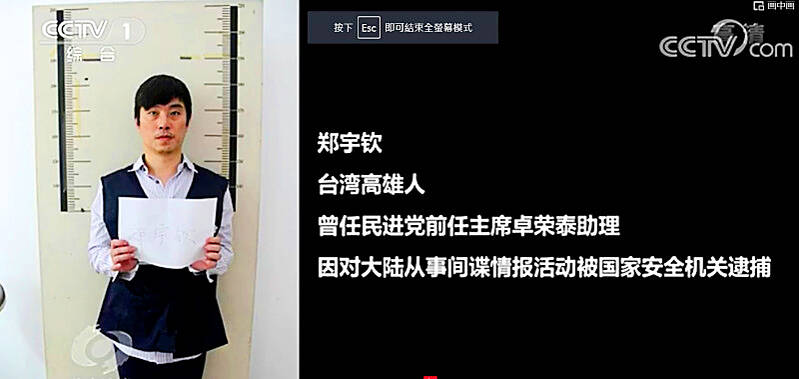
Former Czech Republic-based Taiwanese researcher Cheng Yu-chin (鄭宇欽) has been sentenced to seven years in prison on espionage-related charges, China’s Ministry of State Security announced yesterday. China said Cheng was a spy for Taiwan who “masqueraded as a professor” and that he was previously an assistant to former Cabinet secretary-general Cho Jung-tai (卓榮泰). President-elect William Lai (賴清德) on Wednesday last week announced Cho would be his premier when Lai is inaugurated next month. Today is China’s “National Security Education Day.” The Chinese ministry yesterday released a video online showing arrests over the past 10 years of people alleged to be
THE HAWAII FACTOR: While a 1965 opinion said an attack on Hawaii would not trigger Article 5, the text of the treaty suggests the state is covered, the report says NATO could be drawn into a conflict in the Taiwan Strait if Chinese forces attacked the US mainland or Hawaii, a NATO Defense College report published on Monday says. The report, written by James Lee, an assistant research fellow at Academia Sinica’s Institute of European and American Studies, states that under certain conditions a Taiwan contingency could trigger Article 5 of NATO, under which an attack against any member of the alliance is considered an attack against all members, necessitating a response. Article 6 of the North Atlantic Treaty specifies that an armed attack in the territory of any member in Europe,
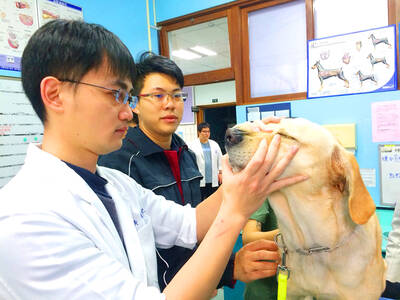
LIKE FAMILY: People now treat dogs and cats as family members. They receive the same medical treatments and tests as humans do, a veterinary association official said The number of pet dogs and cats in Taiwan has officially outnumbered the number of human newborns last year, data from the Ministry of Agriculture’s pet registration information system showed. As of last year, Taiwan had 94,544 registered pet dogs and 137,652 pet cats, the data showed. By contrast, 135,571 babies were born last year. Demand for medical care for pet animals has also risen. As of Feb. 29, there were 5,773 veterinarians in Taiwan, 3,993 of whom were for pet animals, statistics from the Animal and Plant Health Inspection Agency showed. In 2022, the nation had 3,077 pediatricians. As of last

XINJIANG: Officials are conducting a report into amending an existing law or to enact a special law to prohibit goods using forced labor Taiwan is mulling an amendment prohibiting the importation of goods using forced labor, similar to the Uyghur Forced Labor Prevention Act (UFLPA) passed by the US Congress in 2021 that imposed limits on goods produced using forced labor in China’s Xinjiang region. A government official who wished to remain anonymous said yesterday that as the US customs law explicitly prohibits the importation of goods made using forced labor, in 2021 it passed the specialized UFLPA to limit the importation of cotton and other goods from China’s Xinjiang Uyghur region. Taiwan does not have the legal basis to prohibit the importation of goods


 RSS
RSS