


It took an expensive mobile phone bill for a man surnamed Hsu (許) to realize how much he was actually paying when responding to an advertisement with a text message.
Hsu saw a TV commercial saying that he could buy a Nintendo Wii for just NT$199. Following the instructions in the commercial, he pressed 55987 to get the numbers in a text message.
Since then, Hsu has received three to five messages a day asking questions like, "What will happen when you start playing Wii?"
At first, Hsu just found the junk messages annoying and simply deleted them. Later, however, he found that he was actually being charged NT$10 for each junk message he received, and that added an additional NT$600 to his mobile phone bill.
Hsu is only one of thousands of customers who have fallen for such schemes.
Democratic Progressive Party (DPP) Legislator Huang Wei-cher (
Huang said that the service includes allowing mobile phone users to download ringtones and icons or join prize draws.
While the service has been in operation for three years, few mobile phone users actually know that these text message can cost up to NT$30 each. Moreover, the fees accumulated through the text message exchange are all paid by the users.
"Consumers must be adequately informed about the service plan and the costs, as well as the steps to accept or reject the invitations to join the service," Huang said. "They can no longer lure the customers into a trap with vague wording and tricky statements."
Representatives from the Consumer Protection Commission (CPC), the National Communications Commission (NCC) and the nation's major telecom companies also attended yesterday's press conference.
Reviewing the text messages Hsu received, CPC consumer ombudsman Chang Chia-lin (
If the invitation text message fails to provide crucial information to customers, service providers might be charged with making false advertising statements and turned over to the Fair Trade Commission.
Chang also reminded customers they can choose to not subscribe to the service when they fill in their mobile phone service applications.
NCC representative Liang Wen-hsing (
Liang said the commission would schedule a meeting with mobile service providers next week to better understand the situation.
Telecom company representatives, on the other hand, have all agreed that they are willing to return the money to their customers if it is proven that the text messages they receive contain misleading or unclear statements.
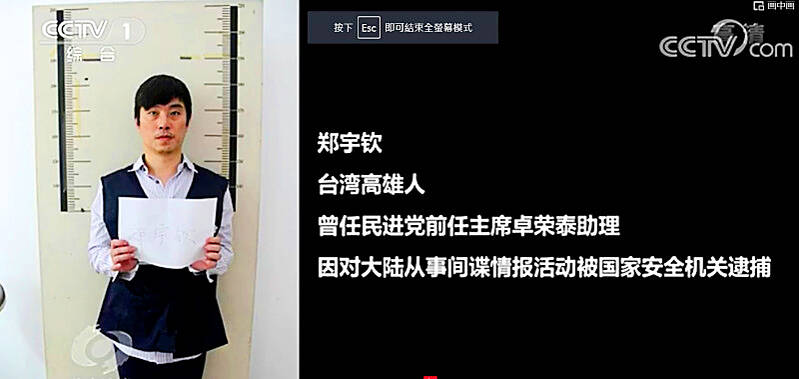
Former Czech Republic-based Taiwanese researcher Cheng Yu-chin (鄭宇欽) has been sentenced to seven years in prison on espionage-related charges, China’s Ministry of State Security announced yesterday. China said Cheng was a spy for Taiwan who “masqueraded as a professor” and that he was previously an assistant to former Cabinet secretary-general Cho Jung-tai (卓榮泰). President-elect William Lai (賴清德) on Wednesday last week announced Cho would be his premier when Lai is inaugurated next month. Today is China’s “National Security Education Day.” The Chinese ministry yesterday released a video online showing arrests over the past 10 years of people alleged to be
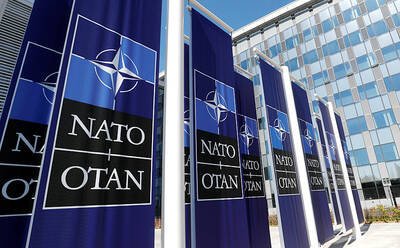
THE HAWAII FACTOR: While a 1965 opinion said an attack on Hawaii would not trigger Article 5, the text of the treaty suggests the state is covered, the report says NATO could be drawn into a conflict in the Taiwan Strait if Chinese forces attacked the US mainland or Hawaii, a NATO Defense College report published on Monday says. The report, written by James Lee, an assistant research fellow at Academia Sinica’s Institute of European and American Studies, states that under certain conditions a Taiwan contingency could trigger Article 5 of NATO, under which an attack against any member of the alliance is considered an attack against all members, necessitating a response. Article 6 of the North Atlantic Treaty specifies that an armed attack in the territory of any member in Europe,

LIKE FAMILY: People now treat dogs and cats as family members. They receive the same medical treatments and tests as humans do, a veterinary association official said The number of pet dogs and cats in Taiwan has officially outnumbered the number of human newborns last year, data from the Ministry of Agriculture’s pet registration information system showed. As of last year, Taiwan had 94,544 registered pet dogs and 137,652 pet cats, the data showed. By contrast, 135,571 babies were born last year. Demand for medical care for pet animals has also risen. As of Feb. 29, there were 5,773 veterinarians in Taiwan, 3,993 of whom were for pet animals, statistics from the Animal and Plant Health Inspection Agency showed. In 2022, the nation had 3,077 pediatricians. As of last

XINJIANG: Officials are conducting a report into amending an existing law or to enact a special law to prohibit goods using forced labor Taiwan is mulling an amendment prohibiting the importation of goods using forced labor, similar to the Uyghur Forced Labor Prevention Act (UFLPA) passed by the US Congress in 2021 that imposed limits on goods produced using forced labor in China’s Xinjiang region. A government official who wished to remain anonymous said yesterday that as the US customs law explicitly prohibits the importation of goods made using forced labor, in 2021 it passed the specialized UFLPA to limit the importation of cotton and other goods from China’s Xinjiang Uyghur region. Taiwan does not have the legal basis to prohibit the importation of goods


 RSS
RSS