


Most US respondents in a poll said they would oppose US intervention in the event of a military conflict in the Taiwan Strait triggered by a formal declaration of independence by Taiwan.
The survey, released on Monday, was coordinated by the non-partisan, non-profit Committee of 100 and found that 32 percent of US citizens, 31 percent of community leaders who help shape public opinion and 23 percent of business leaders said they supported US intervention.
CONGRESSIONAL STAFF
The poll also found that 49 percent of US congressional staffers agreed the US should intervene in such a conflict.
The survey, titled Hope and Fear: American and Chinese Attitudes Toward Each Other, was conducted between mid August and mid September in the US and China and covered a wide range of issues, including bilateral trade and economic relations, product safety, climate change, the rise of China and the Taiwan issue, to name a few.
Those polled included members of the pubic in both countries, as well as business and community leaders and US congressional staffers.
On the question of whether the US should play a more active role in cross-strait relations, 64 percent of congressional staffers said it should, while 57 percent of US community leaders, 54 percent of business leaders and 46 percent of ordinary citizens said that it should.
ON THE RISE
All the figures marked increases over those in a similar survey conducted in 2005, with the ratio of congressional staffers supporting a more active US role registering the steepest rise at over 5 percentage points.
As to whether the US should intervene in a cross-strait military conflict triggered by a declaration of independence by Taiwan, the percentages of business leaders and community leaders supporting the notion both marked sharp drops of over 20 percentage points from the level in the 2005 survey, while the ratio of congressional staffers and ordinary citizens supporting the concept remained roughly the same in the two surveys.
Analyzing the poll results, Li Cheng, a senior researcher at the Brookings Institution who supervised the survey, said he believed the sharp drop in the percentage of business leaders and community leaders supporting US military intervention is related to US and Chinese economic interests as well as to recent provocative moves by Taiwan's government.
He also attributed the high level of support for Taiwan among Congressional staffers to the successful efforts of pro-Taiwan lobby groups in Washington.
CHINESE SURVEYED
Meanwhile, among Chinese citizens surveyed, 53 percent of business leaders and ordinary citizens said they believe the Taiwan issue is currently moving toward a peaceful resolution, while 32 percent of community leaders said they believed the Taiwan issue had come to an impasse.
Asked how China should work to resolve the Taiwan issue, a majority of Chinese, including 66 percent of community leaders, 57 percent of business leaders and 52 percent of ordinary citizens, said increasing exchanges with Taiwan was the most appropriate way to work for unification.
The survey in the US was conducted via telephone interviews with 1,200 adults nationwide, while the survey in China was carried out through face-to-face interviews with 4,104 adults around the country.

A group of Taiwanese-American and Tibetan-American students at Harvard University on Saturday disrupted Chinese Ambassador to the US Xie Feng’s (謝鋒) speech at the school, accusing him of being responsible for numerous human rights violations. Four students — two Taiwanese Americans and two from Tibet — held up banners inside a conference hall where Xie was delivering a speech at the opening ceremony of the Harvard Kennedy School China Conference 2024. In a video clip provided by the Coalition of Students Resisting the CCP (Chinese Communist Party), Taiwanese-American Cosette Wu (吳亭樺) and Tibetan-American Tsering Yangchen are seen holding banners that together read:

UNAWARE: Many people sit for long hours every day and eat unhealthy foods, putting them at greater risk of developing one of the ‘three highs,’ an expert said More than 30 percent of adults aged 40 or older who underwent a government-funded health exam were unaware they had at least one of the “three highs” — high blood pressure, high blood lipids or high blood sugar, the Health Promotion Administration (HPA) said yesterday. Among adults aged 40 or older who said they did not have any of the “three highs” before taking the health exam, more than 30 percent were found to have at least one of them, Adult Preventive Health Examination Service data from 2022 showed. People with long-term medical conditions such as hypertension or diabetes usually do not
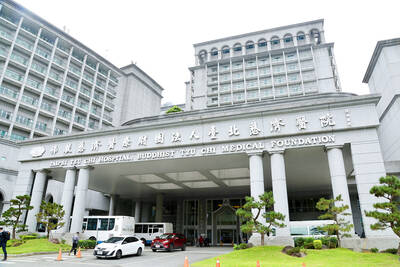
POLICE INVESTIGATING: A man said he quit his job as a nurse at Taipei Tzu Chi Hospital as he had been ‘disgusted’ by the behavior of his colleagues A man yesterday morning wrote online that he had witnessed nurses taking photographs and touching anesthetized patients inappropriately in Taipei Tzu Chi Hospital’s operating theaters. The man surnamed Huang (黃) wrote on the Professional Technology Temple bulletin board that during his six-month stint as a nurse at the hospital, he had seen nurses taking pictures of patients, including of their private parts, after they were anesthetized. Some nurses had also touched patients inappropriately and children were among those photographed, he said. Huang said this “disgusted” him “so much” that “he felt the need to reveal these unethical acts in the operating theater
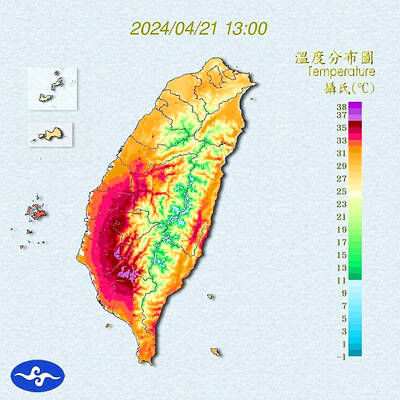
Heat advisories were in effect for nine administrative regions yesterday afternoon as warm southwesterly winds pushed temperatures above 38°C in parts of southern Taiwan, the Central Weather Administration (CWA) said. As of 3:30pm yesterday, Tainan’s Yujing District (玉井) had recorded the day’s highest temperature of 39.7°C, though the measurement will not be included in Taiwan’s official heat records since Yujing is an automatic rather than manually operated weather station, the CWA said. Highs recorded in other areas were 38.7°C in Kaohsiung’s Neimen District (內門), 38.2°C in Chiayi City and 38.1°C in Pingtung’s Sandimen Township (三地門), CWA data showed. The spell of scorching


 RSS
RSS